Department of Neuro- and Sensory Physiology, University of Göttingen Medical Center, Göttingen, Germany.
Cluster of Excellence Nanoscale Microscopy and Molecular Physiology of the Brain, Göttingen, Germany.
EMBO J. 2018 Jan 4;37(1):139-159. doi: 10.15252/embj.201695709. Epub 2017 Nov 16.
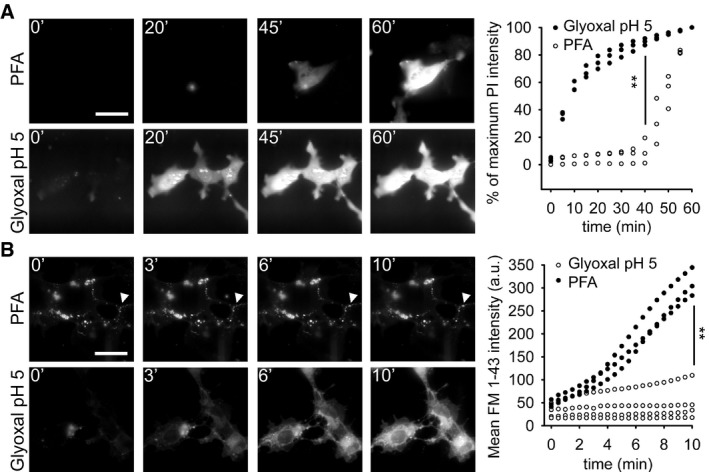
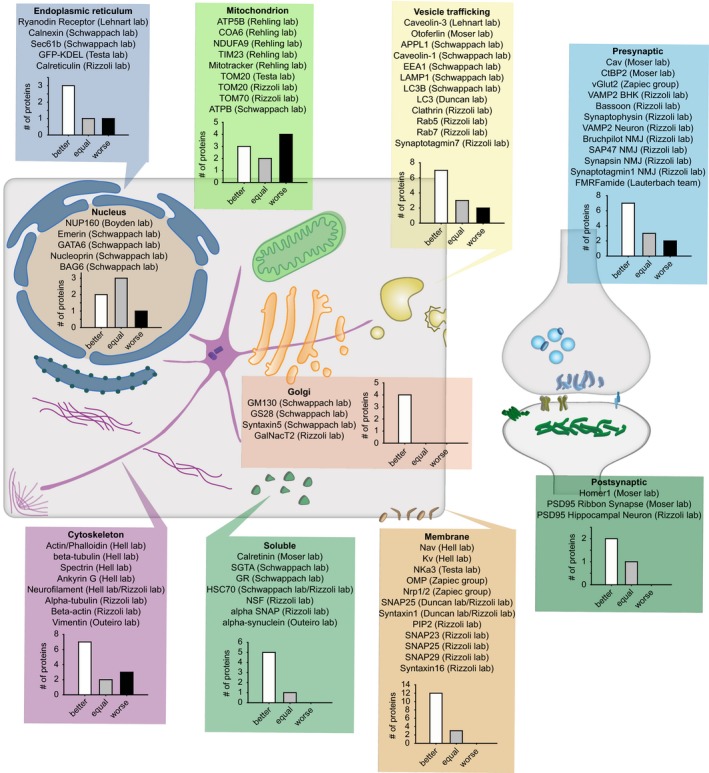
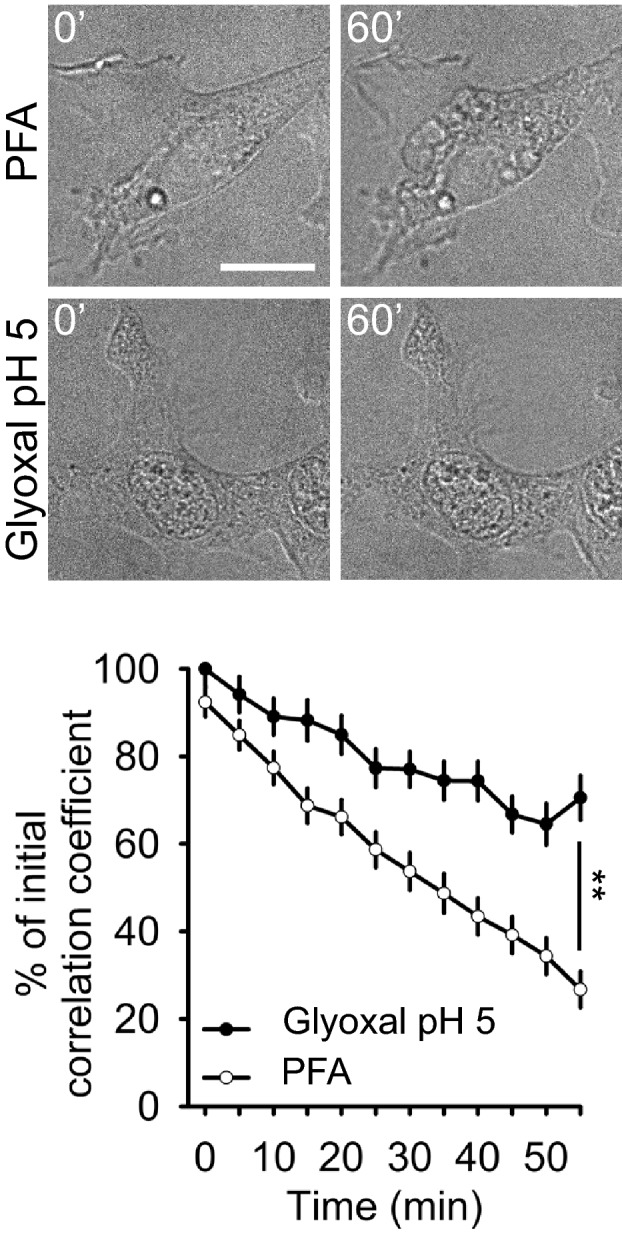
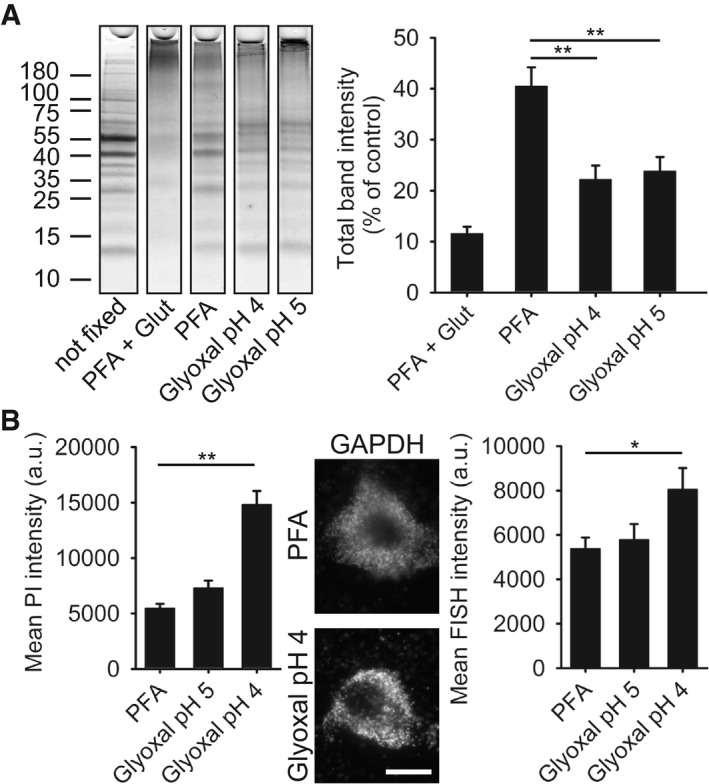
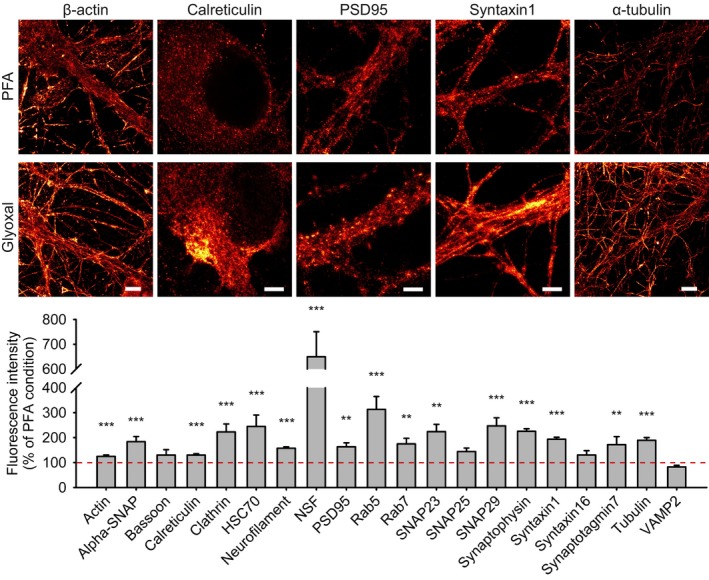
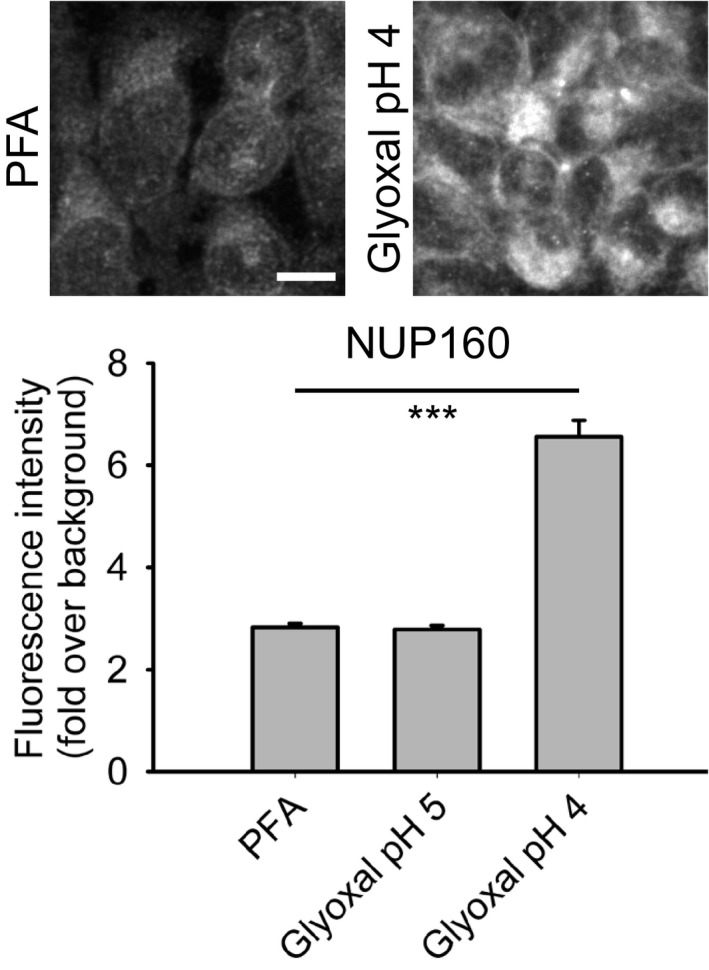
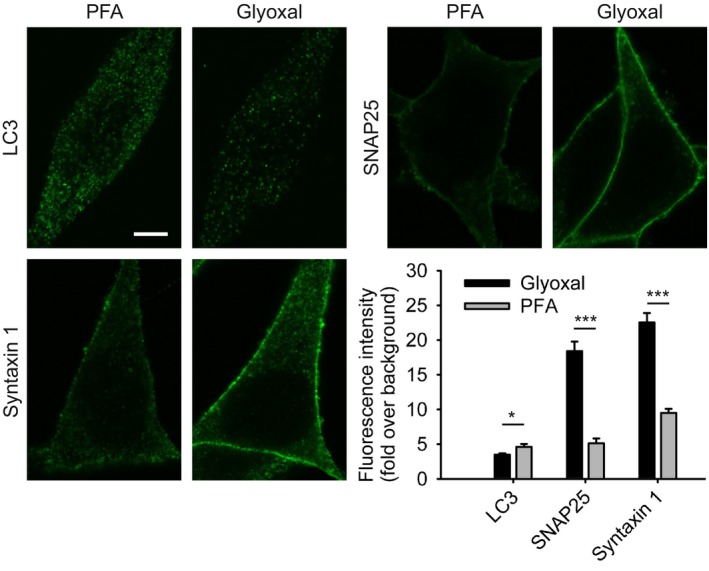
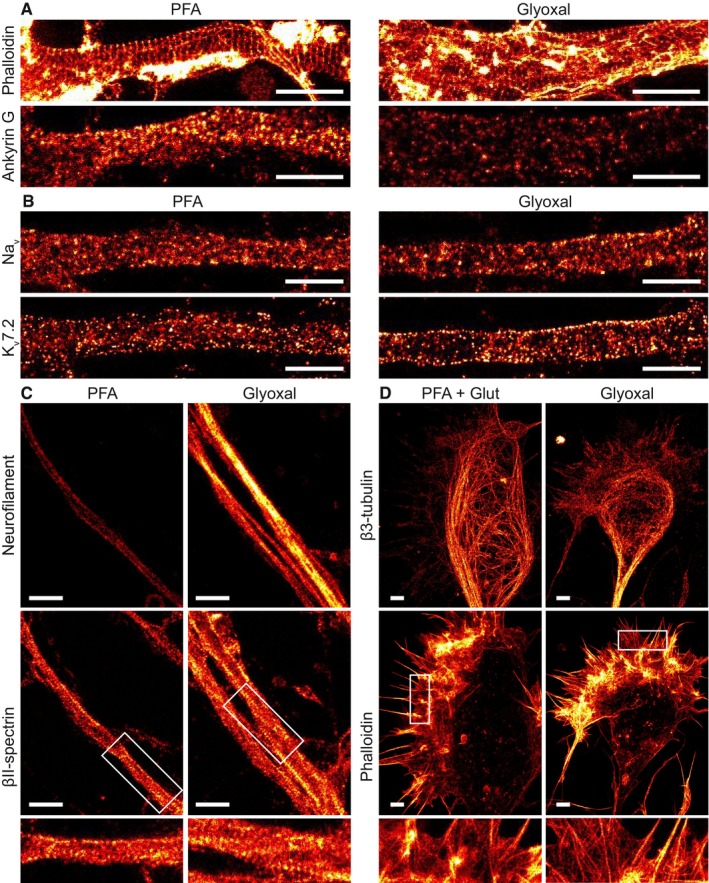
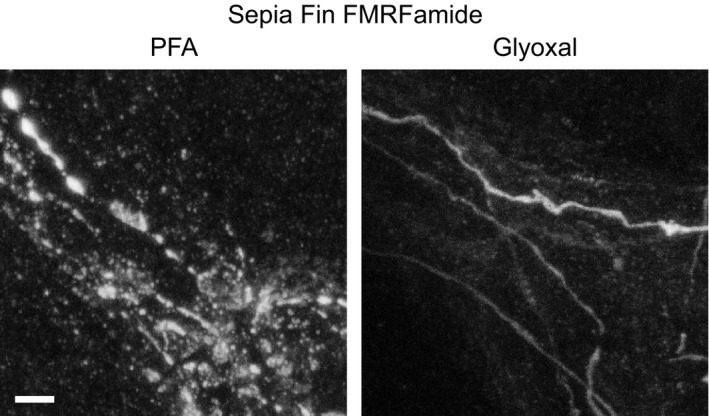
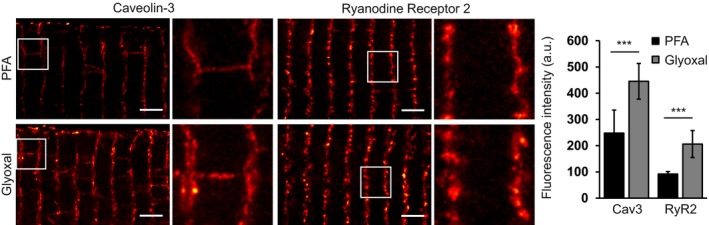
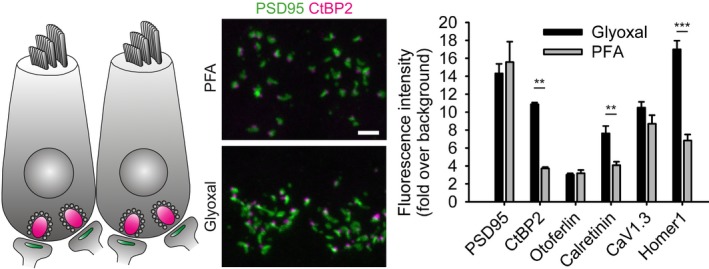
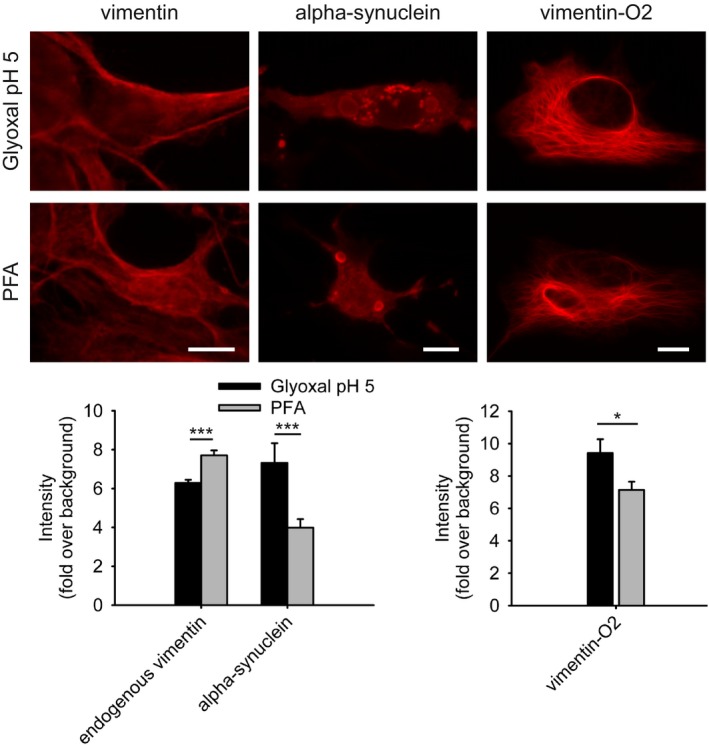
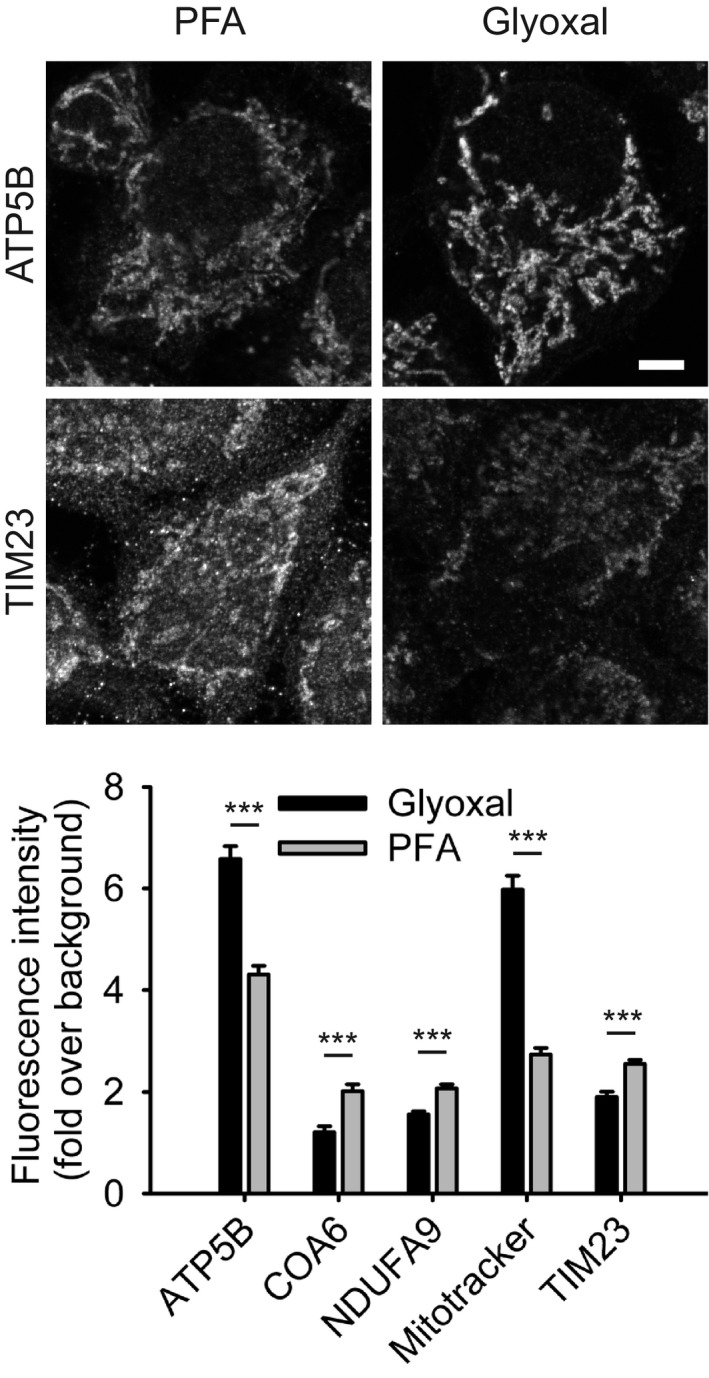
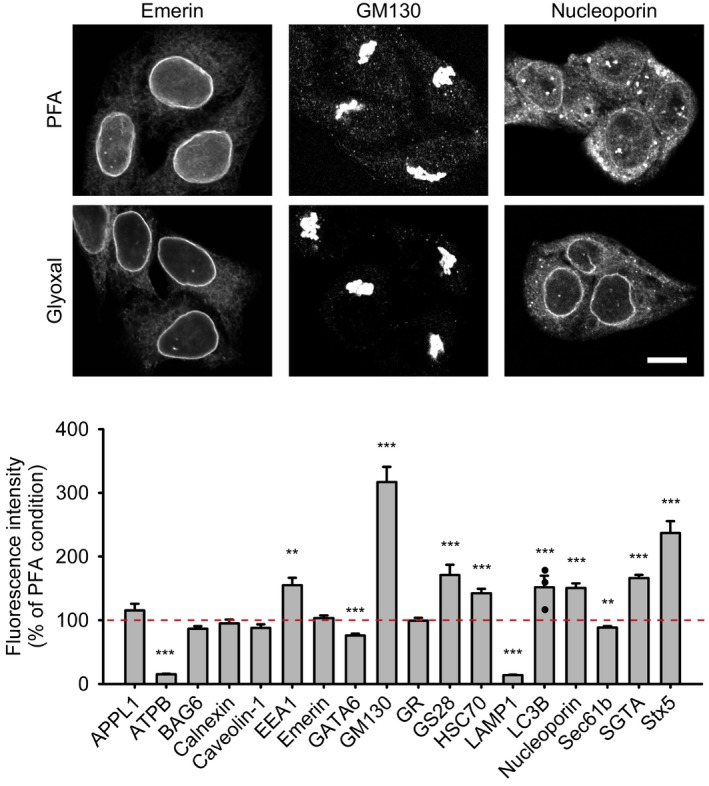
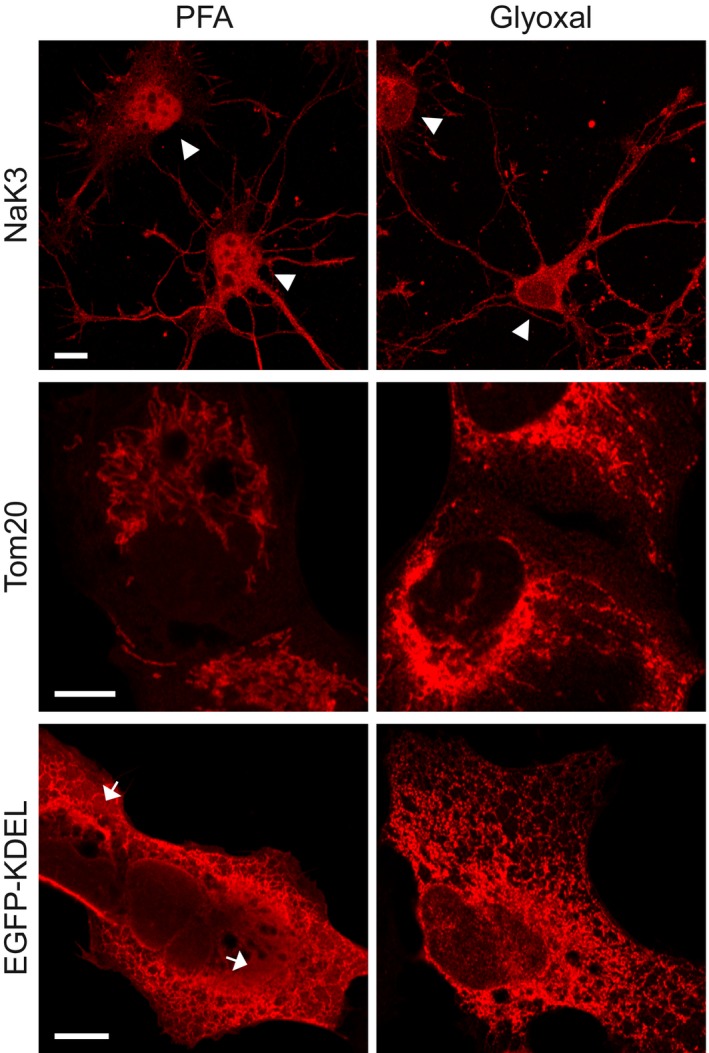
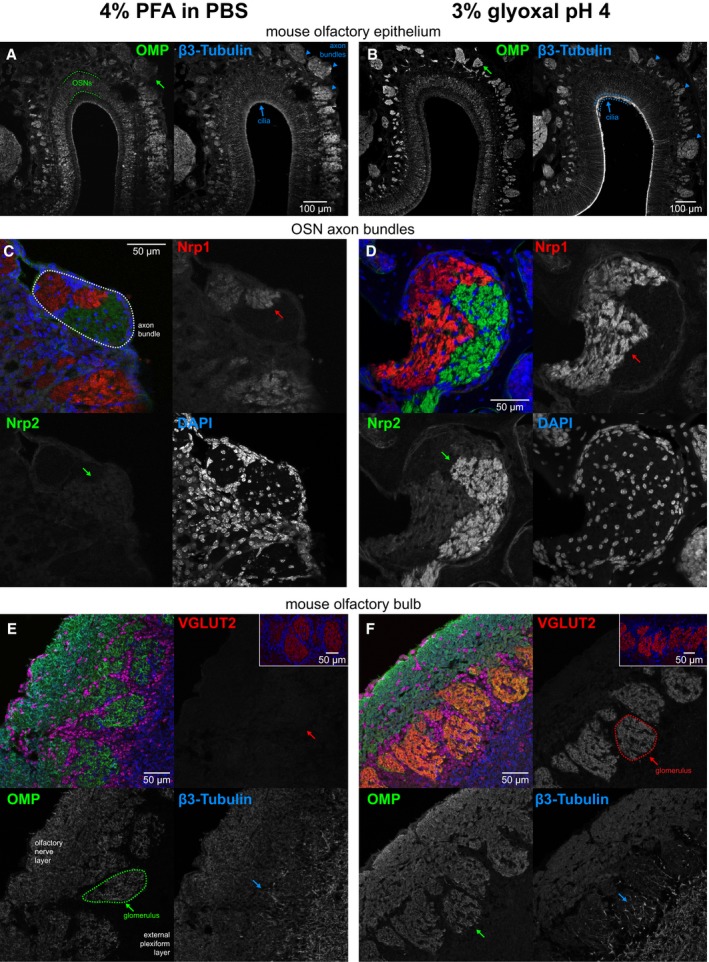
Paraformaldehyde (PFA) is the most commonly used fixative for immunostaining of cells, but has been associated with various problems, ranging from loss of antigenicity to changes in morphology during fixation. We show here that the small dialdehyde glyoxal can successfully replace PFA Despite being less toxic than PFA, and, as most aldehydes, likely usable as a fixative, glyoxal has not yet been systematically tried in modern fluorescence microscopy. Here, we tested and optimized glyoxal fixation and surprisingly found it to be more efficient than PFA-based protocols. Glyoxal acted faster than PFA, cross-linked proteins more effectively, and improved the preservation of cellular morphology. We validated glyoxal fixation in multiple laboratories against different PFA-based protocols and confirmed that it enabled better immunostainings for a majority of the targets. Our data therefore support that glyoxal can be a valuable alternative to PFA for immunostaining.
多聚甲醛(PFA)是最常用于细胞免疫染色的固定剂,但它与各种问题相关,从抗原性丧失到固定过程中的形态变化。我们在这里表明,小的二醛乙二醛可以成功替代 PFA。尽管乙二醛的毒性比 PFA 小,而且像大多数醛一样,可能可作为固定剂使用,但它尚未在现代荧光显微镜中得到系统尝试。在这里,我们测试和优化了乙二醛固定,并令人惊讶地发现它比基于 PFA 的方案更有效。乙二醛的作用比 PFA 更快,更有效地交联蛋白质,并改善了细胞形态的保存。我们针对不同的基于 PFA 的方案在多个实验室中验证了乙二醛固定,并证实它能够使大多数目标的免疫染色效果更好。因此,我们的数据支持乙二醛可以作为免疫染色的 PFA 的一种有价值的替代品。