Centre for Microsystems and Photonics, Electronic and Electrical Engineering, University of Strathclyde, Glasgow, G1 1XW, UK.
Strathclyde Institute of Pharmacy and Biomedical Sciences, University of Strathclyde, Glasgow, G4 0RE, UK.
Sci Rep. 2017 Nov 16;7(1):15692. doi: 10.1038/s41598-017-15950-0.
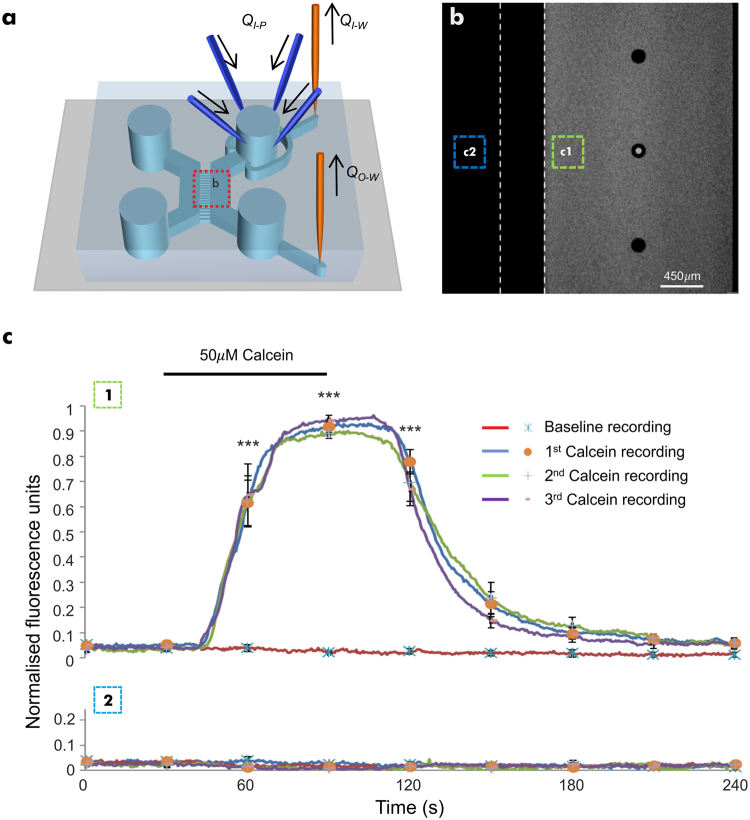
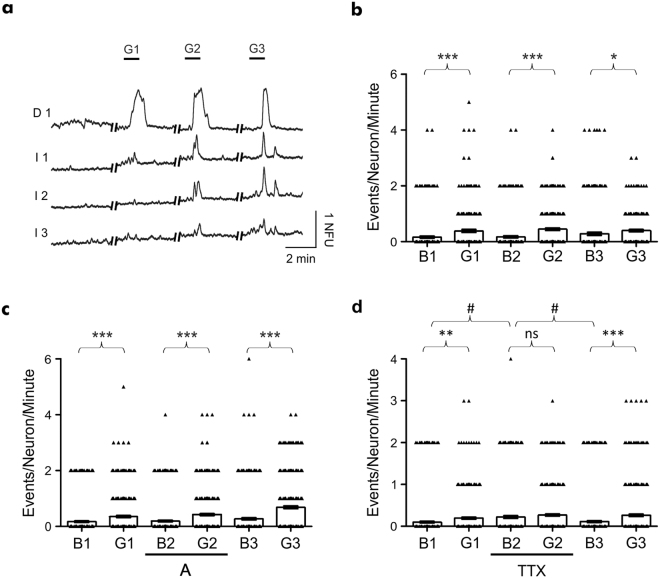
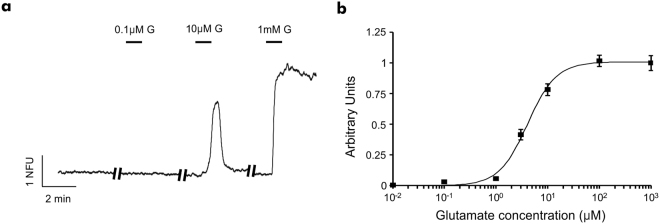
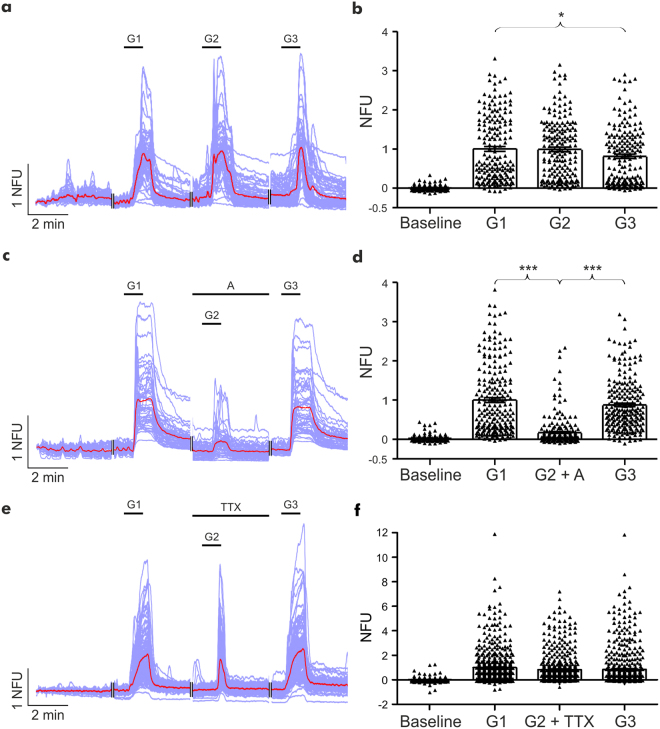
New in vitro technologies that assess neuronal excitability and the derived synaptic activity within a controlled microenvironment would be beneficial for the characterisation of compounds proposed to affect central nervous system (CNS) function. Here, a microfluidic system with computer controlled compound perfusion is presented that offers a novel methodology for the pharmacological profiling of CNS acting compounds based on calcium imaging readouts. Using this system, multiple applications of the excitatory amino acid glutamate (10 nM-1 mM) elicited reproducible and reversible transient increases in intracellular calcium, allowing the generation of a concentration response curve. In addition, the system allows pharmacological investigations to be performed as evidenced by application of glutamatergic receptor antagonists, reversibly inhibiting glutamate-induced increases in intracellular calcium. Importantly, repeated glutamate applications elicited significant increases in the synaptically driven activation of the adjacent, environmentally isolated neuronal network. Therefore, the proposed new methodology will enable neuropharmacological analysis of CNS active compounds whilst simultaneously determining their effect on synaptic connectivity.
新的体外技术可在受控微环境中评估神经元兴奋性和衍生的突触活性,这将有助于对拟影响中枢神经系统 (CNS) 功能的化合物进行特征描述。本文介绍了一种具有计算机控制化合物灌注的微流控系统,该系统为基于钙成像读数的 CNS 作用化合物的药理学分析提供了一种新方法。使用该系统,兴奋性氨基酸谷氨酸(10 nM-1 mM)的多次应用可引发细胞内钙的可重复和可逆的短暂增加,从而生成浓度反应曲线。此外,该系统可进行药理学研究,如应用谷氨酸能受体拮抗剂可可逆地抑制谷氨酸诱导的细胞内钙增加。重要的是,重复的谷氨酸应用会导致相邻环境隔离的神经元网络的突触驱动激活显著增加。因此,拟议的新方法将能够对 CNS 活性化合物进行神经药理学分析,同时确定它们对突触连接的影响。