Hadid Tarik, Fazal Salman, Lister John
Van Elslander Cancer Center, St. John Providence Health System, Grosse Pointe Woods, Michigan, USA.
Division of Hematology and Cellular Therapy, Western Pennsylvania Cancer Institute, West Penn Allegheny Health System, Pittsburgh, Pennsylvania, USA.
World J Oncol. 2014 Apr;5(2):77-80. doi: 10.14740/wjon761w. Epub 2014 May 6.
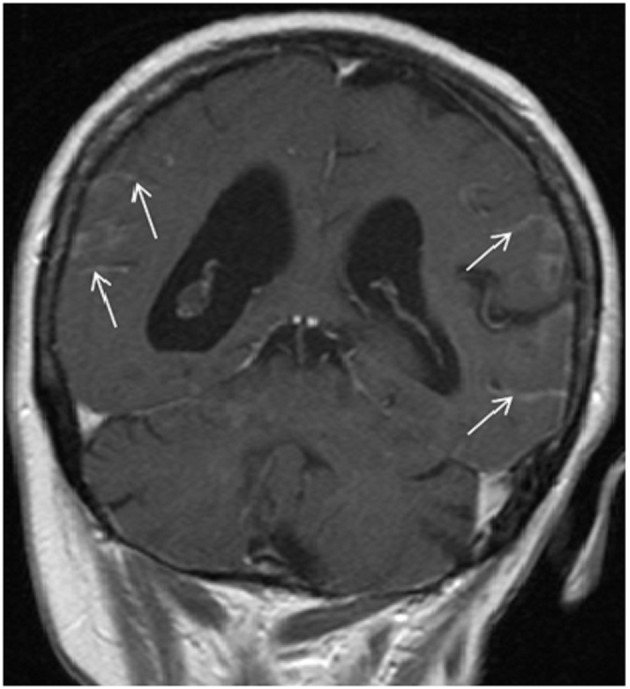
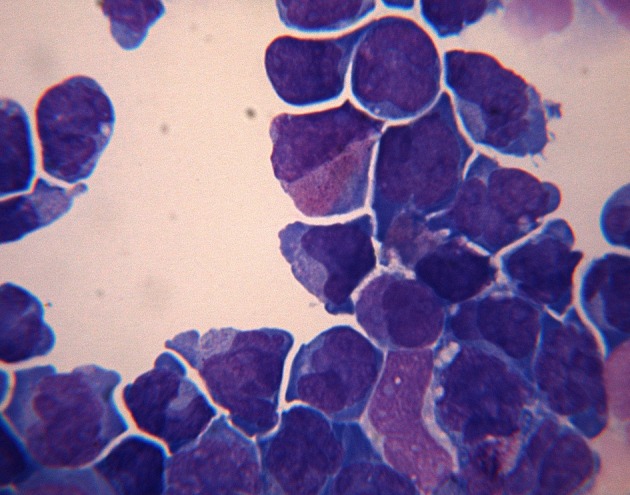
Extramedullary relapse (EMR) of acute promyelocytic leukemia (APL) is a rare entity, with predilection to involve the central nervous system (CNS). Risk factors include leukocytosis of > 10 × 10/L, bcr3 isoform, microgranular variant, age > 45 years and development of subarachnoid hemorrhage (SAH) during induction therapy. We report a case of APL who completed induction and consolidation therapy but subsequently relapsed with leptomeningeal involvement. Retrospectively, we identified several risk factors for EMR in our patient. Interestingly, the use of all-trans retinoic acid has recently been associated with higher risk of EMR possibly due to up-regulation of adhesion molecules on the surface of the leukemic cell, resulting in their passage through the endothelium to extramedullary tissues. However, data remain conflicting in that regard. Although universal CNS prophylaxis has been suggested, the low incidence of EMR among APL patients renders this strategy less attractive. Nonetheless, active surveillance and CNS prophylaxis may be considered in patients at high risk for EMR, particularly in those of SAH during induction therapy. Further research is needed to evaluate the effectiveness and safety of this strategy.
急性早幼粒细胞白血病(APL)的髓外复发(EMR)是一种罕见情况,易累及中枢神经系统(CNS)。危险因素包括白细胞计数>10×10⁹/L、bcr3亚型、微颗粒变异型、年龄>45岁以及诱导治疗期间发生蛛网膜下腔出血(SAH)。我们报告一例APL患者,其完成诱导和巩固治疗后,随后出现软脑膜受累复发。回顾性分析,我们在该患者中确定了几个EMR的危险因素。有趣的是,全反式维甲酸的使用最近与更高的EMR风险相关,这可能是由于白血病细胞表面粘附分子上调,导致它们穿过内皮进入髓外组织。然而,这方面的数据仍存在矛盾。尽管有人建议进行普遍的CNS预防,但APL患者中EMR的低发病率使该策略吸引力降低。尽管如此,对于EMR高危患者,尤其是诱导治疗期间发生SAH的患者,可考虑进行积极监测和CNS预防。需要进一步研究来评估该策略的有效性和安全性。