Hu Lijuan, Cui Rui, Liu Hongyi, Wang Feng
The Graduate School, Tianjin Medical University, Tianjin, China.
The Institute of Integrative Medicine for Acute Abdominal Diseases, Nankai Hospital, Tianjin, China.
Oncotarget. 2017 Sep 27;8(50):88008-88020. doi: 10.18632/oncotarget.21330. eCollection 2017 Oct 20.
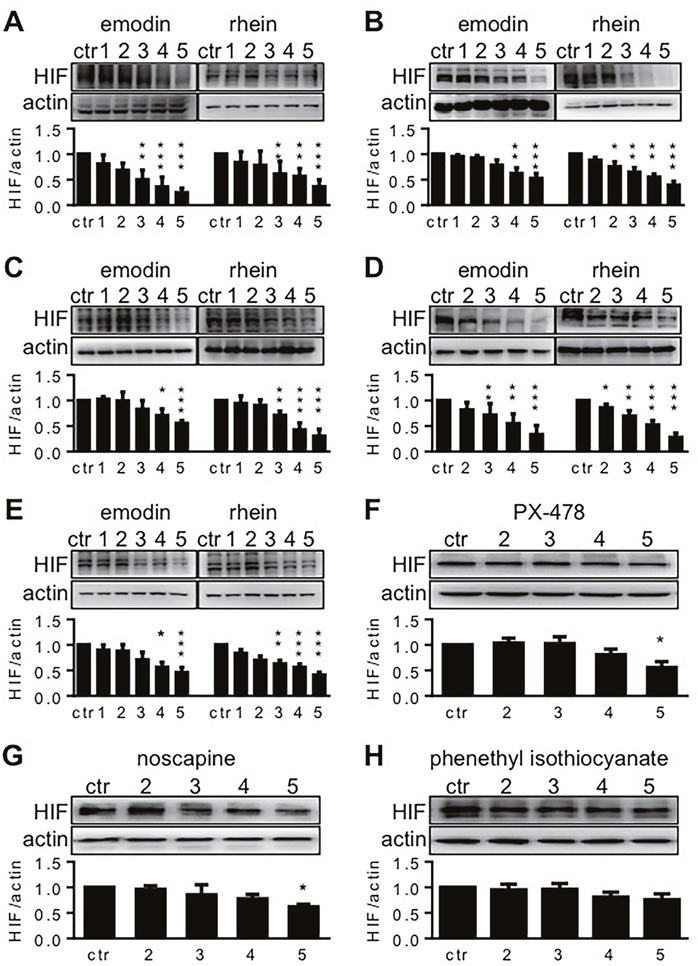
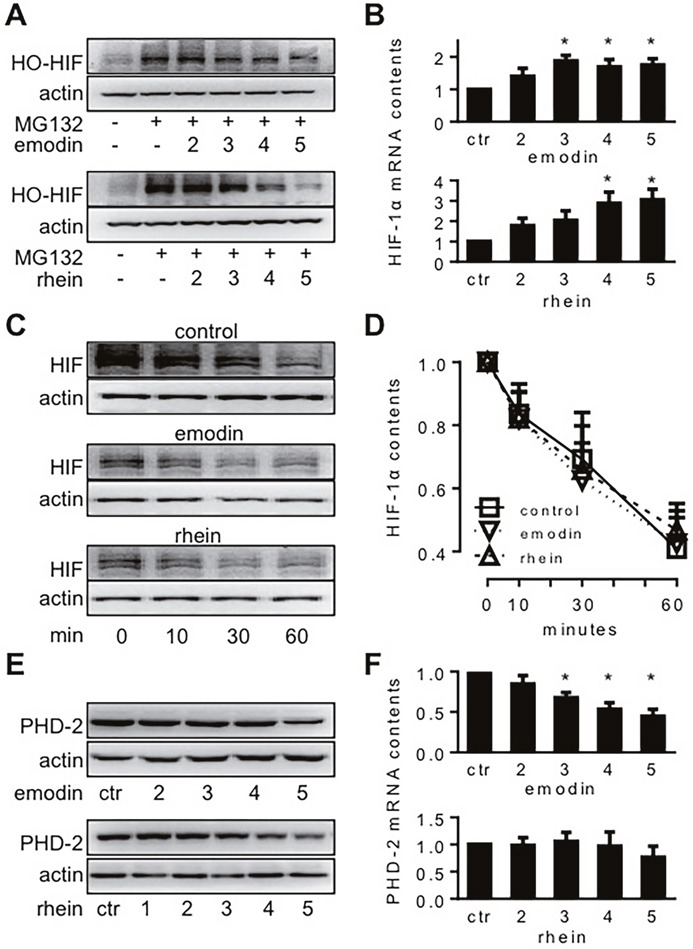
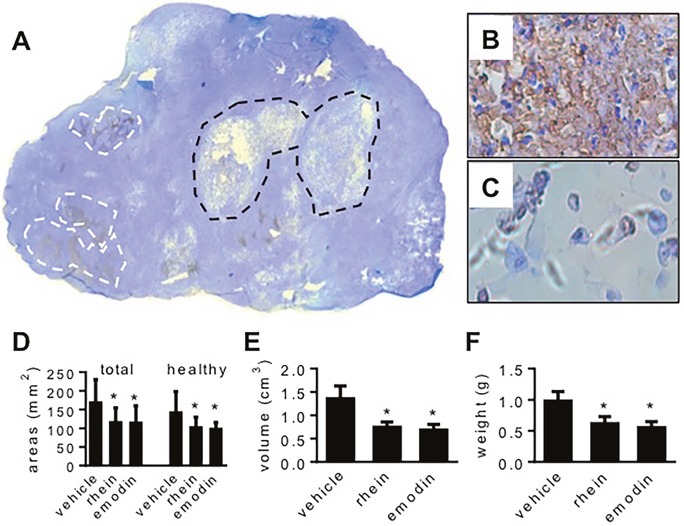
The transcription factor hypoxia-inducible factor-1 (HIF-1) consists of oxygen-sensitive HIF-1α and constitutive HIF-1β. HIF-1α is undetectable in normal cells, but cancer cells frequently express HIF-1α to support their growth, angiogenesis, and high glycolysis (also known as the Warburg effect). The Warburg effect in cancer cells increases energy expenditure and thus participates in cancer-induced metabolic disorder, cancer cachexia. In the present study, we investigated whether two components of Rheum palmatum, emodin and rhein, inhibited HIF-1α expression in human pancreatic cancer cells and whether the inhibiting effect, if any, attenuated cancer cachexia. Using Western blotting, we demonstrated that emodin and rhein decreased HIF-1α expression in MiaPaCa2 and four other human pancreatic cancer cell lines. We also examined HIF-1α expression when MiaPaCa2 cells were exposed to PX-478, noscapine, and phenethyl isothiocyanate, as these compounds were known to inhibit HIF-1α expression in different cancer cells. PX-478 and noscapine inhibited HIF-1α expression to a less extent than emodin and rhein, and phenethyl isothiocyanate did not inhibit HIF-1α expression in tested concentrations. We obtained evidence that emodin and rhein decreased HIF-1α by decreasing its biosynthesis but not gene transcription or protein stability. When MiaPaCa2 cells were implanted in athymic mice, emodin and rhein inhibited cancer-cell growth and HIF-1α expression. In these athymic mice, emodin and rhein also attenuated two pathological constituents of cancer cachexia, namely high hepatic gluconeogenesis and skeletal-muscle proteolysis. In conclusion, emodin and rhein decrease pancreatic cancer cell's growth and HIF-1α expression and attenuate cancer cachexia in the athymic mice carrying the cancer cells.
转录因子缺氧诱导因子-1(HIF-1)由氧敏感的HIF-1α和组成型的HIF-1β组成。HIF-1α在正常细胞中无法检测到,但癌细胞经常表达HIF-1α以支持其生长、血管生成和高糖酵解(也称为瓦伯格效应)。癌细胞中的瓦伯格效应增加了能量消耗,从而参与了癌症诱导的代谢紊乱,即癌症恶病质。在本研究中,我们调查了大黄的两种成分大黄素和大黄酸是否能抑制人胰腺癌细胞中HIF-1α的表达,以及这种抑制作用(如果有的话)是否能减轻癌症恶病质。通过蛋白质印迹法,我们证明大黄素和大黄酸降低了MiaPaCa2和其他四种人胰腺癌细胞系中HIF-1α的表达。我们还检测了MiaPaCa2细胞暴露于PX-478、那可丁和苯乙基异硫氰酸酯时HIF-1α的表达,因为已知这些化合物能抑制不同癌细胞中HIF-1α的表达。PX-478和那可丁对HIF-1α表达的抑制程度低于大黄素和大黄酸,并且苯乙基异硫氰酸酯在测试浓度下未抑制HIF-1α的表达。我们获得的证据表明,大黄素和大黄酸通过减少HIF-1α的生物合成而不是基因转录或蛋白质稳定性来降低HIF-1α的水平。当将MiaPaCa2细胞植入无胸腺小鼠体内时,大黄素和大黄酸抑制了癌细胞的生长和HIF-1α的表达。在这些无胸腺小鼠中,大黄素和大黄酸还减轻了癌症恶病质的两个病理成分,即高肝糖异生和骨骼肌蛋白水解。总之,大黄素和大黄酸降低了胰腺癌细胞的生长和HIF-1α的表达,并减轻了携带癌细胞的无胸腺小鼠的癌症恶病质。