Akkol Esra Küpeli, Tatlı Iffet Irem, Karatoprak Gökçe Şeker, Ağar Osman Tuncay, Yücel Çiğdem, Sobarzo-Sánchez Eduardo, Capasso Raffaele
Department of Pharmacognosy, Faculty of Pharmacy, Gazi University, 06330 Ankara, Turkey.
Department of Pharmaceutical Botany, Faculty of Pharmacy, Hacettepe University, 06100 Ankara, Turkey.
Cancers (Basel). 2021 May 31;13(11):2733. doi: 10.3390/cancers13112733.
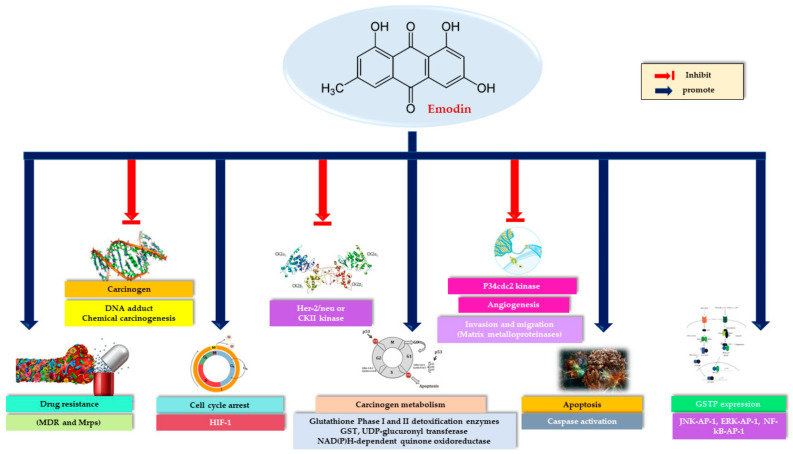
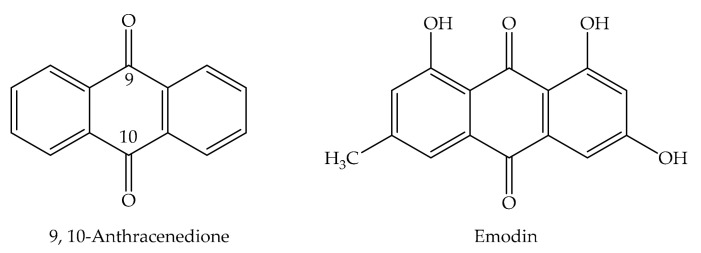
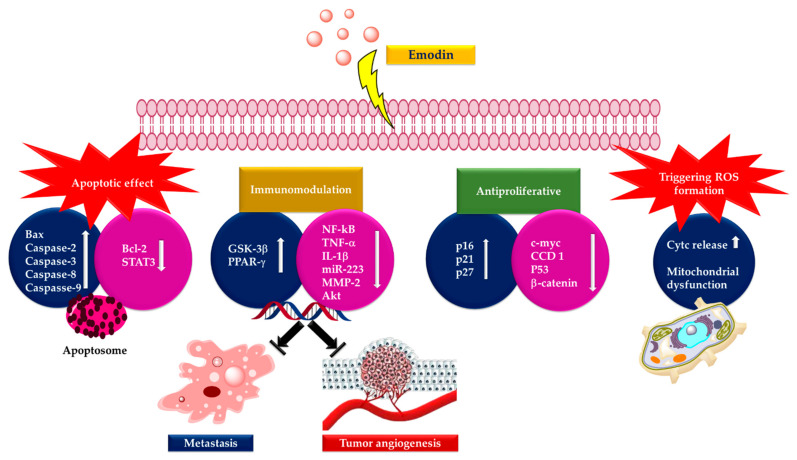
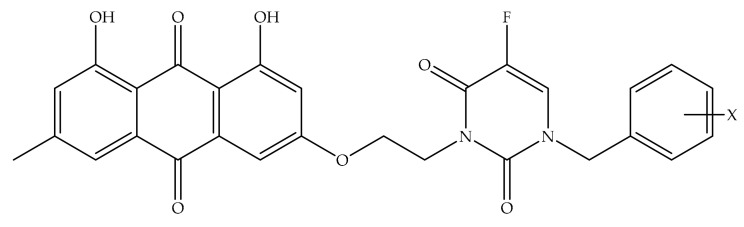
Many anticancer active compounds are known to have the capacity to destroy pathologically proliferating cancer cells in the body, as well as to destroy rapidly proliferating normal cells. Despite remarkable advances in cancer research over the past few decades, the inclusion of natural compounds in researches as potential drug candidates is becoming increasingly important. However, the perception that the natural is reliable is an issue that needs to be clarified. Among the various chemical classes of natural products, anthraquinones have many biological activities and have also been proven to exhibit a unique anticancer activity. Emodin, an anthraquinone derivative, is a natural compound found in the roots and rhizomes of many plants. The anticancer property of emodin, a broad-spectrum inhibitory agent of cancer cells, has been detailed in many biological pathways. In cancer cells, these molecular mechanisms consist of suppressing cell growth and proliferation through the attenuation of oncogenic growth signaling, such as protein kinase B (AKT), mitogen-activated protein kinase (MAPK), HER-2 tyrosine kinase, Wnt/-catenin, and phosphatidylinositol 3-kinase (PI3K). However, it is known that emodin, which shows toxicity to cancer cells, may cause kidney toxicity, hepatotoxicity, and reproductive toxicity especially at high doses and long-term use. At the same time, studies of emodin, which has poor oral bioavailability, to transform this disadvantage into an advantage with nano-carrier systems reveal that natural compounds are not always directly usable compounds. Consequently, this review aimed to shed light on the anti-proliferative and anti-carcinogenic properties of emodin, as well as its potential toxicities and the advantages of drug delivery systems on bioavailability.
已知许多抗癌活性化合物能够破坏体内病理性增殖的癌细胞,同时也会破坏快速增殖的正常细胞。尽管在过去几十年癌症研究取得了显著进展,但将天然化合物纳入潜在药物候选物的研究正变得越来越重要。然而,认为天然的就是可靠的这种观念是一个需要澄清的问题。在各类天然产物化学类别中,蒽醌具有多种生物活性,并且已被证明具有独特的抗癌活性。大黄素是一种蒽醌衍生物,是在许多植物的根和根茎中发现的天然化合物。大黄素作为一种癌细胞广谱抑制剂的抗癌特性,已在许多生物学途径中得到详细阐述。在癌细胞中,这些分子机制包括通过减弱致癌生长信号来抑制细胞生长和增殖,如蛋白激酶B(AKT)、丝裂原活化蛋白激酶(MAPK)、HER-2酪氨酸激酶、Wnt/β-连环蛋白和磷脂酰肌醇3激酶(PI3K)。然而,已知对癌细胞具有毒性的大黄素,尤其是在高剂量和长期使用时,可能会导致肾毒性、肝毒性和生殖毒性。同时,对口服生物利用度较差的大黄素进行研究,以利用纳米载体系统将这一缺点转化为优势,结果表明天然化合物并非总是直接可用的化合物。因此,本综述旨在阐明大黄素的抗增殖和抗癌特性,以及其潜在毒性和药物递送系统对生物利用度的优势。