Department of Immunology, University of Pittsburgh School of Medicine, Pittsburgh, Pa; RiMED Foundation, Palermo, Italy.
Department of Medicine, Division of Rheumatology and Clinical Immunology, University of Pittsburgh School of Medicine, Pittsburgh, Pa.
J Allergy Clin Immunol. 2018 Jul;142(1):109-119.e6. doi: 10.1016/j.jaci.2017.10.029. Epub 2017 Nov 15.
IL-13-producing CD8 T cells have been implicated in the pathogenesis of type 2-driven inflammatory human conditions. We have shown that CD8IL-13 cells play a critical role in cutaneous fibrosis, the most characteristic feature of systemic sclerosis (SSc; scleroderma). However, the molecular mechanisms underlying production of IL-13 and other type 2 cytokines by CD8 T cells remain unclear.
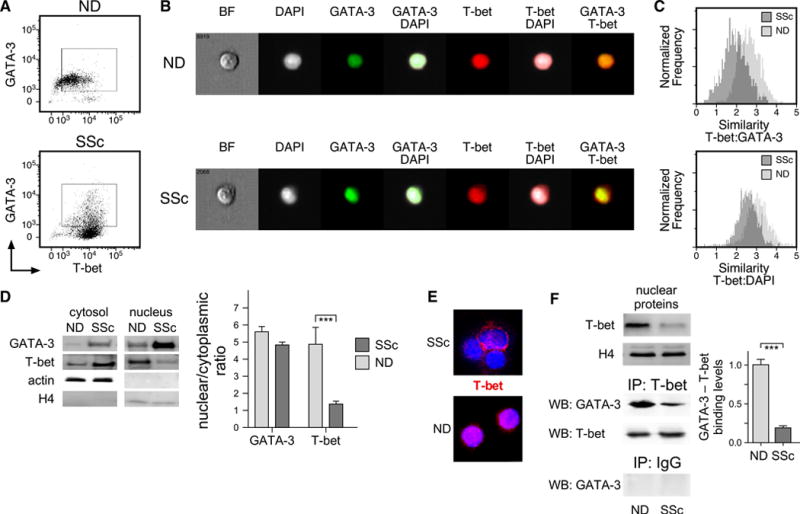
We sought to establish the molecular basis of IL-13 overproduction by CD8 T cells from patients with SSc, focusing on T-bet modulation of GATA-3 activity, which we showed to underlie IL-13 overproduction in CD8IL-13 cells from patients with SSc.
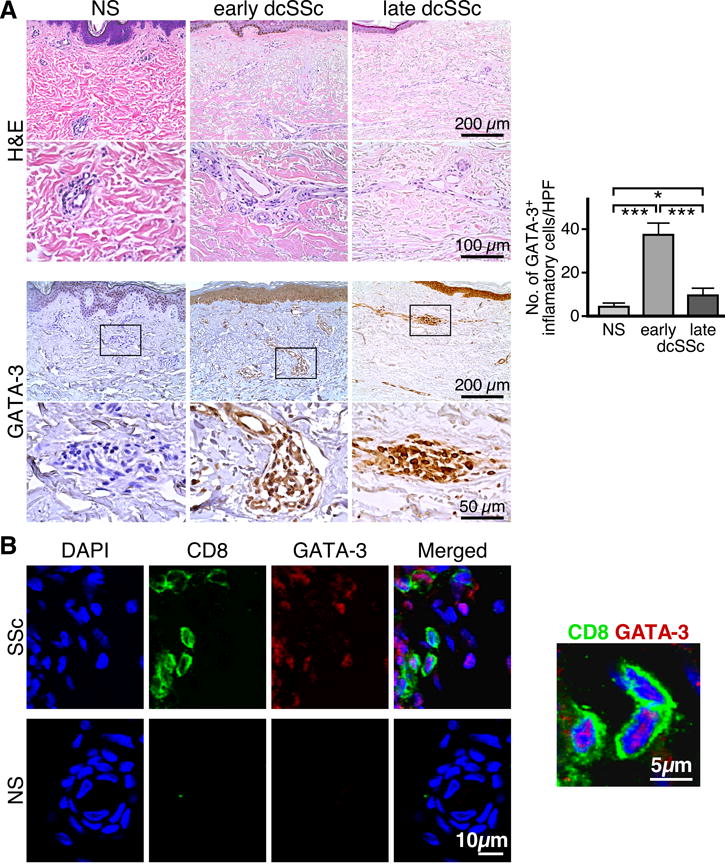
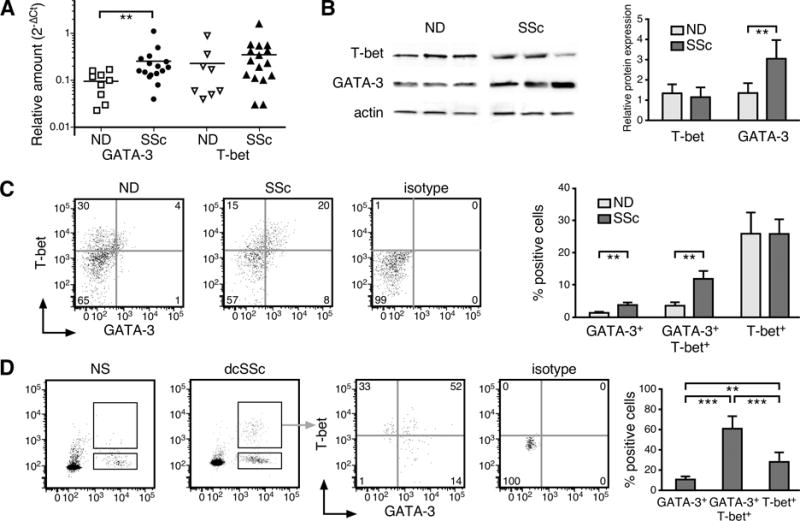
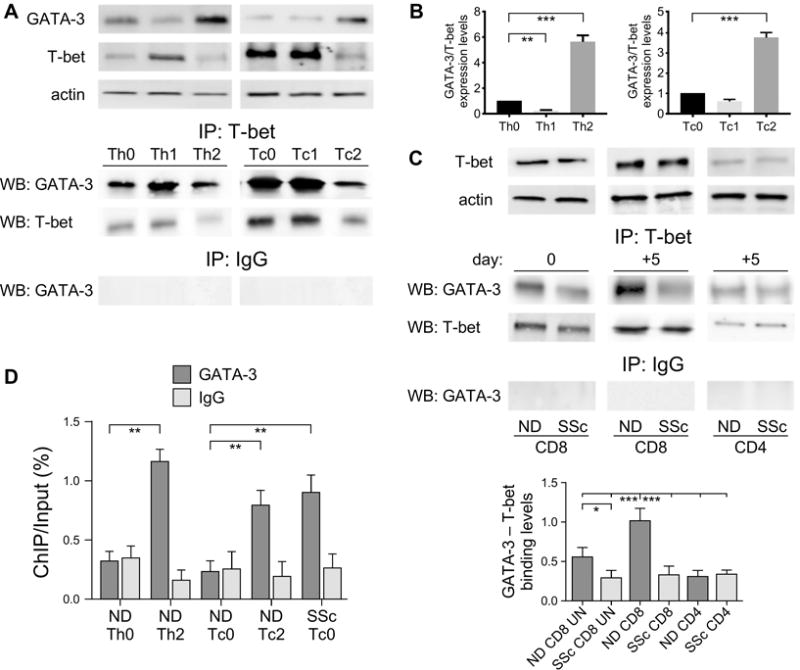
Biochemical and biophysical methods were used to determine the expression and association of T-bet, GATA-3, and regulatory factors in CD8 T cells isolated from the blood and lesional skin of patients with SSc with severe skin thickening. Chromatin immunoprecipitation analysis determined GATA-3 binding to the IL-13 promoter. ImageStream analysis and confocal microscopy visualized the subcellular localization of T-bet and GATA-3. Transcript levels were decreased by small interfering RNAs.
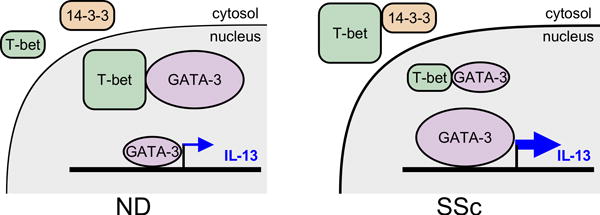
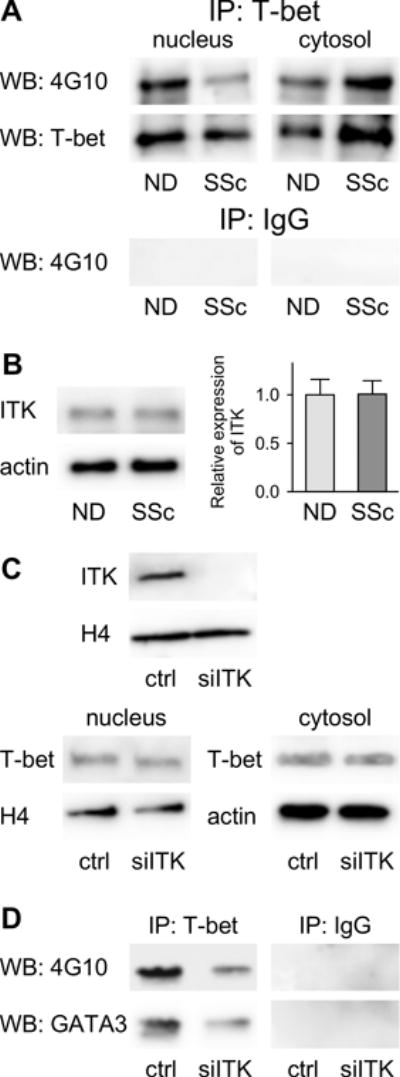
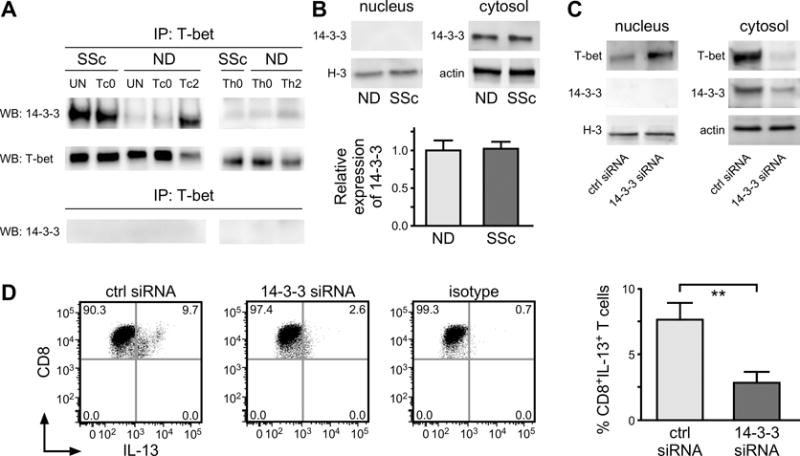
Interaction of T-bet with the adaptor protein 14-3-3z in the cytosol of CD8 T cells from patients with SSc reduces T-bet translocation into the nucleus and its ability to associate with GATA-3, allowing more GATA-3 to bind to the IL-13 promoter and inducing IL-13 upregulation. Strikingly, we show that this mechanism is also found during type 2 polarization of CD8 T cells (T2) from healthy donors.
We identified a novel molecular mechanism underlying type 2 cytokine production by CD8 T cells, revealing a more complete picture of the complex pathway leading to SSc disease pathogenesis.
产生白细胞介素-13(IL-13)的 CD8 T 细胞被认为与 2 型驱动的炎症性人类疾病的发病机制有关。我们已经表明,CD8IL-13 细胞在皮肤纤维化中起关键作用,皮肤纤维化是全身性硬皮病(SSc;硬皮病)的最典型特征。然而,CD8 T 细胞产生白细胞介素-13 和其他 2 型细胞因子的分子机制仍不清楚。
我们试图确定 SSc 患者 CD8 T 细胞过度产生白细胞介素-13 的分子基础,重点关注 T-bet 对 GATA-3 活性的调节,我们之前已经证明这是 SSc 患者 CD8IL-13 细胞过度产生白细胞介素-13 的基础。
使用生化和生物物理方法来确定从患有严重皮肤增厚的 SSc 患者的血液和病变皮肤中分离出的 CD8 T 细胞中 T-bet、GATA-3 和调节因子的表达和相互作用。染色质免疫沉淀分析确定了 GATA-3 与白细胞介素-13 启动子的结合。ImageStream 分析和共聚焦显微镜观察 T-bet 和 GATA-3 的亚细胞定位。通过小干扰 RNA 降低转录水平。
在 SSc 患者的 CD8 T 细胞的细胞质中,T-bet 与衔接蛋白 14-3-3z 的相互作用会减少 T-bet 向细胞核的易位及其与 GATA-3 结合的能力,从而使更多的 GATA-3 结合到白细胞介素-13 启动子上,并诱导白细胞介素-13 的上调。引人注目的是,我们发现这种机制也存在于健康供体的 CD8 T 细胞(T2)的 2 型极化过程中。
我们确定了 CD8 T 细胞产生 2 型细胞因子的新分子机制,揭示了导致 SSc 发病机制的复杂途径的更完整图景。