Meng Qingtao, Wang Shizhi, Tang Weiyan, Wu Shenshen, Gao Na, Zhang Chengcheng, Cao Xiaoli, Li Xiaobo, Zhang Zhengdong, Aschner Michael, Jin Hua, Huang Yue, Chen Rui
Key Laboratory of Environmental Medicine Engineering, Ministry of Education, School of Public Health, Southeast University, Nanjing, China.
Medical Oncology, Jiangsu Cancer Hospital, Nanjing, China.
Oncotarget. 2017 Sep 16;8(49):86217-86226. doi: 10.18632/oncotarget.21040. eCollection 2017 Oct 17.
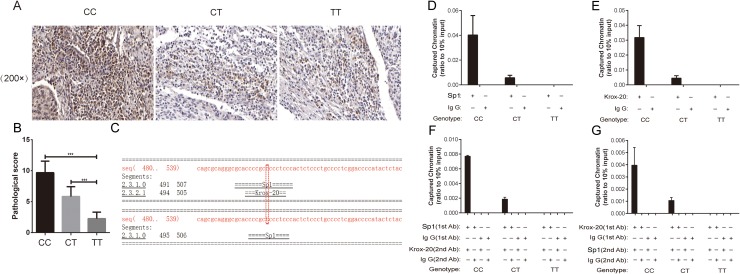
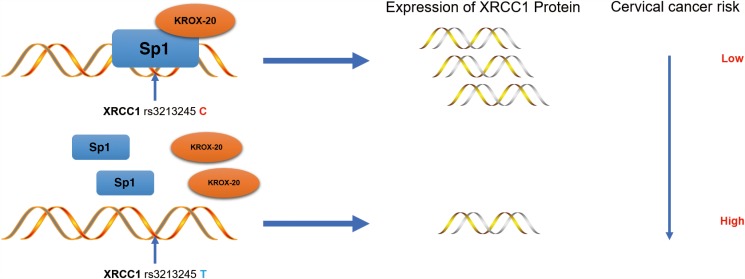
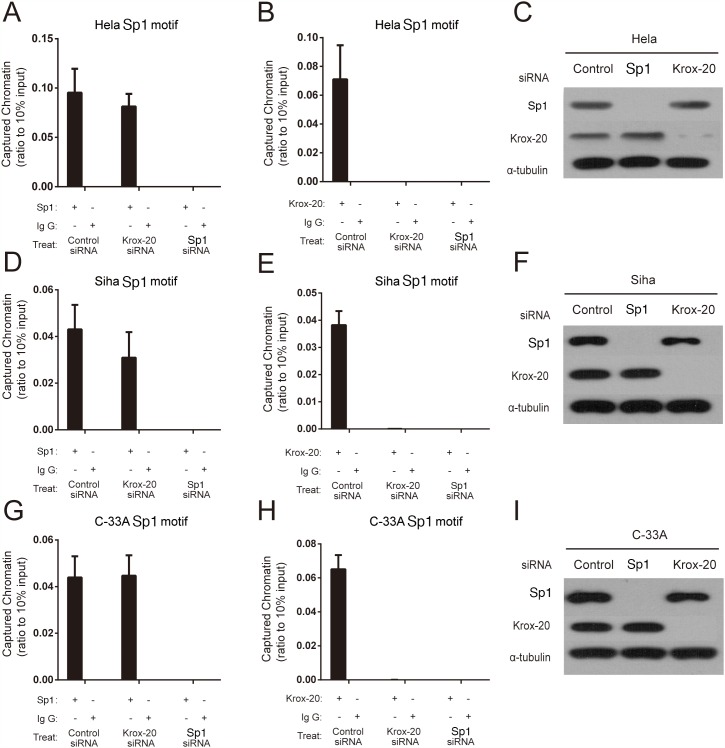
Cervical cancer is the second leading cause of mortality among women. Impairment of the base excision repair (BER) pathway is one of the major causes of the initiation and progression of cervical cancer. However, whether the polymorphisms of the BER pathway components (i.e., , and ) can affect the risk of cervical cancer remains unknown. Herein, we applied a hospital-based case-control study covering two independent cohorts and a subsequent functional assay to determine the roles of the single nucleotide polymorphisms (SNPs) of the BER pathway genes in cervical cancer. Results indicated that the rs3213245 (-77TC) TT genotype was associated with an increased risk of cervical cancer. The immunohistochemistry assay showed that XRCC1 protein expression levels were upregulated in cervical cancer patients with the rs3213245 CC genotype compared with the CT or TT genotypes. Further, results from ChIP assay showed that Sp1 could bind to the -77 site and that the rs3213245 C genotype promoted the binding of Sp1 to the promoter. Moreover, ChIP/Re-ChIP assays revealed that transcription factor Krox-20 was recruited to the XRCC1 rs3213245 mutation region and regulated the transcription of the gene by interacting with Sp1, ultimately mediated cervical cancer development. In summary, the findings indicated that the functional SNP rs3213245 was associated with the risk of cervical cancer based on the Sp1/Krox-20 switch.
宫颈癌是女性死亡的第二大主要原因。碱基切除修复(BER)途径受损是宫颈癌发生和发展的主要原因之一。然而,BER途径成分(即 、 和 )的多态性是否会影响宫颈癌风险仍不清楚。在此,我们进行了一项基于医院的病例对照研究,涵盖两个独立队列,并进行了后续功能分析,以确定BER途径基因单核苷酸多态性(SNP)在宫颈癌中的作用。结果表明,rs3213245(-77TC)的TT基因型与宫颈癌风险增加相关。免疫组织化学分析显示,与CT或TT基因型相比,rs3213245 CC基因型的宫颈癌患者中XRCC1蛋白表达水平上调。此外,染色质免疫沉淀(ChIP)分析结果表明,Sp1可以结合到-77位点,且rs3213245 C基因型促进Sp1与 启动子的结合。此外,ChIP/再ChIP分析显示,转录因子Krox-20被招募到XRCC1 rs3213245突变区域,并通过与Sp1相互作用调节 基因的转录,最终介导宫颈癌的发展。总之,研究结果表明,基于Sp1/Krox-20开关,功能性SNP rs3213245与宫颈癌风险相关。