University of Rochester.
University of Connecticut.
J Cogn Neurosci. 2018 Mar;30(3):267-280. doi: 10.1162/jocn_a_01208. Epub 2017 Nov 21.
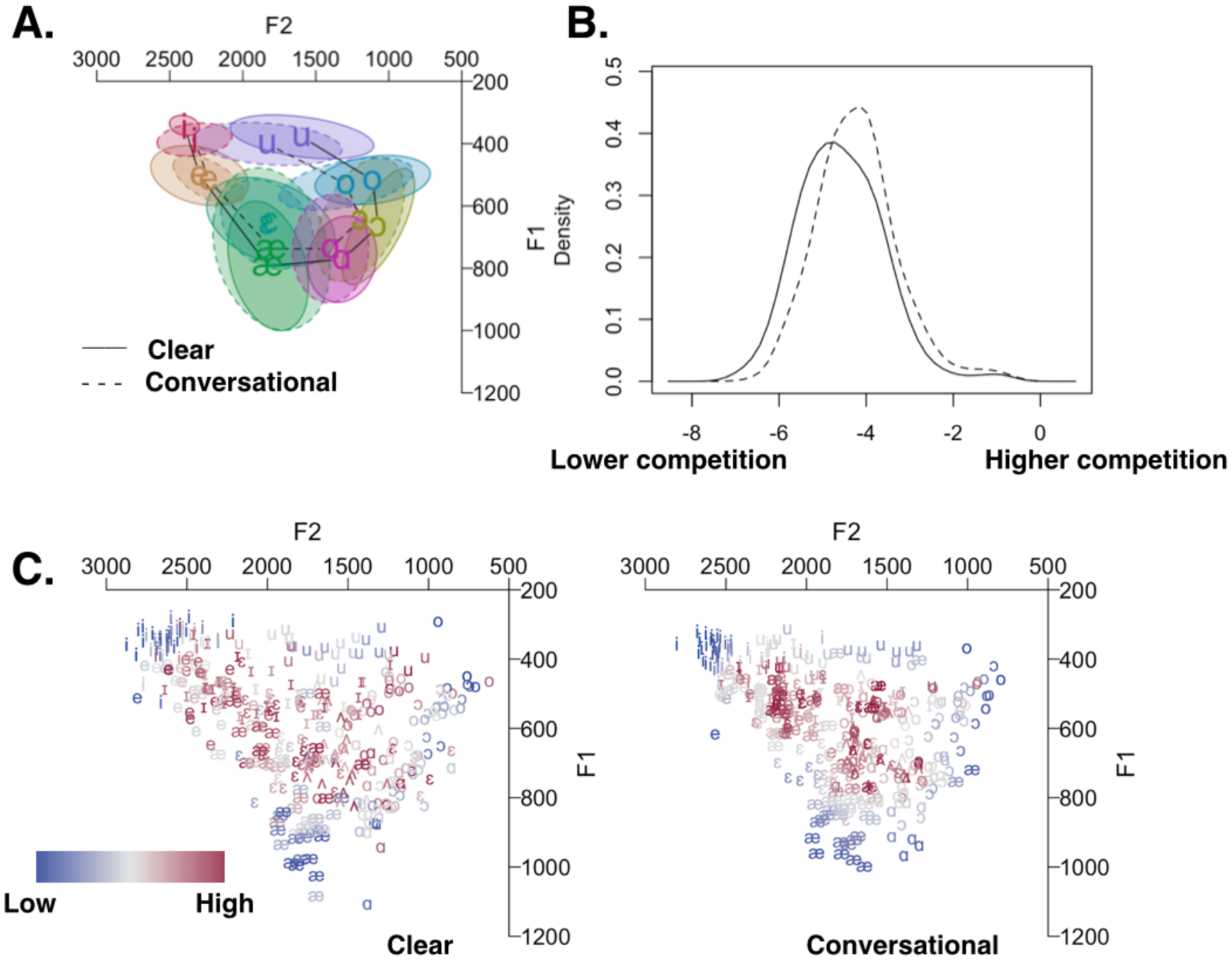
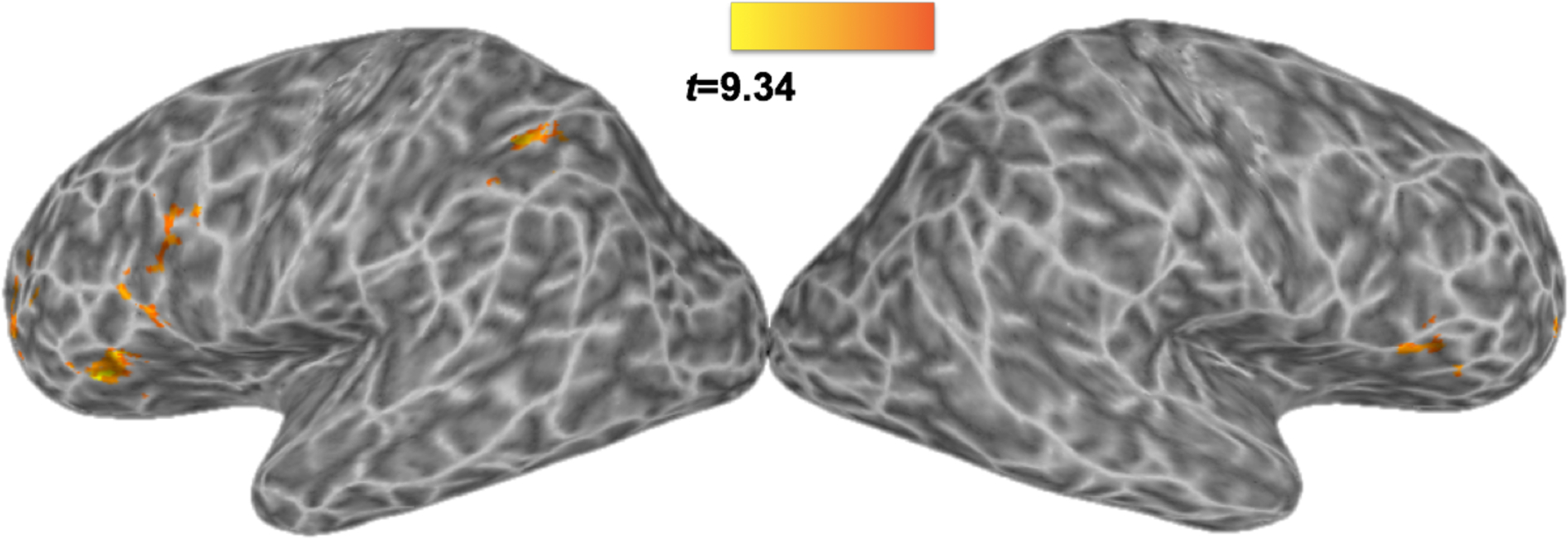
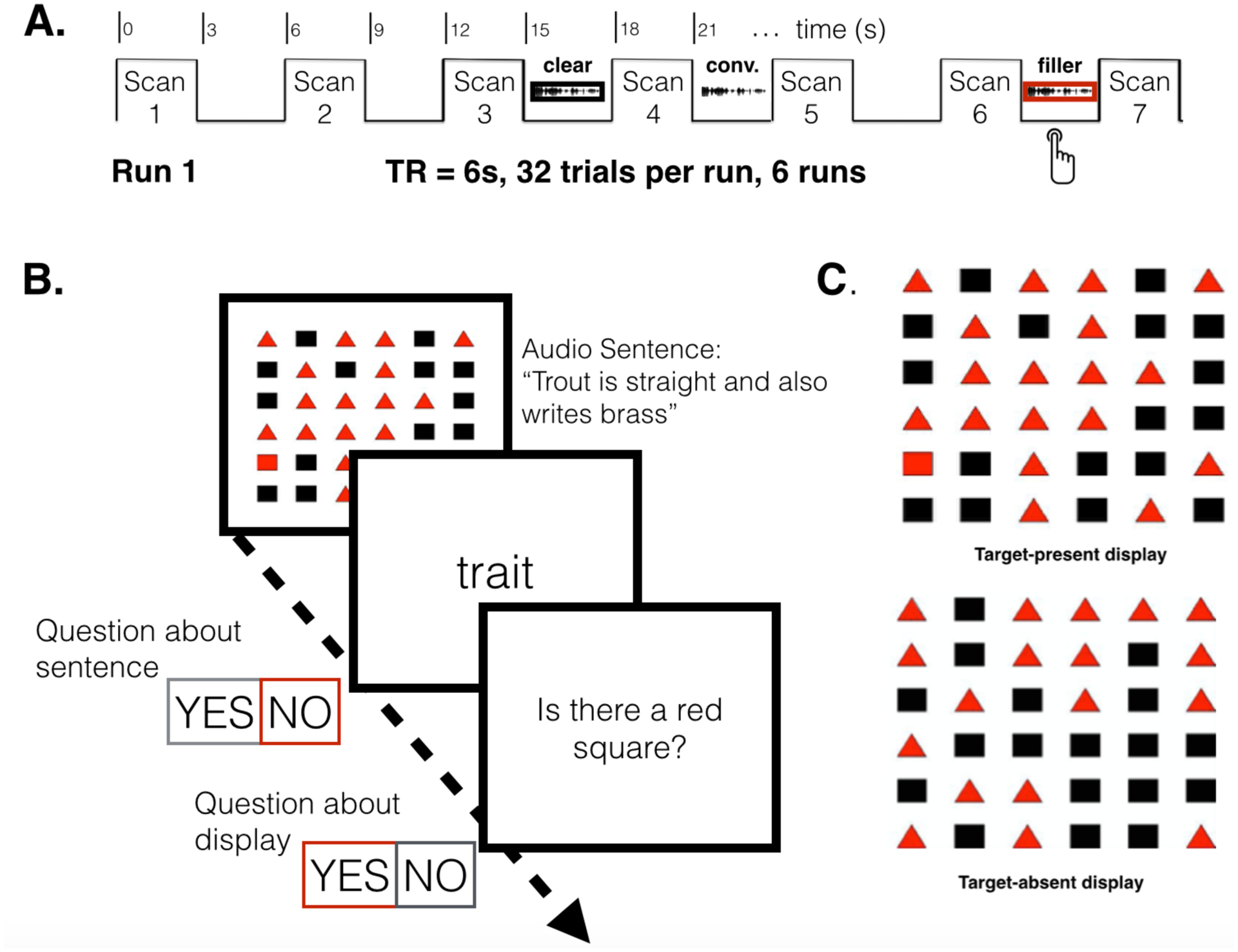
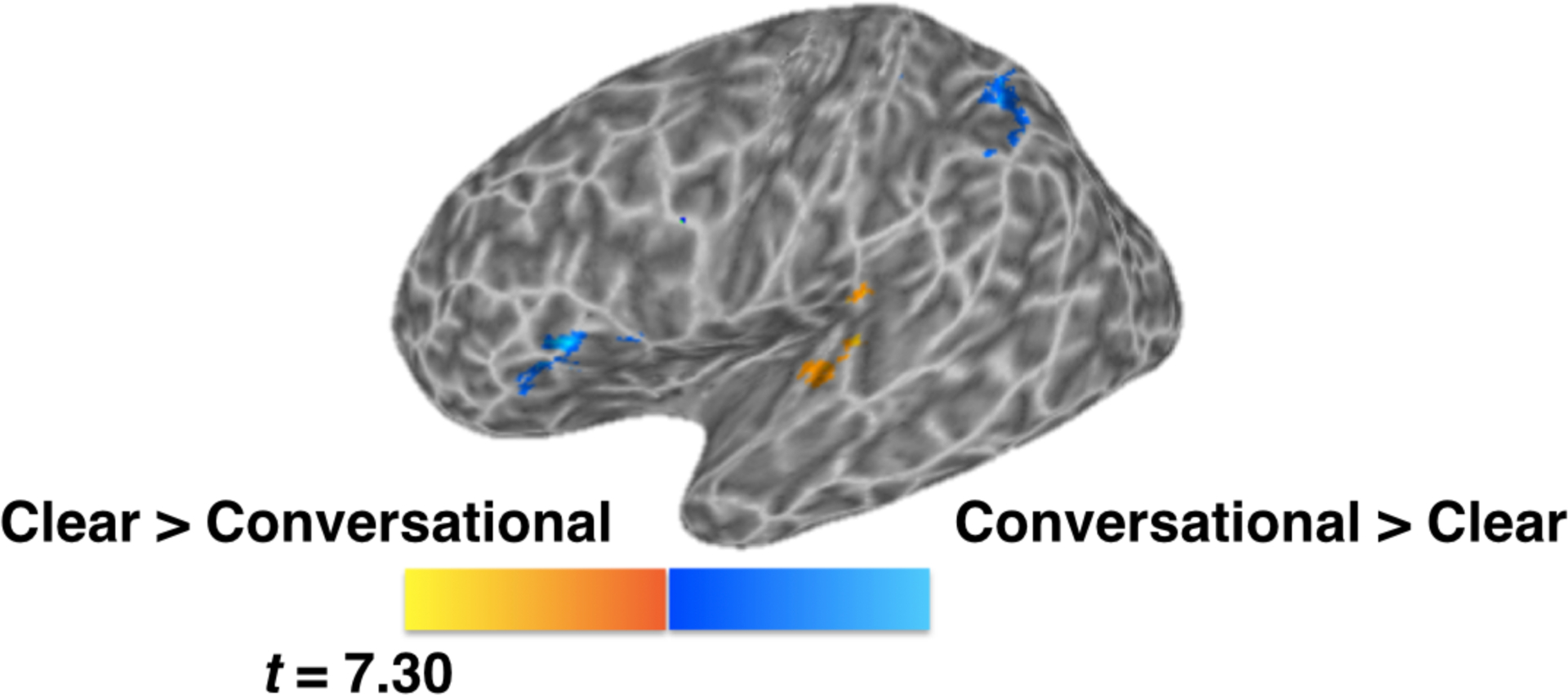
The speech signal is rife with variations in phonetic ambiguity. For instance, when talkers speak in a conversational register, they demonstrate less articulatory precision, leading to greater potential for confusability at the phonetic level compared with a clear speech register. Current psycholinguistic models assume that ambiguous speech sounds activate more than one phonological category and that competition at prelexical levels cascades to lexical levels of processing. Imaging studies have shown that the left inferior frontal gyrus (LIFG) is modulated by phonetic competition between simultaneously activated categories, with increases in activation for more ambiguous tokens. Yet, these studies have often used artificially manipulated speech and/or metalinguistic tasks, which arguably may recruit neural regions that are not critical for natural speech recognition. Indeed, a prominent model of speech processing, the dual-stream model, posits that the LIFG is not involved in prelexical processing in receptive language processing. In the current study, we exploited natural variation in phonetic competition in the speech signal to investigate the neural systems sensitive to phonetic competition as listeners engage in a receptive language task. Participants heard nonsense sentences spoken in either a clear or conversational register as neural activity was monitored using fMRI. Conversational sentences contained greater phonetic competition, as estimated by measures of vowel confusability, and these sentences also elicited greater activation in a region in the LIFG. Sentence-level phonetic competition metrics uniquely correlated with LIFG activity as well. This finding is consistent with the hypothesis that the LIFG responds to competition at multiple levels of language processing and that recruitment of this region does not require an explicit phonological judgment.
语音信号中存在大量的语音歧义变化。例如,当说话者以会话方式说话时,他们的发音精度较低,与清晰语音相比,在语音层面上更有可能产生混淆。当前的心理语言学模型假设,模糊的语音会激活一个以上的语音类别,并且在词汇前水平上的竞争会级联到词汇处理水平。成像研究表明,左额下回(LIFG)会受到同时激活的类别之间语音竞争的调节,对于更模糊的语音,激活程度会增加。然而,这些研究经常使用人为操纵的语音和/或元语言任务,这可能会招募对于自然语音识别不重要的神经区域。事实上,一个突出的语音处理模型,即双流模型,假设 LIFG 不参与接受性语言处理中的词汇前处理。在当前的研究中,我们利用语音信号中语音竞争的自然变化,在参与者使用 fMRI 监测神经活动时,研究了对语音竞争敏感的神经系统,以进行接受性语言任务。参与者听到清晰或会话方式说出的无意义句子。会话句子包含更大的语音竞争,这可以通过元音混淆度的度量来估计,并且这些句子也会在 LIFG 中的一个区域引起更大的激活。句子级别的语音竞争指标与 LIFG 活动也具有独特的相关性。这一发现与 LIFG 对语言处理多个层次的竞争做出反应的假设一致,并且该区域的招募不需要明确的语音判断。