Kurihara Misuzu, Otsuka Kai, Matsubara Shin, Shiraishi Akira, Satake Honoo, Kimura Atsushi P
Graduate School of Life Science, Hokkaido University, Sapporo, Japan.
Bioorganic Research Institute, Suntory Foundation for Life Sciences, Kyoto, Japan.
Front Endocrinol (Lausanne). 2017 Nov 2;8:299. doi: 10.3389/fendo.2017.00299. eCollection 2017.
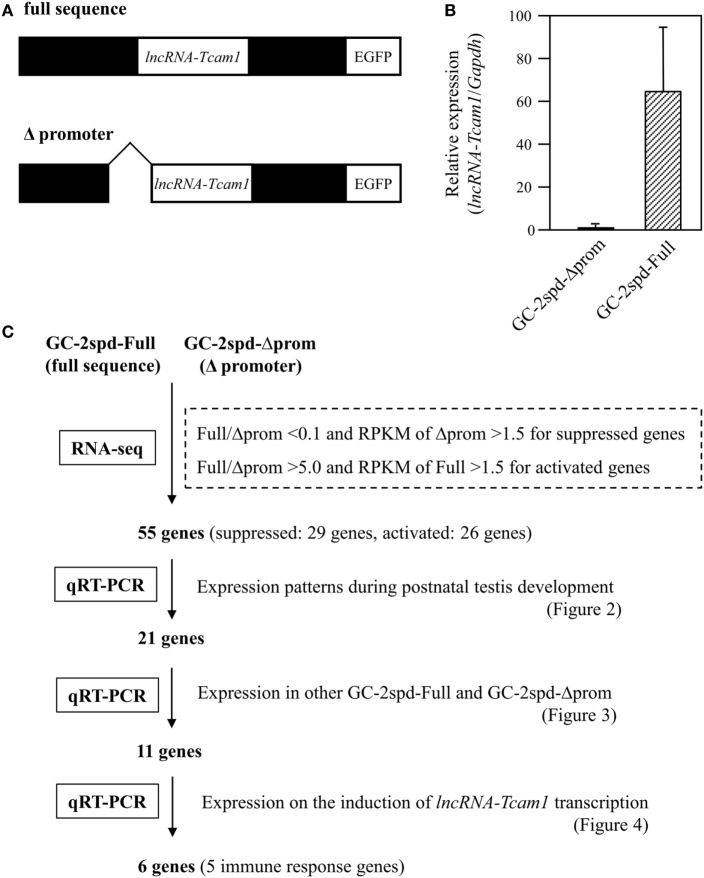
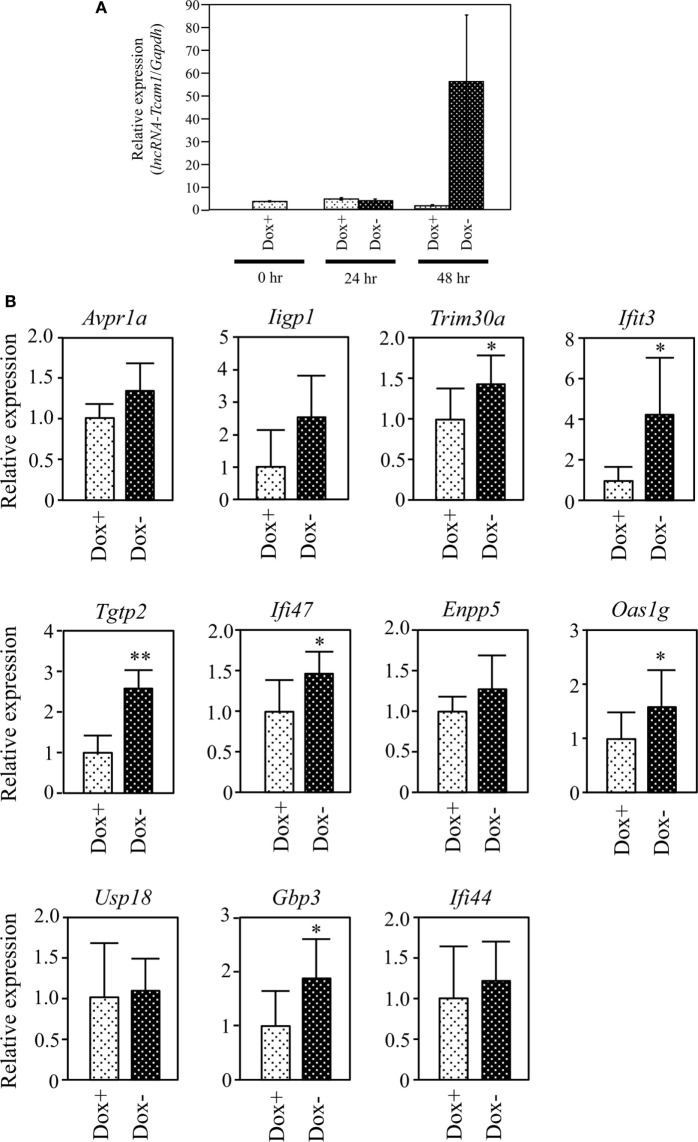
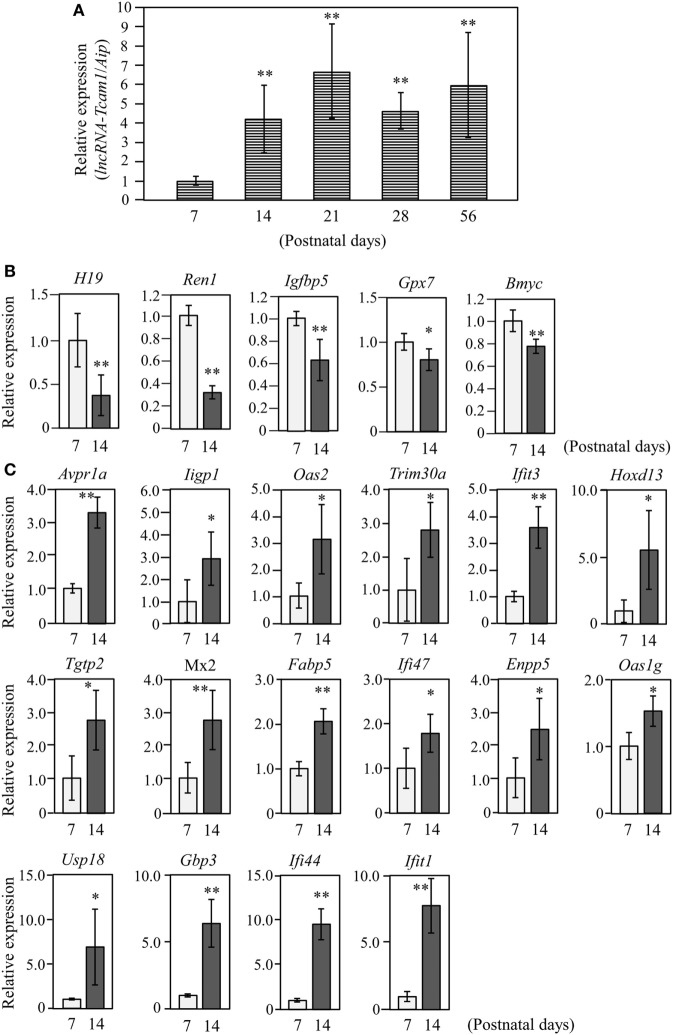
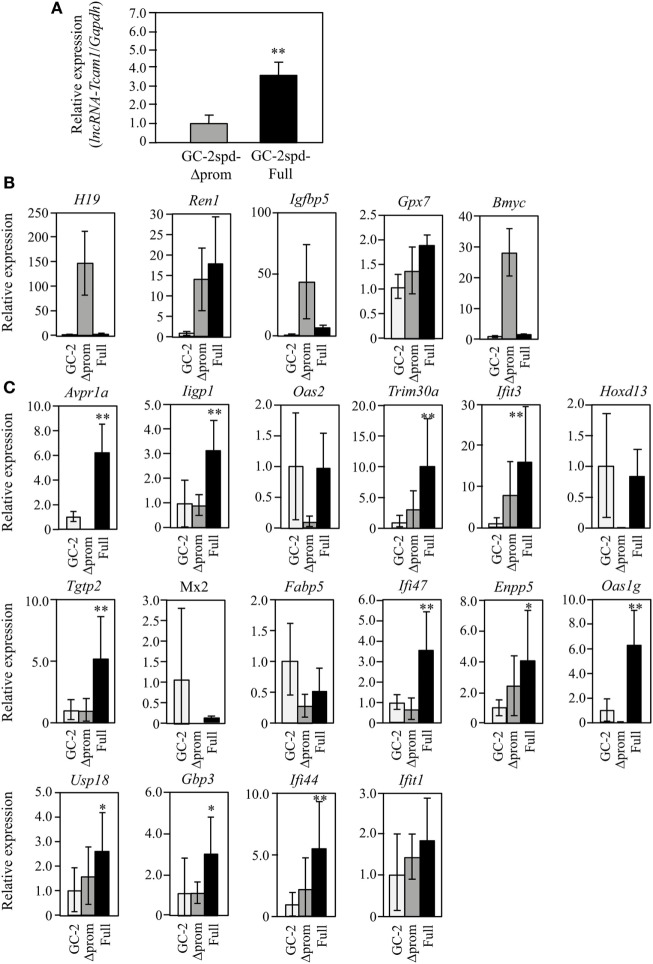
Spermatogenesis is precisely controlled by hormones from the hypothalamus-pituitary-gonadal axis and testis-specific genes, but the regulatory mechanism is not fully understood. Recently, a large number of long non-coding RNAs (lncRNAs) are found to be transcribed at each stage of meiosis of male germ cells, and their functions in spermatogenesis have yet to be fully investigated. () is a nuclear lncRNA which is specifically expressed in mouse male germ cells and presumed to play a role in gene regulation during meiosis. Here, we present the identification of potential target genes of using spermatocyte-derived GC-2spd(ts) cells. Initially, 55 target gene candidates were detected by RNA-sequencing of two GC-2spd(ts) cell clones that were stably transfected with transgenes to express at different levels. Expression of 21 genes of the candidates was found to be correlated with at 7-14 postnatal days, when expression was elevated. Subsequently, we examined expression levels of the 21 genes in other two GC-2spd(ts) clones, and 11 genes exhibited the correlation with . Induction of transcription using the Tet-off system verified that six genes, , and , were upregulated in GC-2spd(ts) cells, indicating that is responsible for the regulation of gene expression of the six genes. In addition, five of the six genes, namely, , and , are immune response genes, and is a negative regulator of immune response. Altogether, the present study suggests that is responsible for gene regulation for the immune response during spermatogenesis.
精子发生受下丘脑 - 垂体 - 性腺轴激素和睾丸特异性基因的精确调控,但其调控机制尚未完全阐明。最近,人们发现大量长链非编码RNA(lncRNAs)在雄性生殖细胞减数分裂的各个阶段都有转录,它们在精子发生中的功能还有待充分研究。()是一种核lncRNA,在小鼠雄性生殖细胞中特异性表达,推测在减数分裂过程中参与基因调控。在此,我们展示了利用精母细胞来源的GC - 2spd(ts)细胞鉴定()潜在靶基因的过程。最初,通过对两个稳定转染转基因以不同水平表达()的GC - 2spd(ts)细胞克隆进行RNA测序,检测到55个候选靶基因。在出生后7 - 14天(此时()表达升高),发现其中21个候选基因的表达与()相关。随后,我们检测了另外两个GC - 2spd(ts)克隆中这21个基因的表达水平,其中11个基因与()呈现相关性。使用Tet - off系统诱导()转录证实,在GC - 2spd(ts)细胞中,()、()、()、()、()和()这六个基因上调,表明()负责这六个基因的表达调控。此外,这六个基因中的五个,即()、()、()、()和()是免疫反应基因,而()是免疫反应的负调节因子。总之,本研究表明()在精子发生过程中负责免疫反应的基因调控。