Xiang Hong, Tao Xufeng, Xia Shilin, Qu Jialin, Song Huiyi, Liu Jianjun, Shang Dong
College (Institute) of Integrative Medicine, Dalian Medical University, Dalian, China.
Department of General Surgery, The First Affiliated Hospital of Dalian Medical University, Dalian, China.
Front Immunol. 2017 Nov 6;8:1488. doi: 10.3389/fimmu.2017.01488. eCollection 2017.
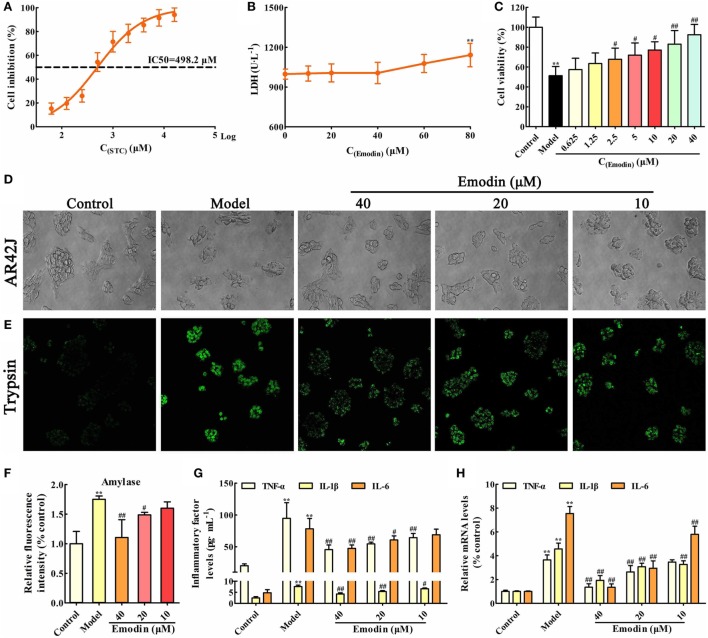
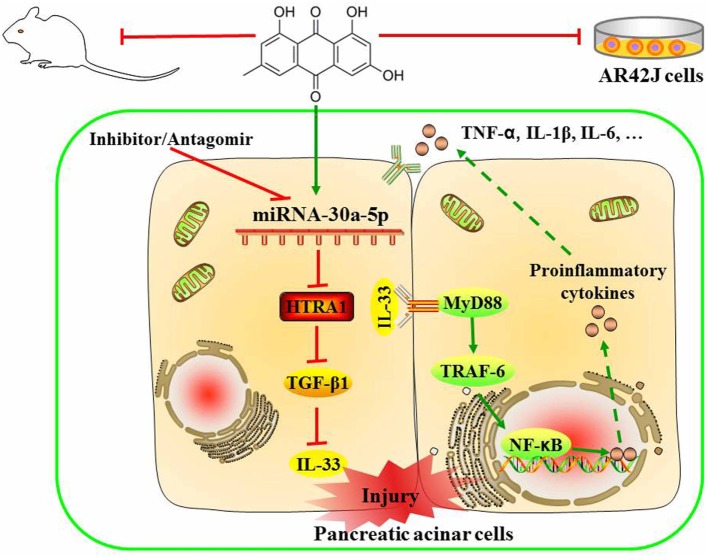
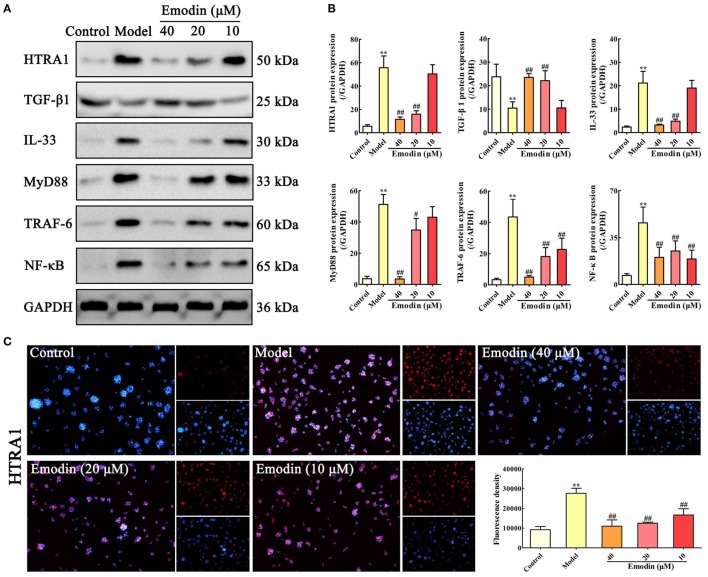
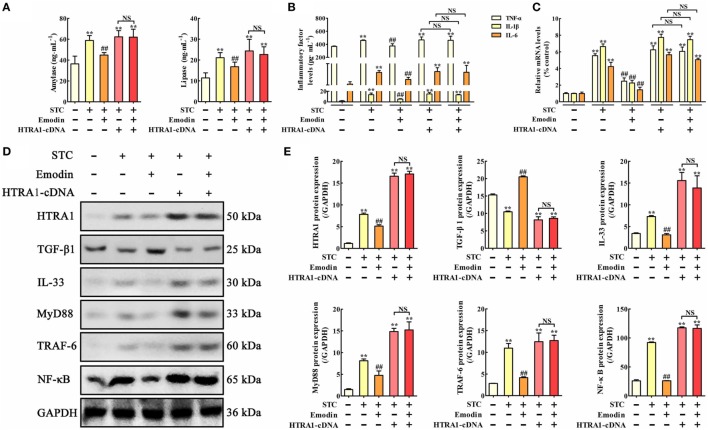
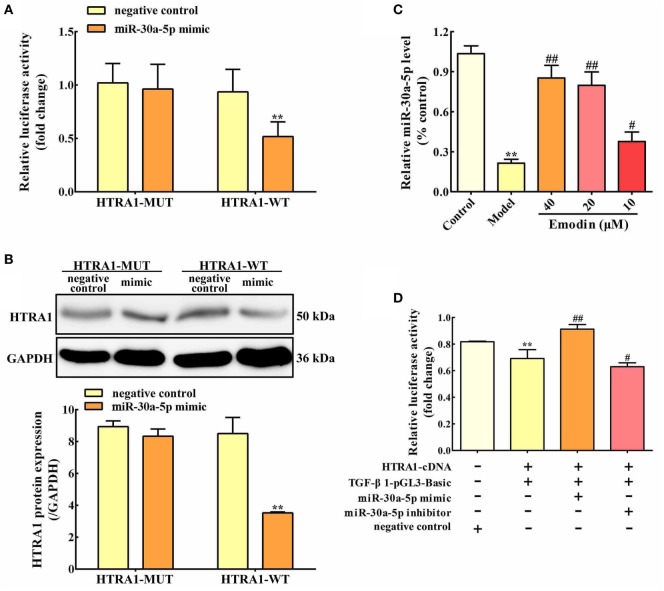
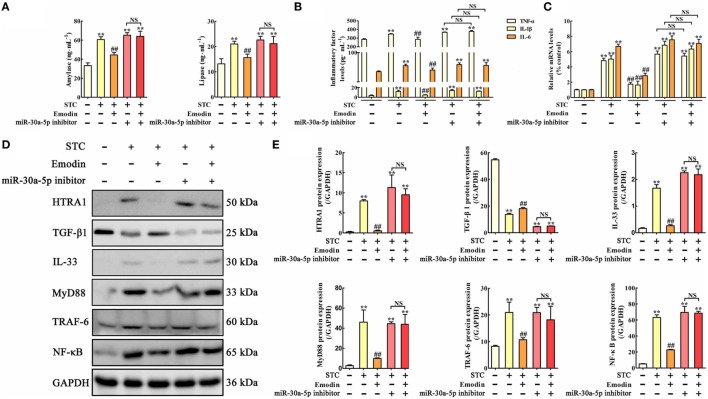
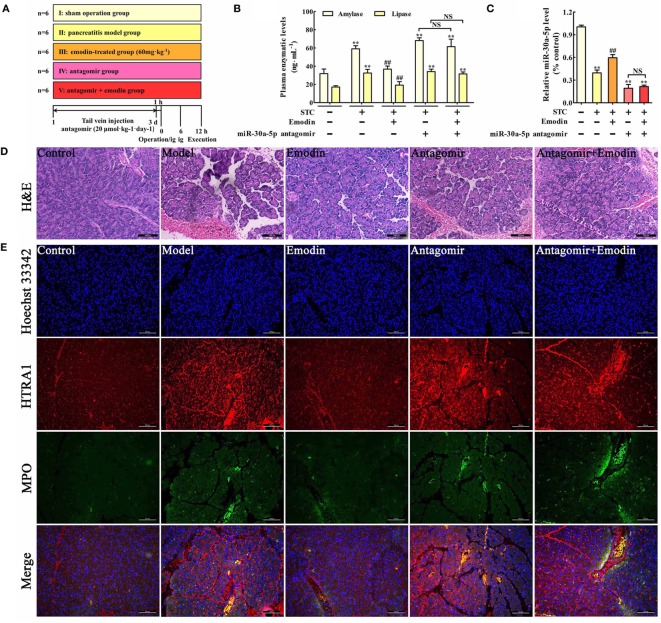
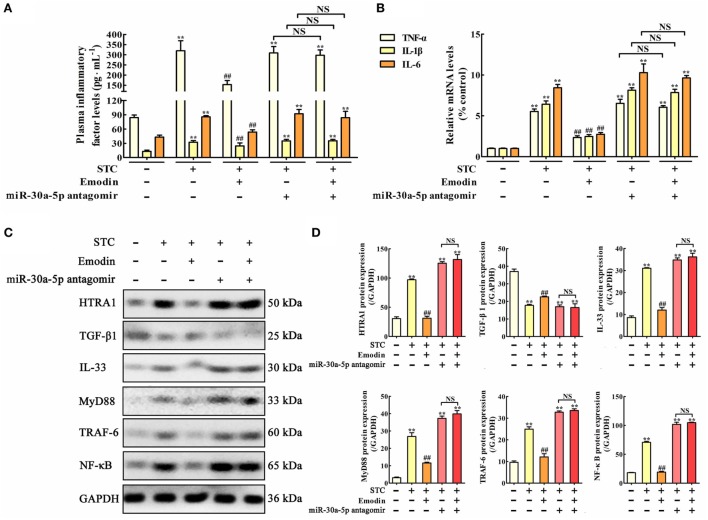
Pancreatitis is an inflammatory disease that is responsible for substantial morbidity and mortality, and it can induce pancreatic necrosis that starts within pancreatic acinar cells in severe cases. Emodin, a pleiotropic natural product isolated from the Chinese herb ., has effective anti-inflammatory activities. In this paper, we investigated the protective effects and molecular mechanism of emodin against sodium taurocholate (STC)-induced pancreatic acinar cells injury and ; and the results showed that emodin could significantly alleviate STC-induced pancreatic acinar cells injury through decreasing trypsin, amylase and the release of inflammatory factors (tumor necrosis factor alpha, interleukin-1β, and interleukin-6). Also, we found that emodin could significantly downregulate the HTRA1, interleukin-33, myeloid differentiation primary response gene 88, TNF receptor-associated factor-6, and nuclear factor kappa-B protein levels, but upregulate the transforming growth factor beta 1 (TGF-β1) protein level. These results indicated that emodin alleviated pancreatic acinar cells injury mainly through inhibiting HTRA1/TGF-β1 signaling pathway, and this finding was further proved by the HTRA1 overexpression experiments. In addition, the inflammatory regulator microRNA-30a-5p (miR-30a-5p) was confirmed to be a transcriptional brake that controls the gene through using a dual luciferase reporter assay, and it was upregulated by emodin in pancreatic acinar cells. Furthermore, the pancreatic protective effects and anti-inflammatory activities of emodin were all abrogated with both miR-30a-5p inhibitor and miR-30a-5p antagomir . Collectively, these results demonstrate that miR-30a-5p/HTRA1 are the target of emodin-mediated attenuation of pancreatic acinar cell injury in pancreatitis, thus providing the foundation for further development of this natural product for medical therapy.
胰腺炎是一种导致大量发病和死亡的炎症性疾病,在严重情况下,它可引发始于胰腺腺泡细胞的胰腺坏死。大黄素是从中药材中分离出的一种具有多种药理作用的天然产物,具有有效的抗炎活性。在本文中,我们研究了大黄素对牛磺胆酸钠(STC)诱导的胰腺腺泡细胞损伤的保护作用及其分子机制;结果表明,大黄素可通过降低胰蛋白酶、淀粉酶以及炎症因子(肿瘤坏死因子α、白细胞介素-1β和白细胞介素-6)的释放,显著减轻STC诱导的胰腺腺泡细胞损伤。此外,我们发现大黄素可显著下调HTRA1、白细胞介素-33、髓样分化初级反应基因88、肿瘤坏死因子受体相关因子-6和核因子κB蛋白水平,但上调转化生长因子β1(TGF-β1)蛋白水平。这些结果表明,大黄素主要通过抑制HTRA1/TGF-β1信号通路减轻胰腺腺泡细胞损伤,HTRA1过表达实验进一步证明了这一发现。此外,通过双荧光素酶报告基因实验证实炎症调节因子微小RNA-30a-5p(miR-30a-5p)是控制该基因的转录制动器,且大黄素可使其在胰腺腺泡细胞中上调。此外,miR-30a-5p抑制剂和miR-30a-5p拮抗剂均可消除大黄素的胰腺保护作用和抗炎活性。综上所述,这些结果表明miR-30a-5p/HTRA1是大黄素介导减轻胰腺炎胰腺腺泡细胞损伤的靶点,从而为进一步开发这种天然产物用于医学治疗奠定了基础。