Lee Ting-Fang, Tseng Yu-Chi, Chang Wei-Chin, Chen Yi-Chen, Kao Yu-Rung, Chou Teh-Ying, Ho Chao-Chi, Wu Cheng-Wen
Institute of Clinical Medicine, National Yang-Ming University, Taipei, Taiwan.
Institute of Biochemistry and Molecular Biology, National Yang-Ming University, Taipei, Taiwan.
Oncotarget. 2017 Jul 27;8(52):89539-89551. doi: 10.18632/oncotarget.19647. eCollection 2017 Oct 27.
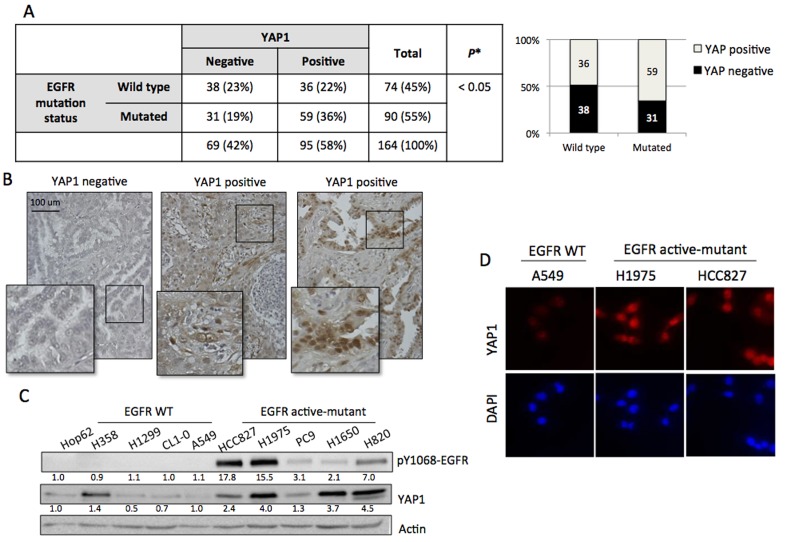
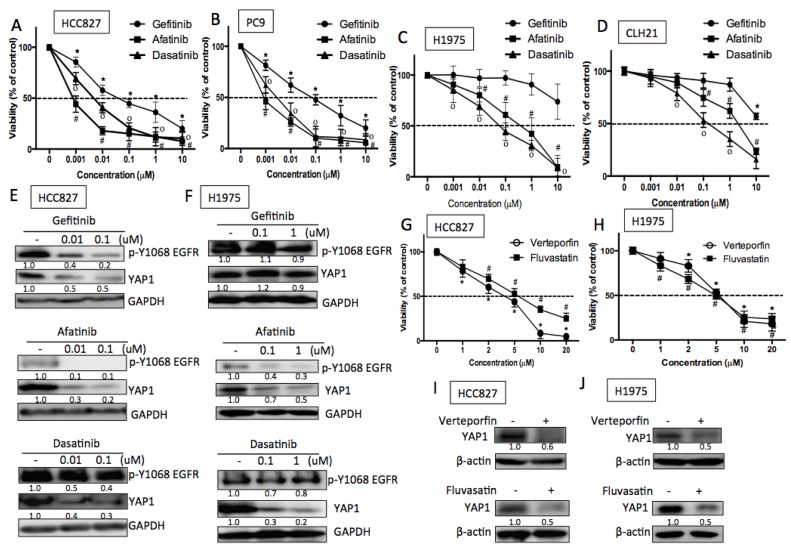
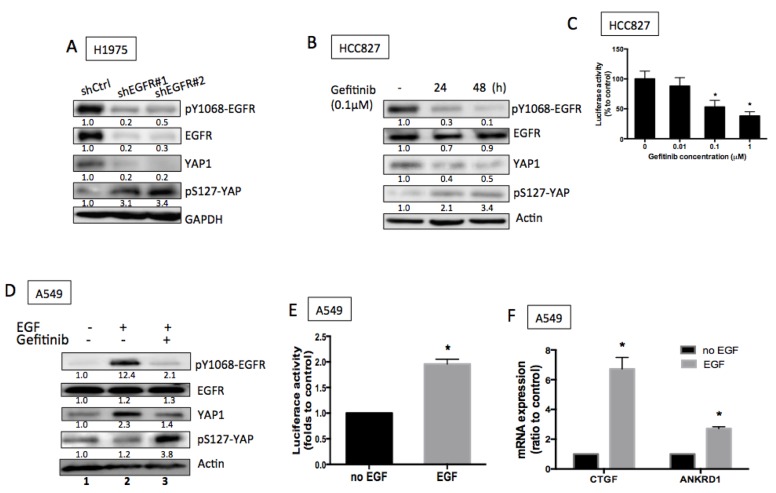
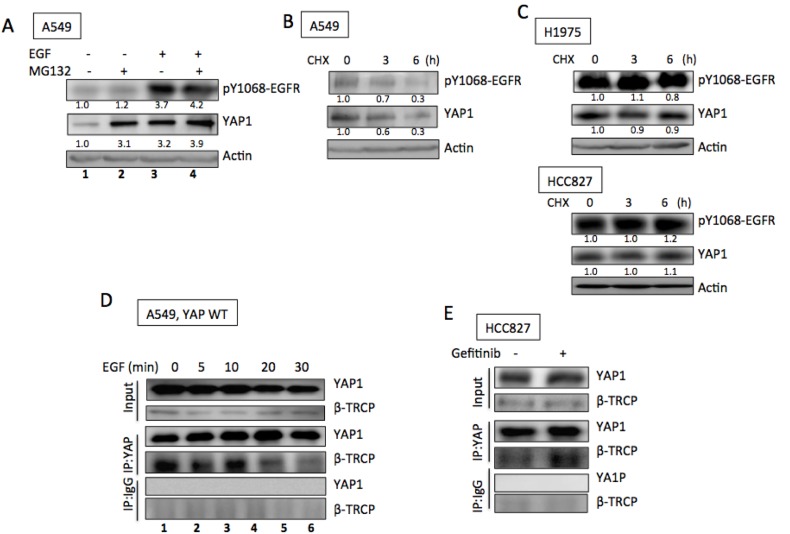
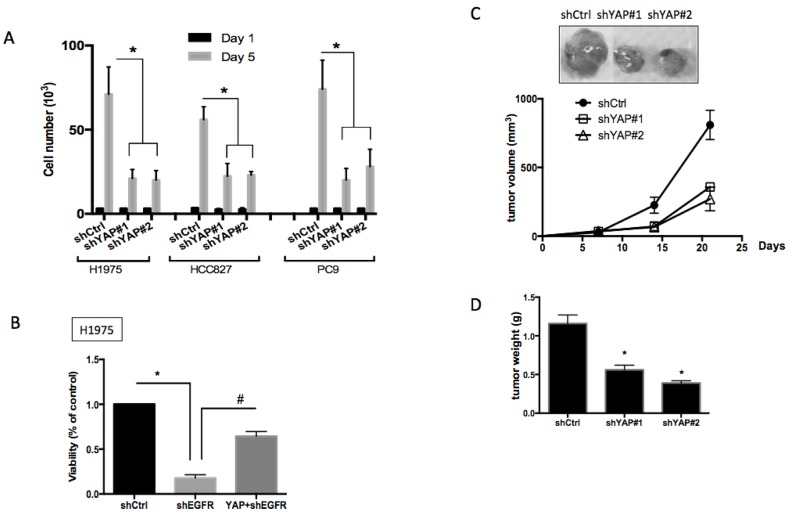
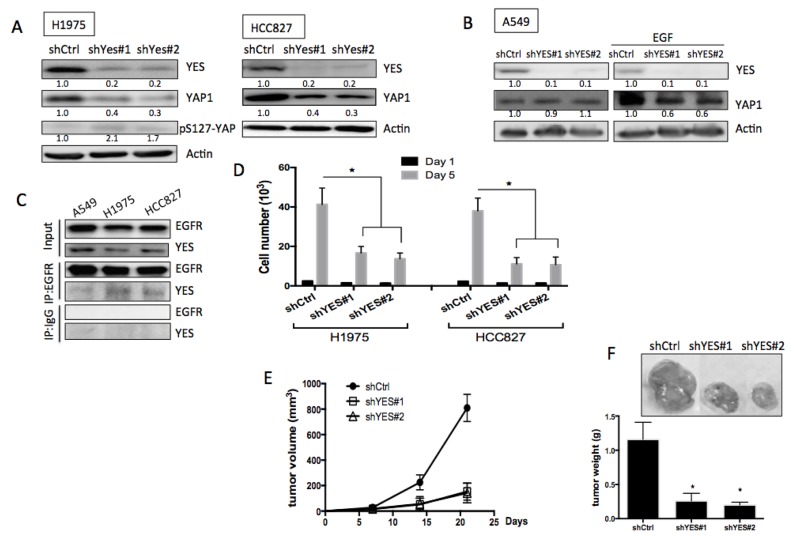
Epidermal growth factor receptor (EGFR) mutations are found in lung adenocarcinomas leading to tumor cells proliferation and survival. EGFR tyrosine kinase inhibitors (TKIs) that block EGFR activity are effective therapeutics for EGFR-mutant lung adenocarcinoma patients, but TKI-resistance inevitably occurs. The YES-associated protein (YAP1) transcription coactivator has been implicated as an oncogene and is amplified in human cancers and provides tumor cells strong proliferation and survival cues. This study investigated the roles of YAP1 in lung adenocarcinoma by exploring its regulation and functions mediated by EGFR signaling. In this study, we detected a correlation between YAP1 level and EGFR mutation status in lung adenocarcinoma tissues. Using lung adenocarcinoma cell lines, enhanced YAP1 expression and activity mediated by EGFR signaling was detected through enhanced protein stability. A SRC family protein, YES, was involved in EGFR-regulated YAP1 expression and this pathway was crucial for proliferation in EGFR-dependent cells. Small molecules that reduced YAP1 levels by mechanisms bypassing EGFR signaling were effective in reducing viability in EGFR-dependent cells including those with EGFR T790M, the major cause of TKI-resistance. These observations unveiled the significance of YAP1 in EGFR mutant lung adenocarcinomas and identified YAP1 as a promising therapeutic target for EGFR-dependent lung adenocarcinoma patients, including those with EGFR T790M-caused TKI resistance.
在肺腺癌中发现表皮生长因子受体(EGFR)突变,可导致肿瘤细胞增殖和存活。阻断EGFR活性的EGFR酪氨酸激酶抑制剂(TKIs)是EGFR突变型肺腺癌患者的有效治疗药物,但TKI耐药不可避免地会出现。Yes相关蛋白(YAP1)转录共激活因子被认为是一种癌基因,在人类癌症中发生扩增,并为肿瘤细胞提供强大的增殖和存活信号。本研究通过探索YAP1由EGFR信号介导的调控和功能,研究了YAP1在肺腺癌中的作用。在本研究中,我们检测了肺腺癌组织中YAP1水平与EGFR突变状态之间的相关性。利用肺腺癌细胞系,通过增强蛋白稳定性检测到由EGFR信号介导的YAP1表达和活性增强。一种SRC家族蛋白YES参与了EGFR调节的YAP1表达,并且该通路对于EGFR依赖性细胞的增殖至关重要。通过绕过EGFR信号的机制降低YAP1水平的小分子在降低EGFR依赖性细胞(包括那些具有EGFR T790M的细胞,TKI耐药的主要原因)的活力方面是有效的。这些观察结果揭示了YAP1在EGFR突变型肺腺癌中的重要性,并确定YAP1是EGFR依赖性肺腺癌患者(包括那些由EGFR T790M导致TKI耐药的患者)的一个有前景的治疗靶点。