Tissue Repair and Translational Physiology Program, Institute of Health and Biomedical Innovation, Queensland University of Technology, Brisbane, OLD 4059, Australia.
School of Biomedical Sciences, Institute of Health and Biomedical Innovation, Queensland University of Technology, Brisbane, OLD 4059, Australia.
Nutrients. 2017 Nov 22;9(11):1270. doi: 10.3390/nu9111270.
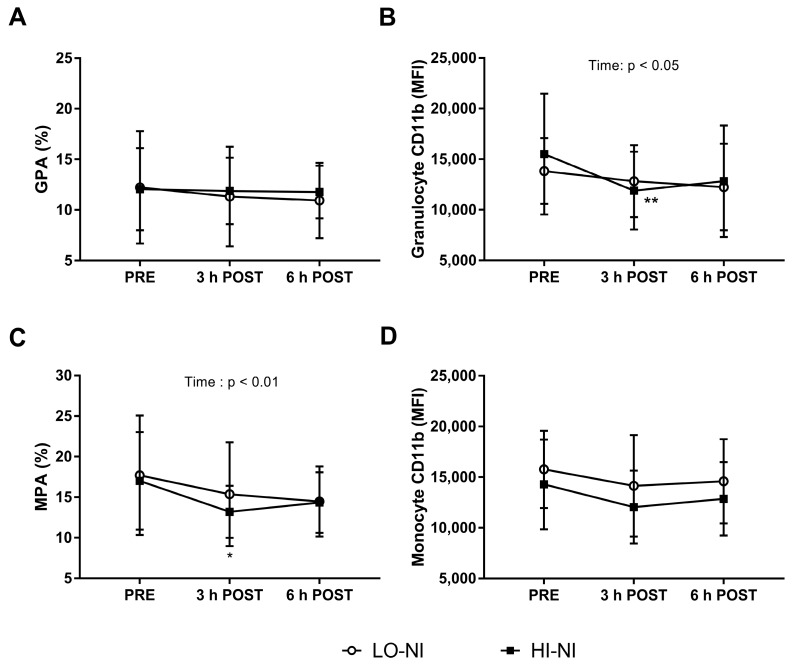
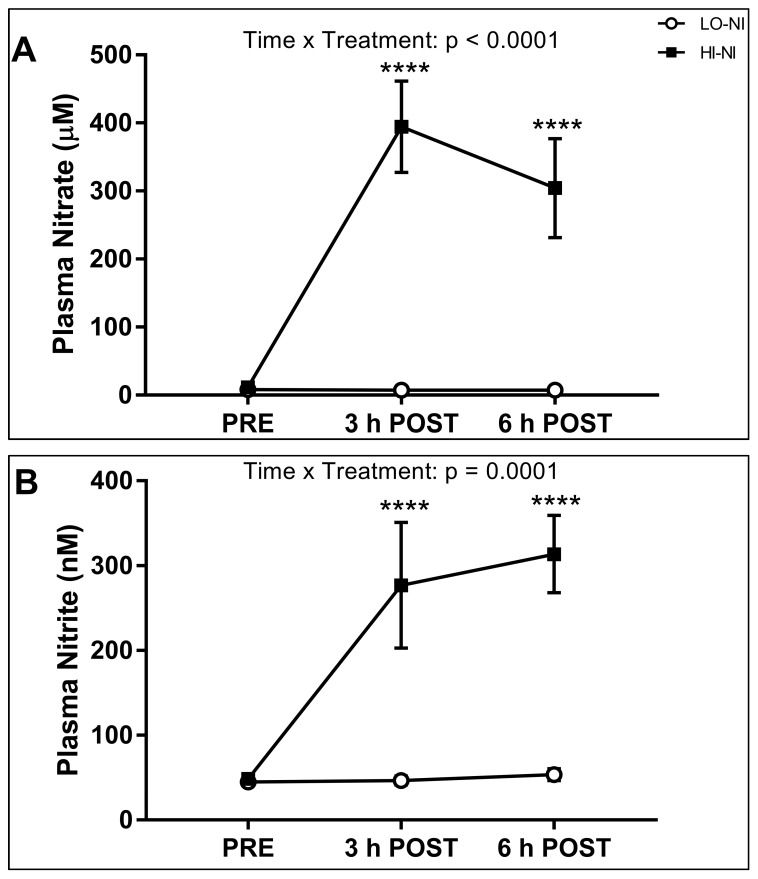
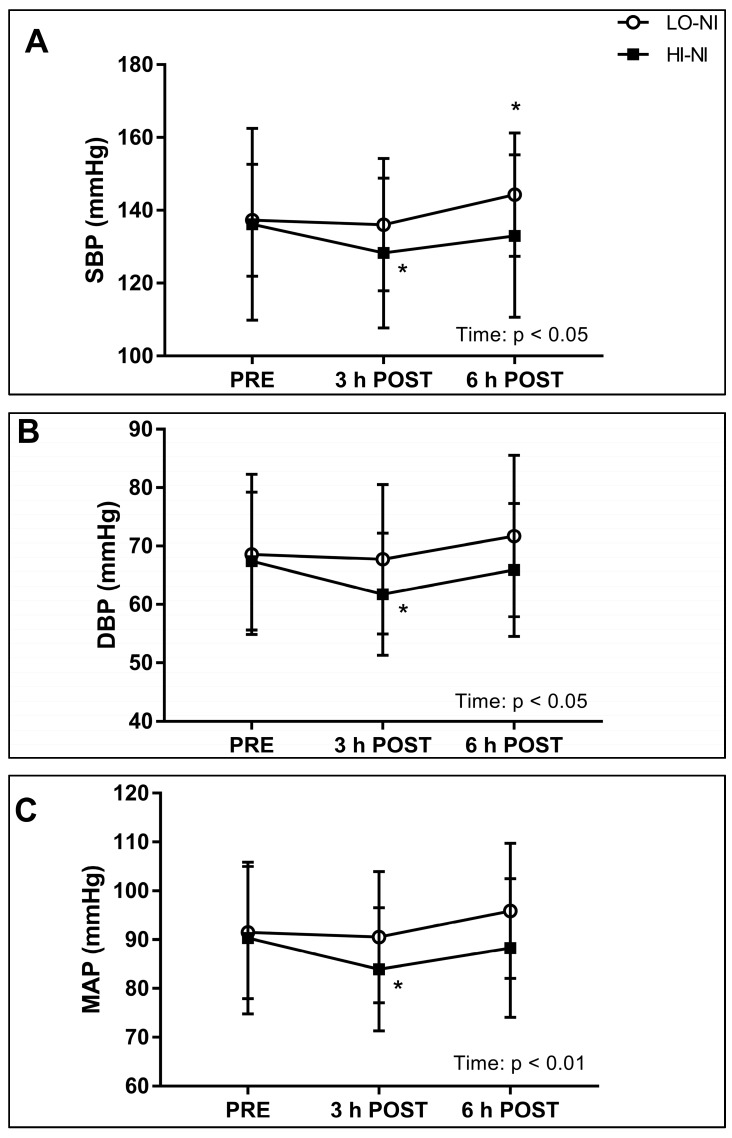
Aging is associated with a vasoconstrictive, pro-coagulant, and pro-inflammatory profile of arteries and a decline in the bioavailability of the endothelium-derived molecule nitric oxide. Dietary nitrate elicits vasodilatory, anti-coagulant and anti-inflammatory effects in younger individuals, but little is known about whether these benefits are evident in older adults. We investigated the effects of 140 mL of nitrate-rich (HI-NI; containing 12.9 mmol nitrate) versus nitrate-depleted beetroot juice (LO-NI; containing ≤0.04 mmol nitrate) on blood pressure, blood coagulation, vascular inflammation markers, plasma nitrate and nitrite before, and 3 h and 6 h after ingestion in healthy older adults (five males, seven females, mean age: 64 years, age range: 57-71 years) in a randomized, placebo-controlled, crossover study. Plasma nitrate and nitrite increased 3 and 6 h after HI-NI ingestion ( < 0.05). Systolic, diastolic and mean arterial blood pressure decreased 3 h relative to baseline after HI-NI ingestion only ( < 0.05). The number of blood monocyte-platelet aggregates decreased 3 h after HI-NI intake ( < 0.05), indicating reduced platelet activation. The number of blood CD11b-expressing granulocytes decreased 3 h following HI-NI beetroot juice intake ( < 0.05), suggesting a shift toward an anti-adhesive granulocyte phenotype. Numbers of blood CD14CD16⁺ intermediate monocyte subtypes slightly increased 6 h after HI-NI beetroot juice ingestion ( < 0.05), but the clinical implications of this response are currently unclear. These findings provide new evidence for the acute effects of nitrate-rich beetroot juice on circulating immune cells and platelets. Further long-term research is warranted to determine if these effects reduce the risk of developing hypertension and vascular inflammation with aging.
衰老是与动脉的血管收缩、促凝和促炎状态以及内皮衍生分子一氧化氮的生物利用度下降相关。在年轻个体中,饮食硝酸盐会引起血管舒张、抗凝血和抗炎作用,但对于老年人是否存在这些益处知之甚少。我们研究了富含硝酸盐(HI-NI;含有 12.9mmol 硝酸盐)和硝酸盐耗尽的甜菜根汁(LO-NI;含有 ≤0.04mmol 硝酸盐)对健康老年人(5 名男性,7 名女性,平均年龄:64 岁,年龄范围:57-71 岁)血压、血液凝固、血管炎症标志物、血浆硝酸盐和亚硝酸盐的影响,在一项随机、安慰剂对照、交叉研究中,在摄入后 3 小时和 6 小时进行测量。HI-NI 摄入后 3 小时和 6 小时血浆硝酸盐和亚硝酸盐增加( < 0.05)。仅 HI-NI 摄入后 3 小时收缩压、舒张压和平均动脉压相对于基线下降( < 0.05)。HI-NI 摄入后 3 小时血液单核细胞-血小板聚集减少( < 0.05),表明血小板活化减少。HI-NI 甜菜根汁摄入后 3 小时血液 CD11b 表达的粒细胞数量减少( < 0.05),提示向抗黏附粒细胞表型转变。HI-NI 甜菜根汁摄入后 6 小时血液 CD14CD16⁺中间单核细胞亚型数量略有增加( < 0.05),但目前尚不清楚这种反应的临床意义。这些发现为富含硝酸盐的甜菜根汁对循环免疫细胞和血小板的急性影响提供了新证据。需要进一步的长期研究来确定这些影响是否会降低随着年龄增长发生高血压和血管炎症的风险。