Trans-synaptic Signaling Group, European Neuroscience Institute, 37077 Göttingen, Germany.
Trans-synaptic Signaling Group, European Neuroscience Institute, 37077 Göttingen, Germany; Department of Diagnostic and Interventional Radiology, University Medical Center Göttingen, 37075 Göttingen, Germany.
Cell Rep. 2017 Nov 21;21(8):2118-2133. doi: 10.1016/j.celrep.2017.10.084.
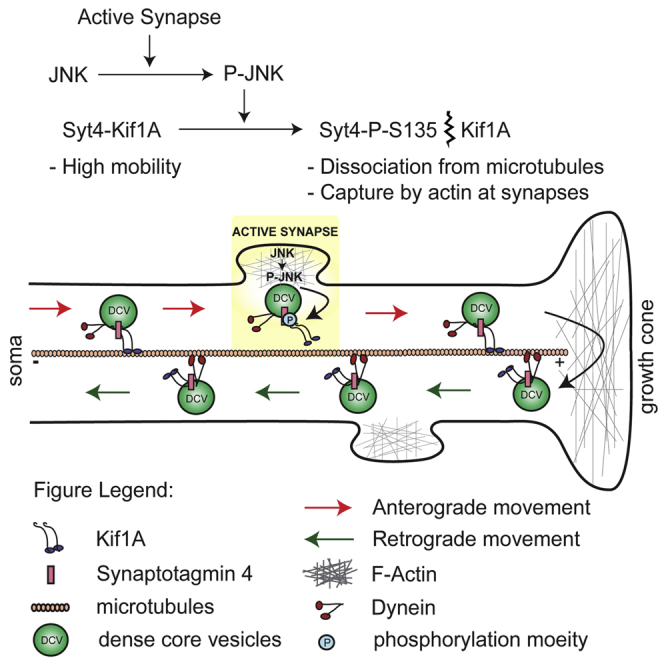
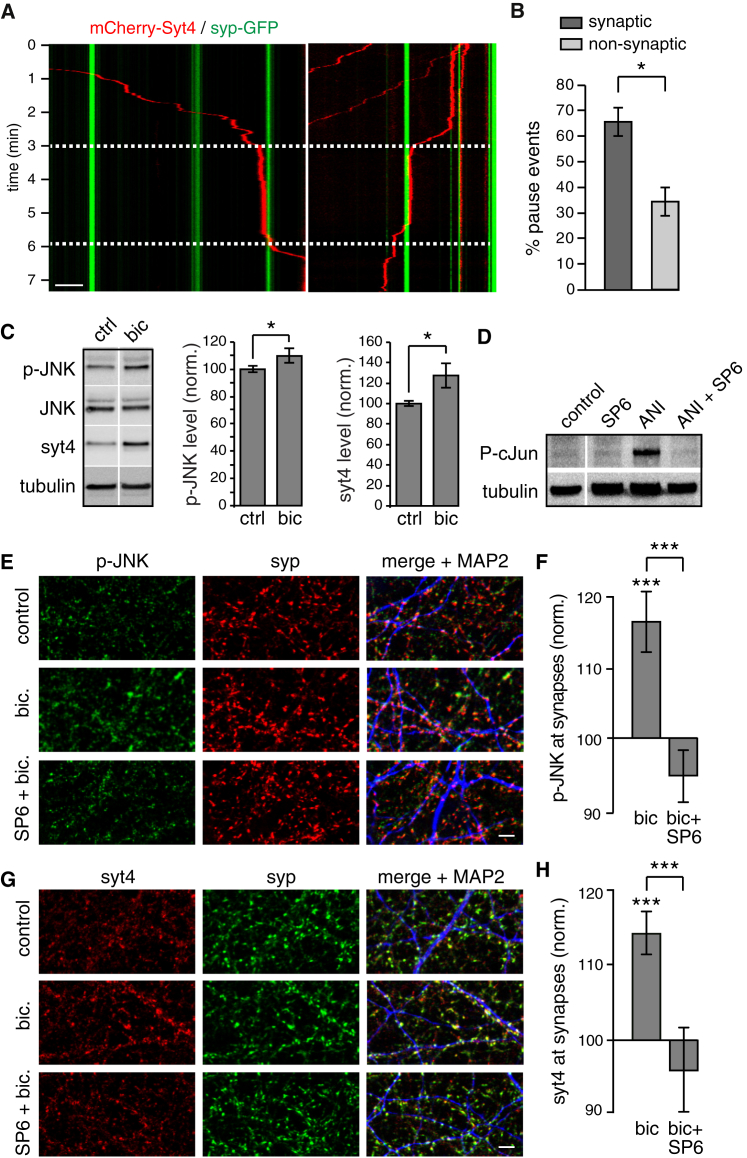
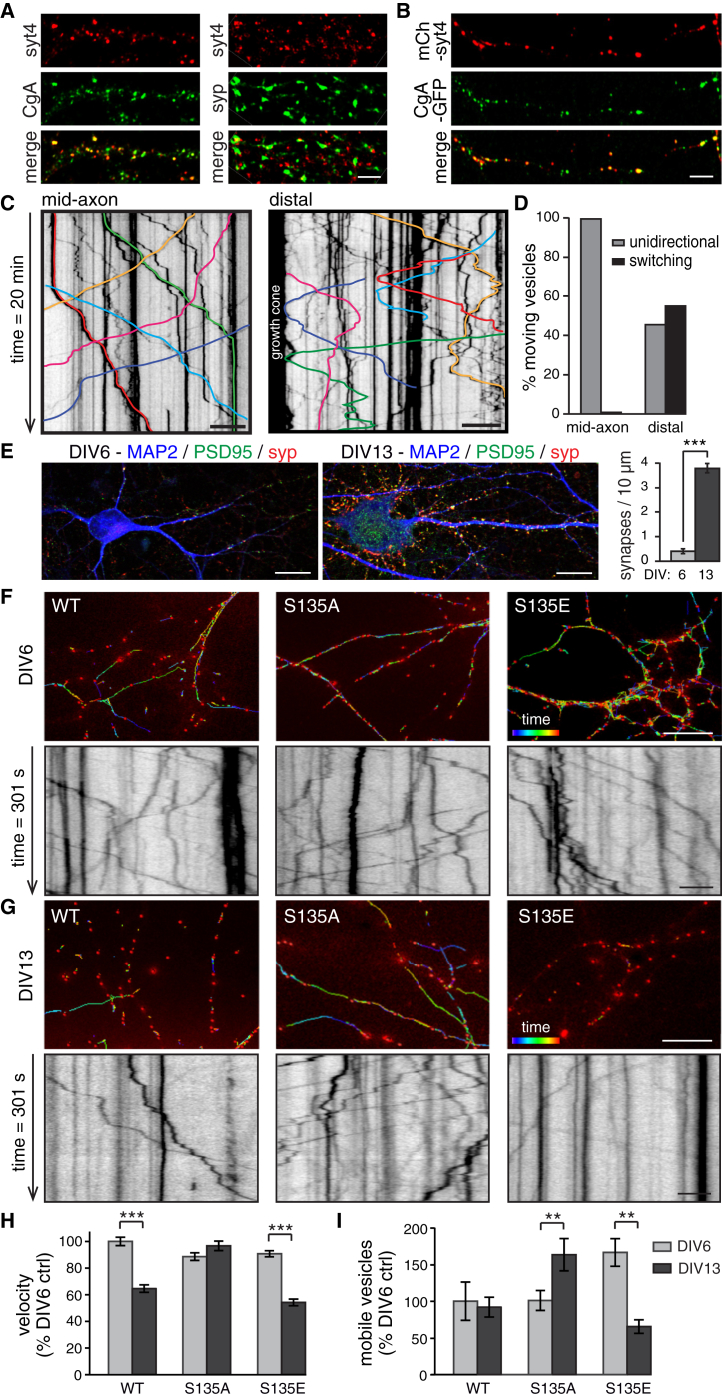
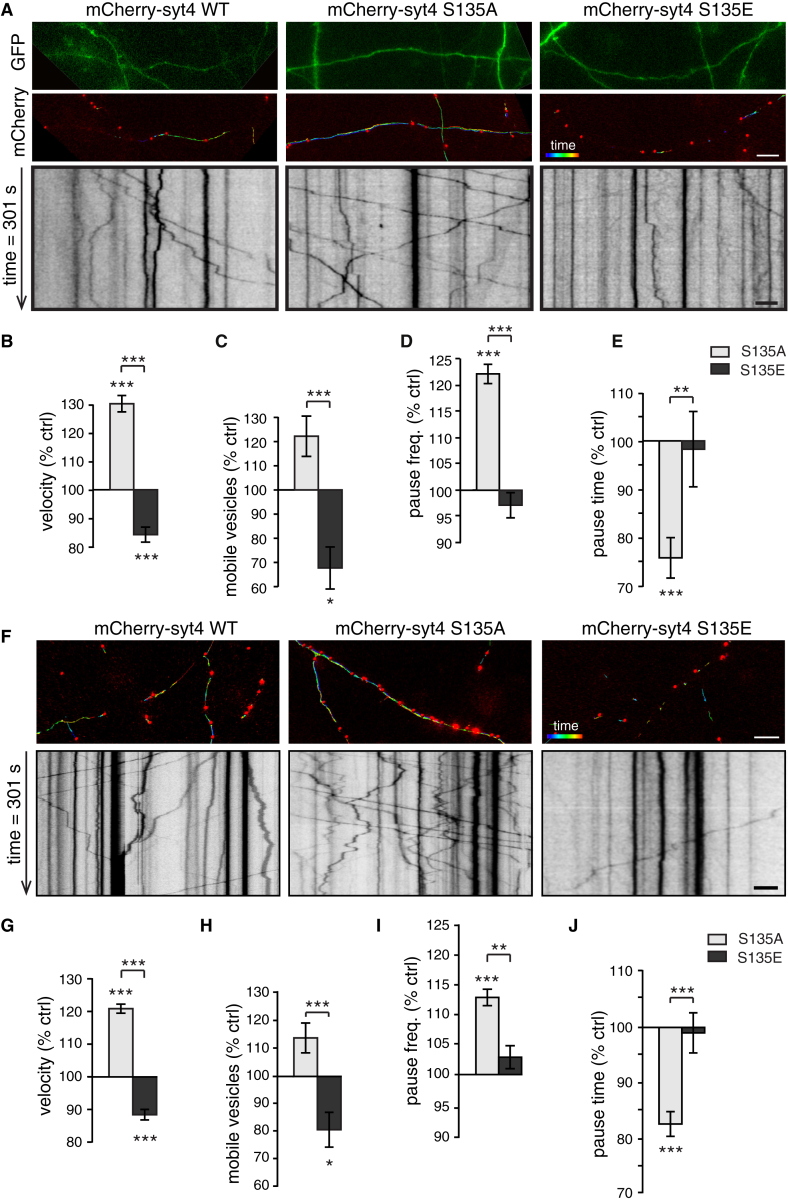
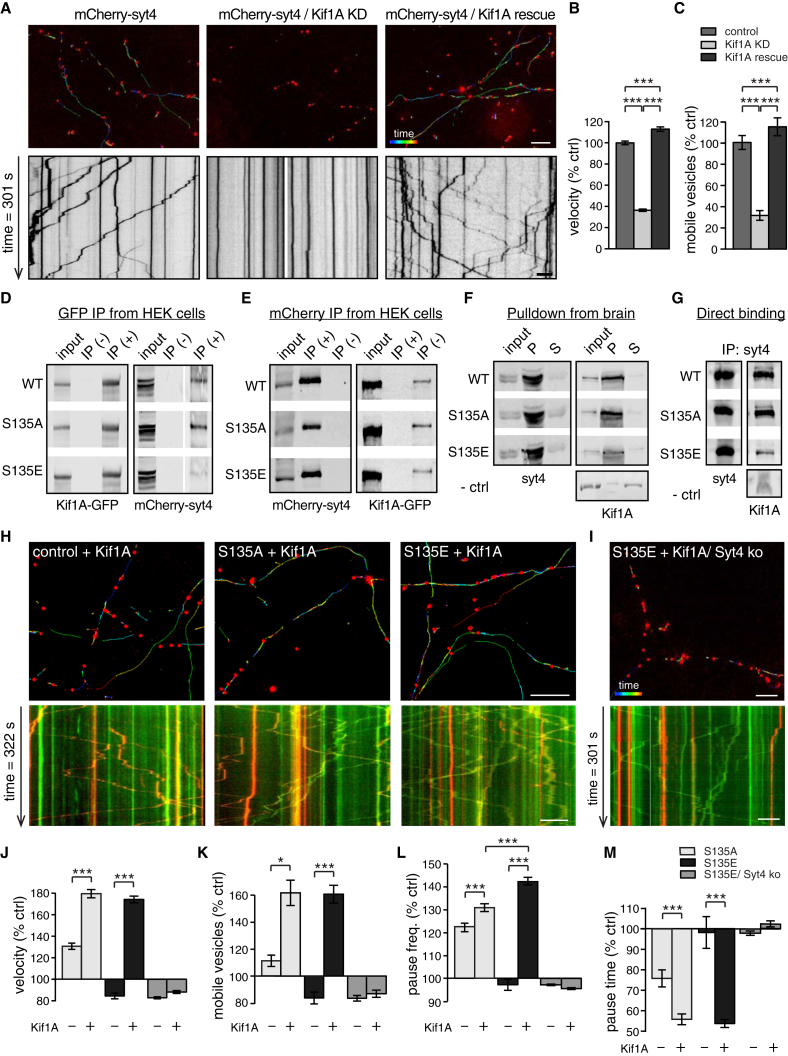
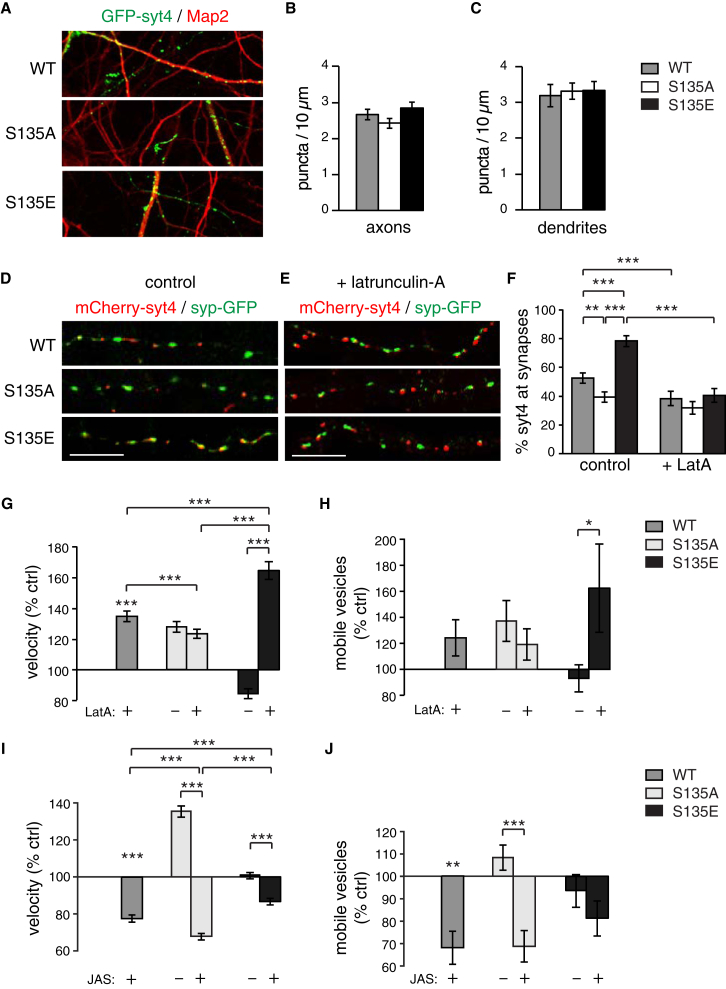
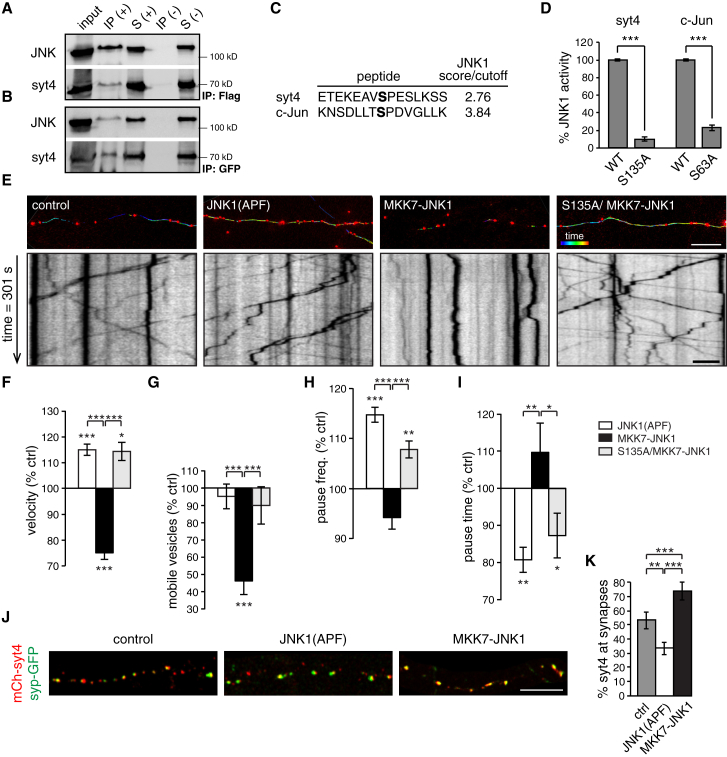
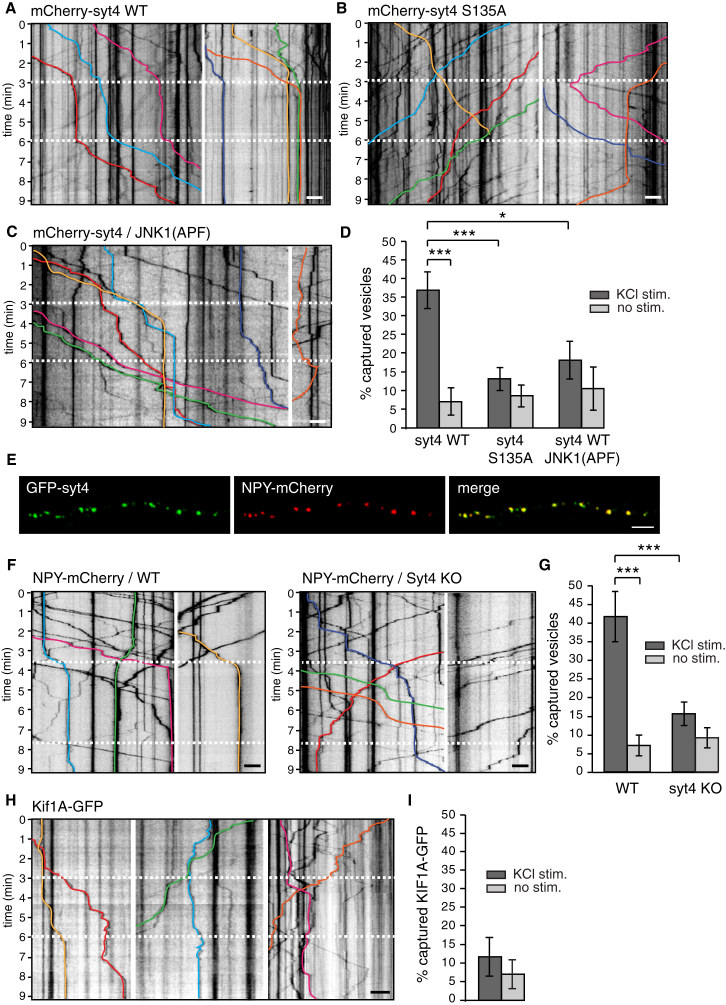
Delivery of neurotrophins and neuropeptides via long-range trafficking of dense core vesicles (DCVs) from the cell soma to nerve terminals is essential for synapse modulation and circuit function. But the mechanism by which transiting DCVs are captured at specific sites is unknown. Here, we discovered that Synaptotagmin-4 (Syt4) regulates the capture and spatial distribution of DCVs in hippocampal neurons. We found that DCVs are highly mobile and undergo long-range translocation but switch directions only at the distal ends of axons, revealing a circular trafficking pattern. Phosphorylation of serine 135 of Syt4 by JNK steers DCV trafficking by destabilizing Syt4-Kif1A interaction, leading to a transition from microtubule-dependent DCV trafficking to capture at en passant presynaptic boutons by actin. Furthermore, neuronal activity increased DCV capture via JNK-dependent phosphorylation of the S135 site of Syt4. Our data reveal a mechanism that ensures rapid, site-specific delivery of DCVs to synapses.
通过从细胞体到神经末梢的致密核心囊泡 (DCV) 的远程运输来递呈神经营养因子和神经肽对于突触调节和电路功能至关重要。但是,转移的 DCV 在特定部位被捕获的机制尚不清楚。在这里,我们发现突触融合蛋白-4(Syt4)调节海马神经元中 DCV 的捕获和空间分布。我们发现 DCV 具有高度的流动性并且进行远程易位,但是仅在轴突的远端改变方向,显示出循环运输模式。JNK 通过磷酸化 Syt4 的丝氨酸 135 来指导 DCV 运输,通过破坏 Syt4-Kif1A 相互作用,导致从微管依赖性 DCV 运输转变为通过肌动蛋白在顺行突触小泡处捕获。此外,神经元活性通过 JNK 依赖性磷酸化 Syt4 的 S135 位点增加 DCV 的捕获。我们的数据揭示了一种确保 DCV 快速、特异性递送至突触的机制。