University of Siena, Department of Information Engineering and Mathematics, Siena, 53100, Italy.
University of Siena, Complex Systems Community, Siena, 53100, Italy.
Sci Rep. 2017 Nov 22;7(1):15978. doi: 10.1038/s41598-017-15865-w.
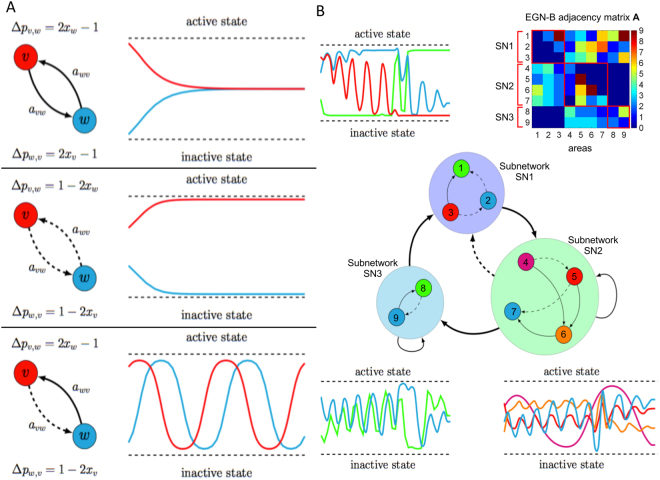
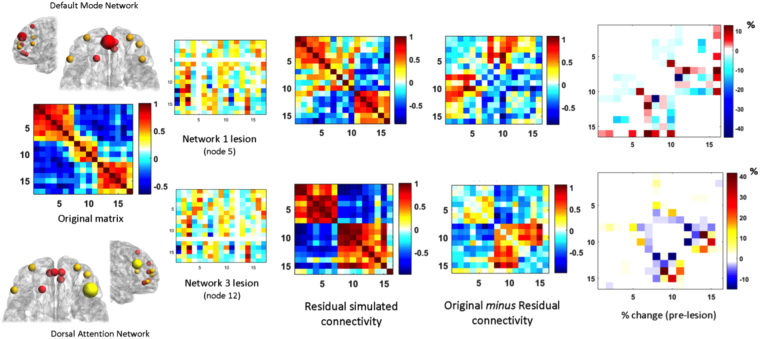
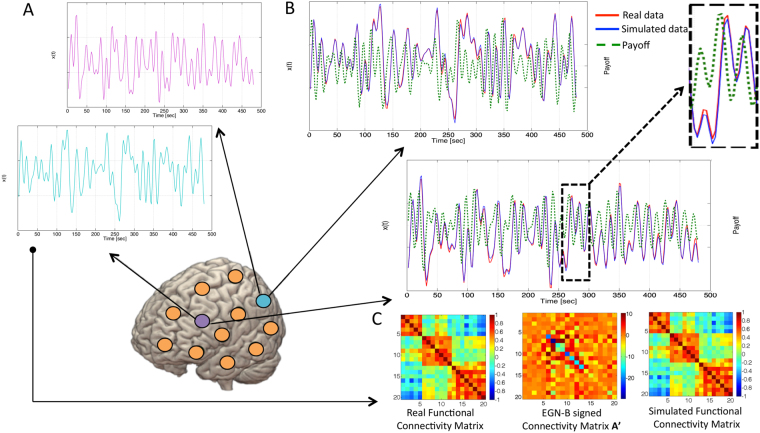
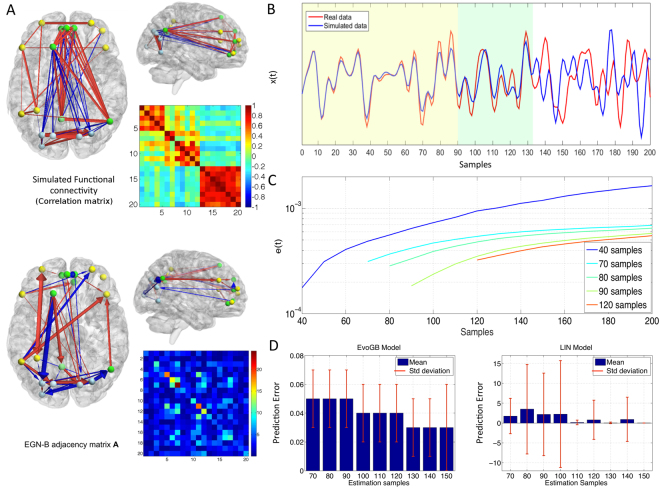
Our brain is a complex system of interconnected regions spontaneously organized into distinct networks. The integration of information between and within these networks is a continuous process that can be observed even when the brain is at rest, i.e. not engaged in any particular task. Moreover, such spontaneous dynamics show predictive value over individual cognitive profile and constitute a potential marker in neurological and psychiatric conditions, making its understanding of fundamental importance in modern neuroscience. Here we present a theoretical and mathematical model based on an extension of evolutionary game theory on networks (EGN), able to capture brain's interregional dynamics by balancing emulative and non-emulative attitudes among brain regions. This results in the net behavior of nodes composing resting-state networks identified using functional magnetic resonance imaging (fMRI), determining their moment-to-moment level of activation and inhibition as expressed by positive and negative shifts in BOLD fMRI signal. By spontaneously generating low-frequency oscillatory behaviors, the EGN model is able to mimic functional connectivity dynamics, approximate fMRI time series on the basis of initial subset of available data, as well as simulate the impact of network lesions and provide evidence of compensation mechanisms across networks. Results suggest evolutionary game theory on networks as a new potential framework for the understanding of human brain network dynamics.
我们的大脑是一个复杂的相互连接的区域系统,这些区域自发地组织成不同的网络。这些网络之间和内部的信息整合是一个持续的过程,即使在大脑处于休息状态时也可以观察到,也就是说,大脑没有参与任何特定的任务。此外,这种自发的动力学表现出对个体认知特征的预测价值,并构成神经和精神疾病的潜在标志物,因此理解它在现代神经科学中具有重要的基础意义。在这里,我们提出了一个基于网络进化博弈论(EGN)扩展的理论和数学模型,该模型能够通过平衡大脑区域之间的模仿和非模仿态度来捕捉大脑的区域间动力学。这导致了使用功能磁共振成像(fMRI)识别的静息状态网络的节点的净行为,确定了它们作为 BOLD fMRI 信号的正移和负移所表达的激活和抑制的瞬间水平。通过自发产生低频振荡行为,EGN 模型能够模拟功能连接动力学,根据可用数据的初始子集来近似 fMRI 时间序列,以及模拟网络损伤的影响并提供跨网络补偿机制的证据。结果表明,网络进化博弈论是理解人类大脑网络动力学的一个新的潜在框架。