Gao Jia, Qian Yuanchao, Wang Yifan, Qu Yinbo, Zhong Yaohua
State Key Laboratory of Microbial Technology, School of Life Sciences, Shandong University, Jinan, 250100 People's Republic of China.
Biotechnol Biofuels. 2017 Nov 15;10:272. doi: 10.1186/s13068-017-0963-1. eCollection 2017.
The enzymes for efficient hydrolysis of lignocellulosic biomass are a major factor in the development of an economically feasible cellulose bioconversion process. Up to now, low hydrolysis efficiency and high production cost of cellulases remain the significant hurdles in this process. The aim of the present study was to develop a versatile cellulase system with the enhanced hydrolytic efficiency and the ability to synthesize powerful inducers by genetically engineering .
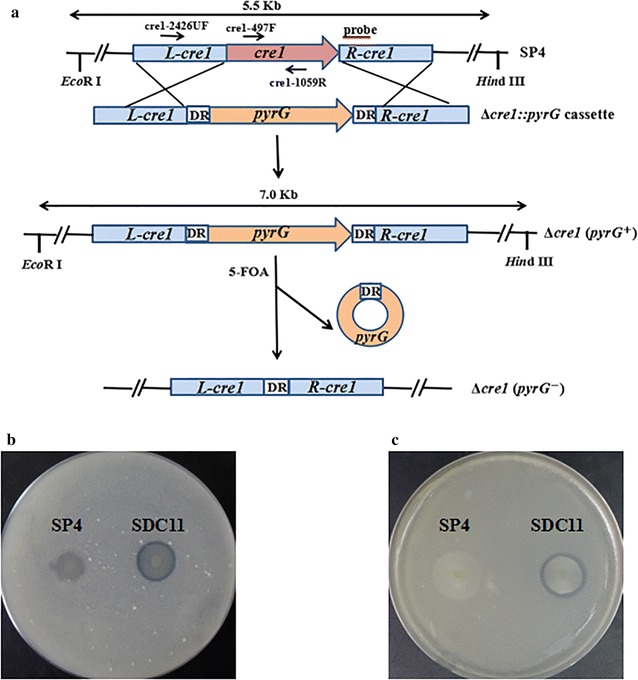
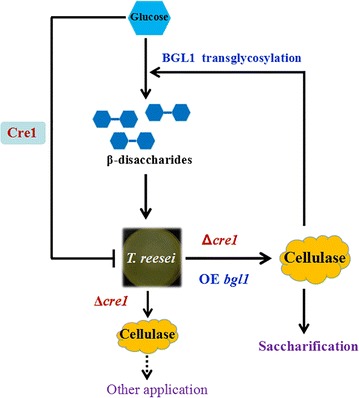
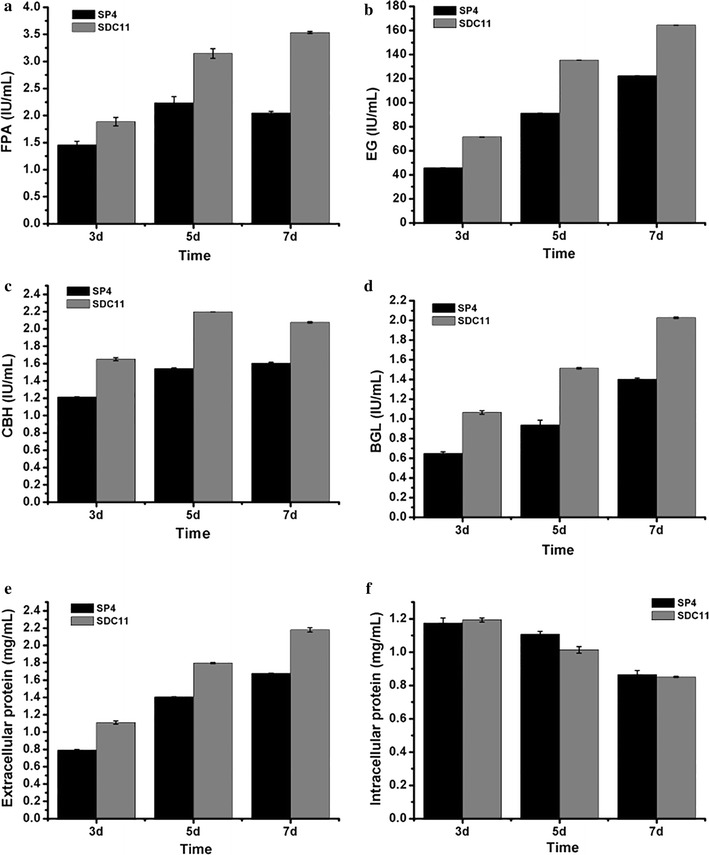
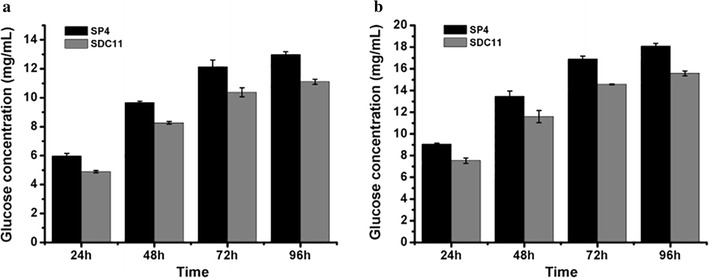
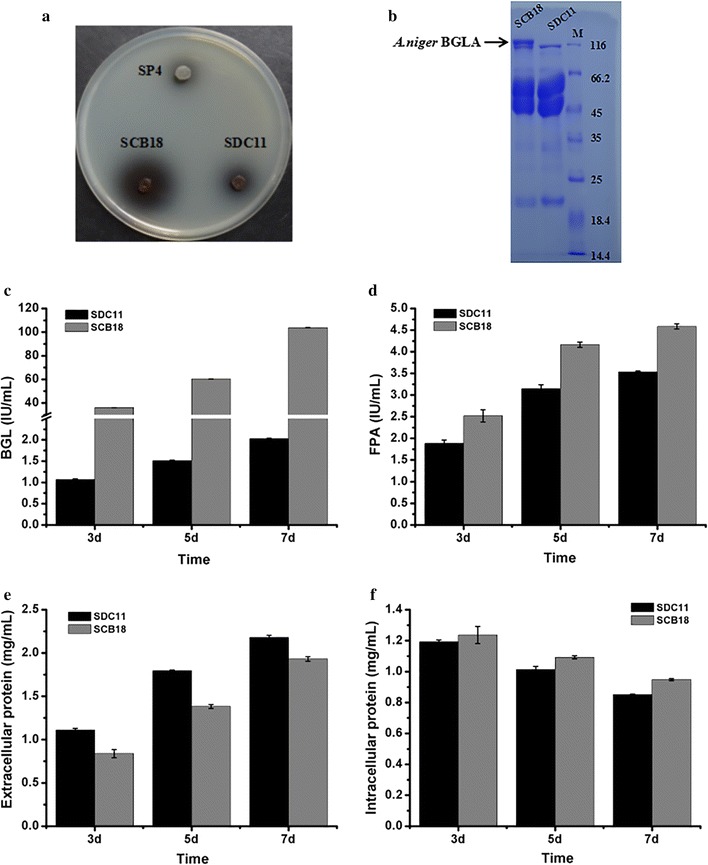
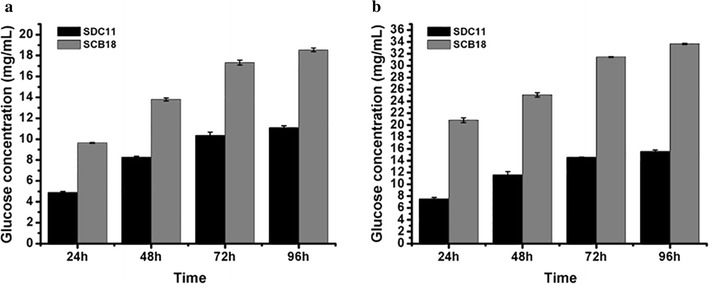
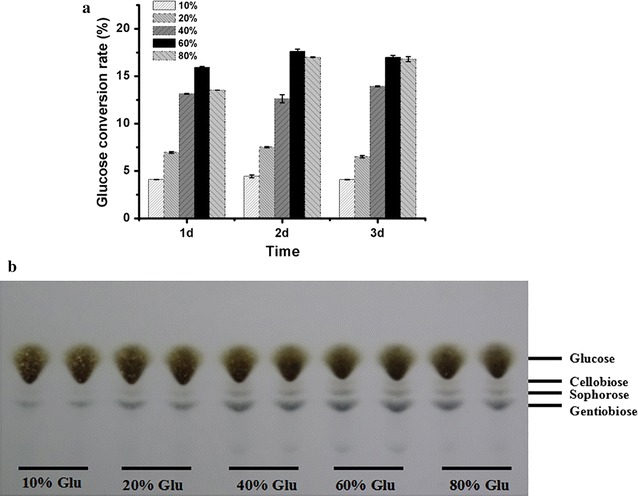
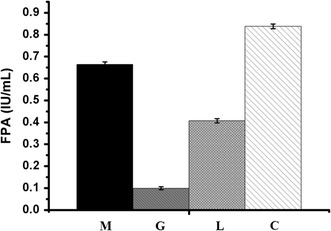
In our study, we employed a systematic genetic strategy to construct the carbon catabolite-derepressed strain SCB18 to produce the cellulase complex that exhibited a strong cellulolytic capacity for biomass saccharification and an extraordinary high β-glucosidase (BGL) activity for cellulase-inducing disaccharides synthesis. We first identified the hypercellulolytic and uracil auxotrophic strain SP4 as carbon catabolite repressed, and then deleted the carbon catabolite repressor gene in the genome. We found that the deletion of with the selectable marker led to a 72.6% increase in total cellulase activity, but a slight reduction in saccharification efficiency. To facilitate the following genetic modification, the marker was successfully removed by homologous recombination based on resistance to 5-FOA. Furthermore, the BGLA-encoding gene was overexpressed, and the generated strain SCB18 exhibited a 29.8% increase in total cellulase activity and a 51.3-fold enhancement in BGL activity (up to 103.9 IU/mL). We observed that the cellulase system of SCB18 showed significantly higher saccharification efficiency toward differently pretreated corncob residues than the control strains SDC11 and SP4. Moreover, the crude enzyme preparation from SCB18 with high BGL activity possessed strong transglycosylation ability to synthesize β-disaccharides from glucose. The transglycosylation product was finally utilized as the inducer for cellulase production, which provided a 63.0% increase in total cellulase activity compared to the frequently used soluble inducer, lactose.
In summary, we constructed a versatile cellulase system in for efficient biomass saccharification and powerful cellulase inducer synthesis by combinational genetic manipulation of three distinct types of genes to achieve the customized cellulase production, thus providing a viable strategy for further strain improvement to reduce the cost of biomass-based biofuel production.
高效水解木质纤维素生物质的酶是经济可行的纤维素生物转化工艺发展的主要因素。到目前为止,纤维素酶水解效率低和生产成本高仍然是该工艺的重大障碍。本研究的目的是通过基因工程开发一种具有更高水解效率和合成强效诱导剂能力的通用纤维素酶系统。
在我们的研究中,我们采用系统的遗传策略构建了碳分解代谢物阻遏解除菌株SCB18,以产生纤维素酶复合物,该复合物对生物质糖化表现出强大的纤维素分解能力,并且对纤维素酶诱导性二糖合成具有极高的β-葡萄糖苷酶(BGL)活性。我们首先鉴定出高纤维素分解能力和尿嘧啶营养缺陷型菌株SP4为碳分解代谢物阻遏型,然后在基因组中删除碳分解代谢物阻遏基因。我们发现用选择标记删除该基因导致总纤维素酶活性增加72.6%,但糖化效率略有降低。为便于后续基因改造,基于对5-FOA的抗性通过同源重组成功去除了标记。此外,过表达编码BGLA的基因,产生的菌株SCB18总纤维素酶活性增加29.8%,BGL活性提高51.3倍(高达103.9 IU/mL)。我们观察到,SCB18的纤维素酶系统对不同预处理的玉米芯残渣的糖化效率明显高于对照菌株SDC11和SP4。此外,来自SCB18的具有高BGL活性的粗酶制剂具有很强的转糖基化能力,能够从葡萄糖合成β-二糖。转糖基化产物最终用作纤维素酶生产的诱导剂,与常用的可溶性诱导剂乳糖相比,总纤维素酶活性提高了63.0%。
总之,我们通过对三种不同类型基因的组合遗传操作,在中构建了一种通用的纤维素酶系统,用于高效生物质糖化和强大的纤维素酶诱导剂合成,以实现定制的纤维素酶生产,从而为进一步改良菌株以降低基于生物质的生物燃料生产成本提供了可行策略。