Miao Huaibin, Fu Jun, Qian Zhihui, Ren Luquan, Ren Lei
Key Laboratory of Bionic Engineering, Jilin University, Changchun 130022, People's Republic of China.
Key Laboratory of Bionic Engineering, Jilin University, Changchun 130022, People's Republic of China
Biol Open. 2017 Dec 15;6(12):1889-1896. doi: 10.1242/bio.024828.
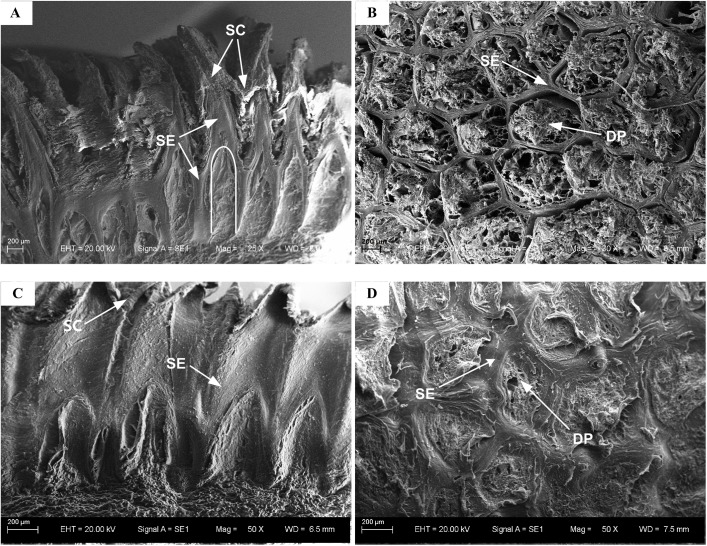
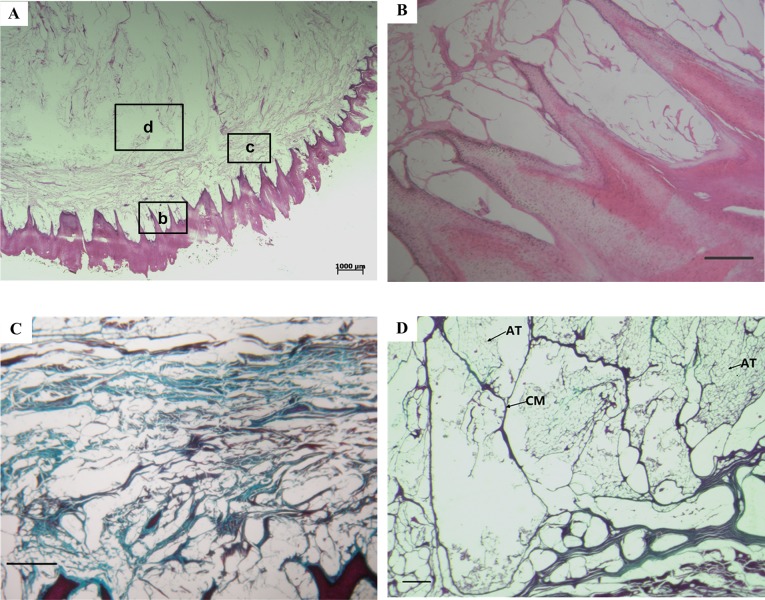
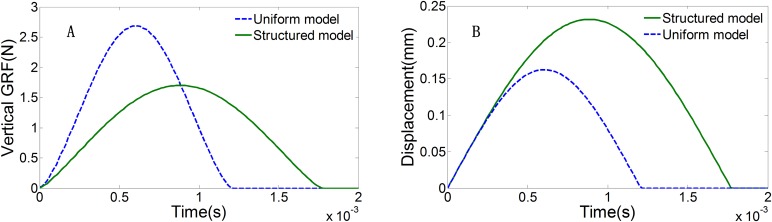
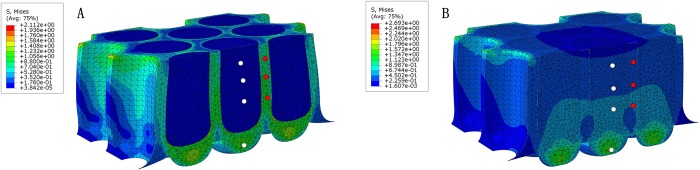
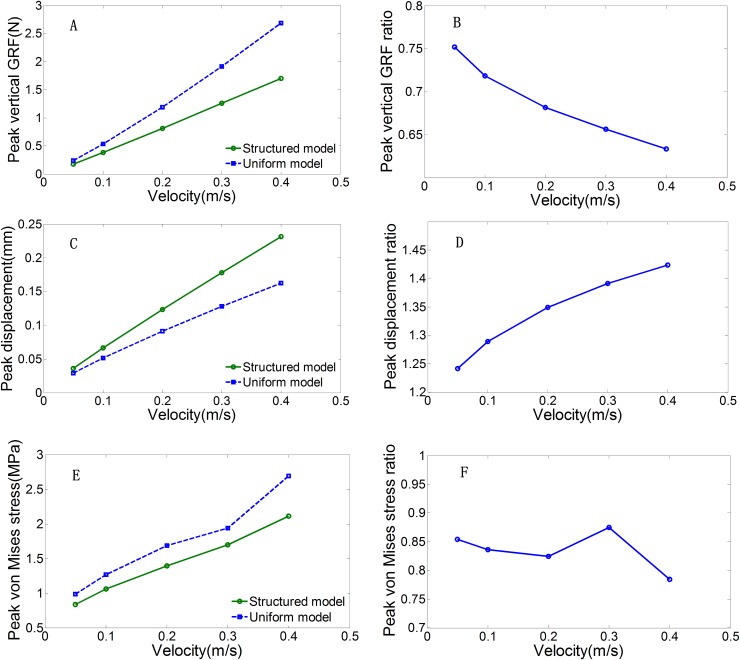
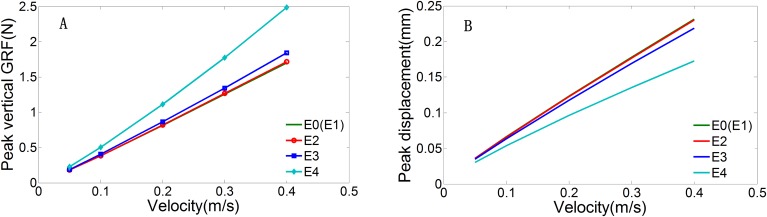
Macroscopic mechanical properties of digitigrade paw pads, such as non-linear elastic and variable stiffness, have been investigated in previous studies; however, little is known about the micro-scale structural characteristics of digitigrade paw pads, or the relationship between these characteristics and the exceptional cushioning of the pads. The digitigrade paw pad consists of a multi-layered structure, which is mainly comprised of a stratified epithelium layer, a dermis layer and a subcutaneous layer. The stratified epithelium layer and dermal papillae constitute the epidermis layer. Finite element analyses were carried out and showed that the epidermis layer effectively attenuated the ground impact across impact velocities of 0.05-0.4 m/s, and that the von Mises stresses were uniformly distributed in this layer. The dermis layer encompassing the subcutaneous layer can be viewed as a hydrostatic system, which can store, release and dissipate impact energy. All three layers in the paw pad work as a whole to meet the biomechanical requirements of animal locomotion. These findings provide insights into the biomechanical functioning of digitigrade paw pads and could be used to facilitate bio-inspired, ground-contacting component development for robots and machines, as well as contribute to footwear design.
以往的研究已经对趾行性爪垫的宏观力学性能,如非线性弹性和可变刚度进行了研究;然而,对于趾行性爪垫的微观结构特征,或者这些特征与爪垫卓越缓冲性能之间的关系,人们却知之甚少。趾行性爪垫由多层结构组成,主要包括分层上皮层、真皮层和皮下层。分层上皮层和真皮乳头构成表皮层。进行了有限元分析,结果表明,表皮层在0.05 - 0.4米/秒的冲击速度范围内有效地衰减了地面冲击力,并且冯·米塞斯应力在该层中均匀分布。包含皮下层的真皮层可被视为一个流体静力系统,它可以存储、释放和消散冲击能量。爪垫中的所有三层共同发挥作用,以满足动物运动的生物力学要求。这些发现为趾行性爪垫的生物力学功能提供了见解,可用于促进受生物启发的机器人和机器地面接触部件的开发,以及为鞋类设计做出贡献。