Pavelko Kevin D, Bell Michael P, Harrington Susan M, Dong Haidong
Department of Immunology, College of Medicine, Mayo Clinic, Rochester, MN, United States.
Department of Urology, College of Medicine, Mayo Clinic, Rochester, MN, United States.
Front Immunol. 2017 Nov 9;8:1532. doi: 10.3389/fimmu.2017.01532. eCollection 2017.
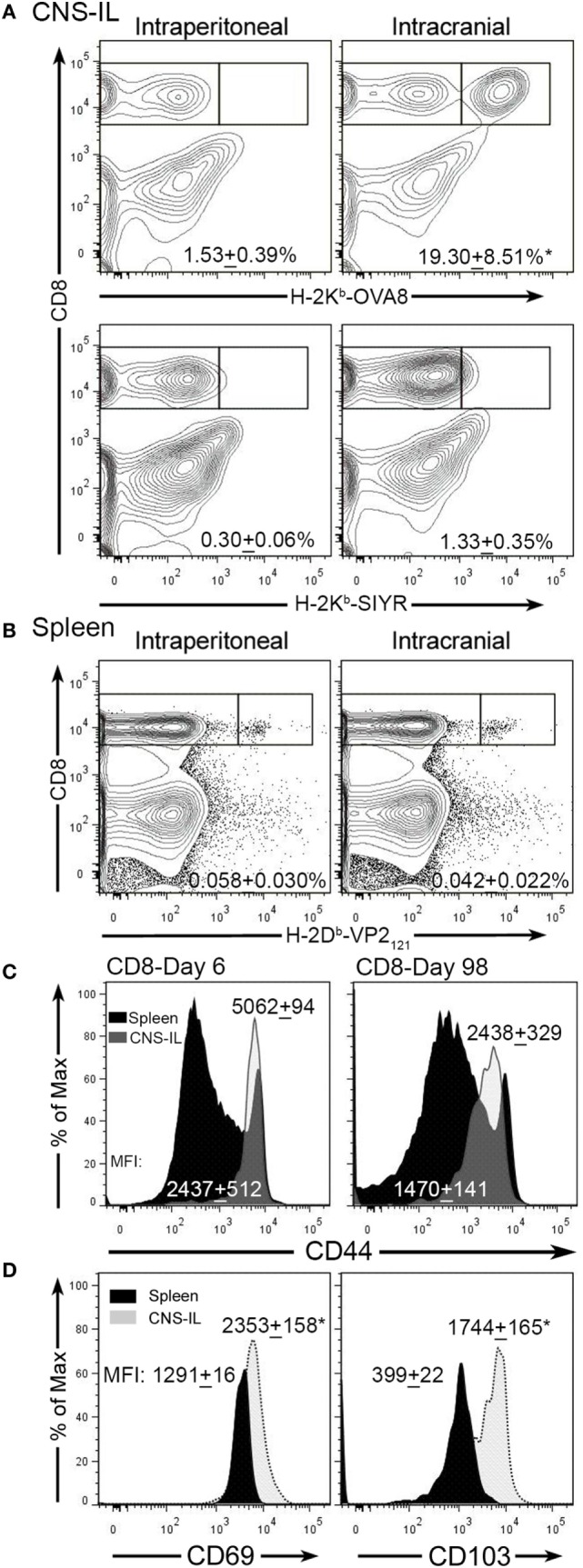
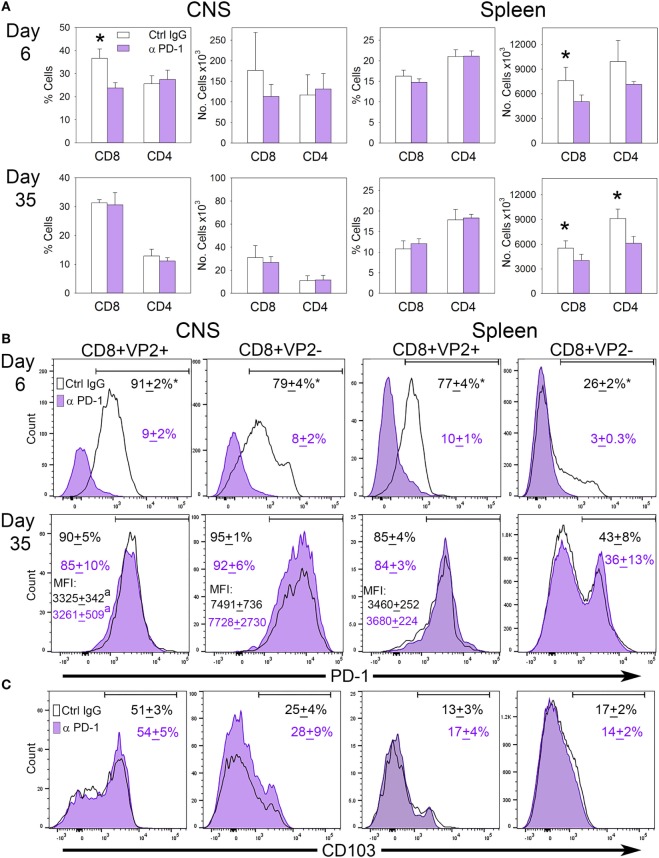
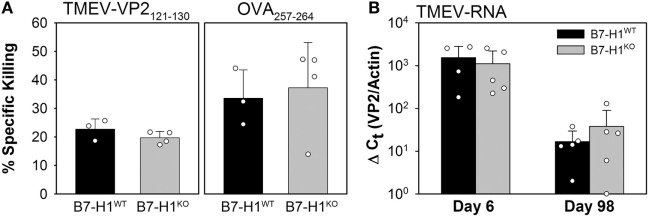
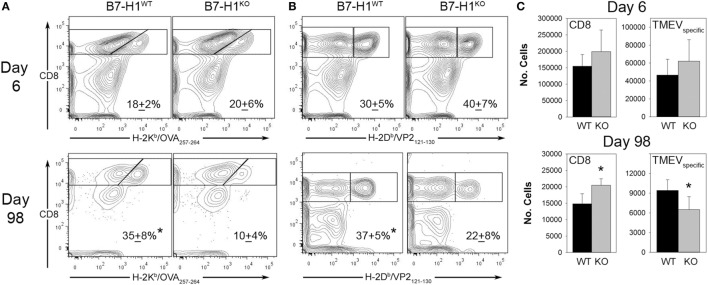
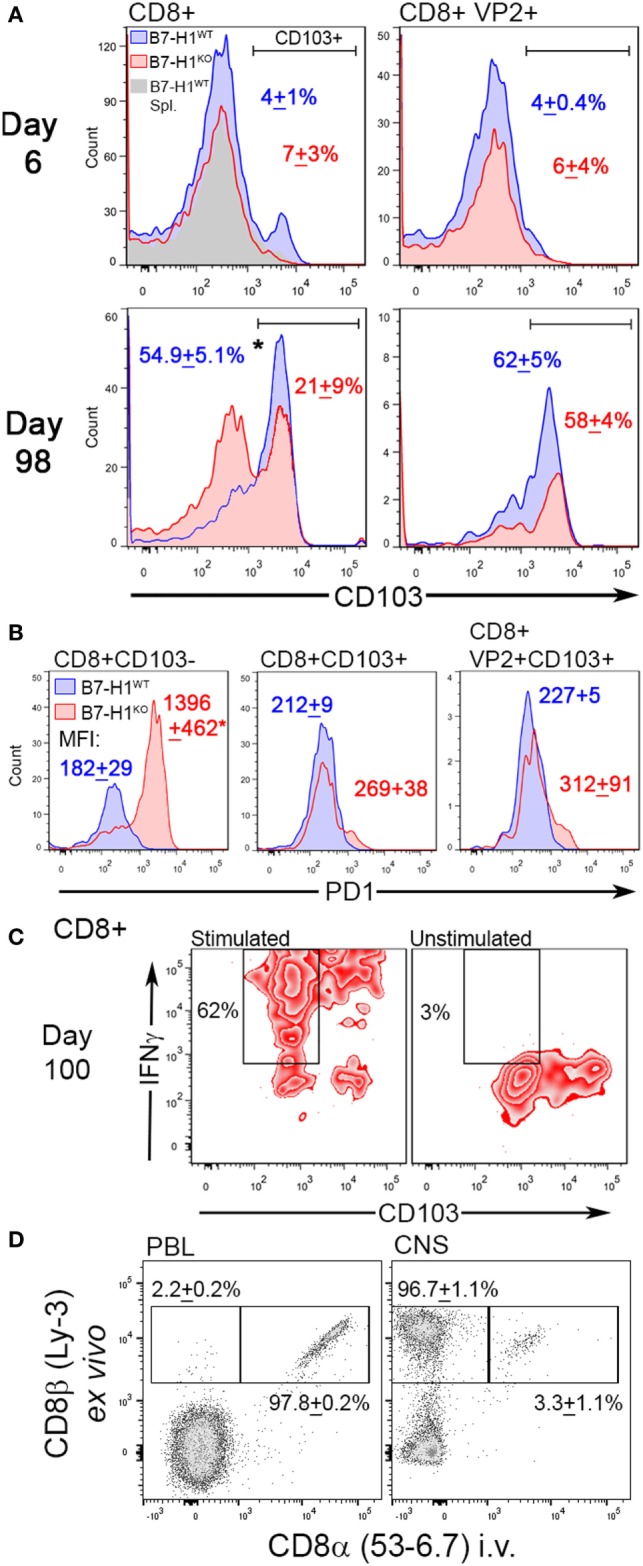
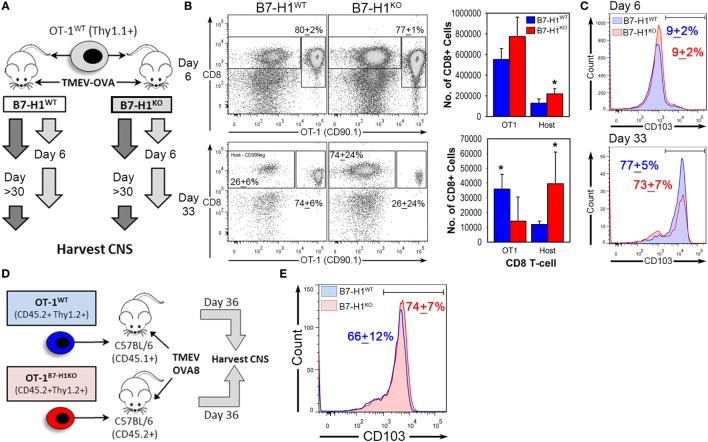
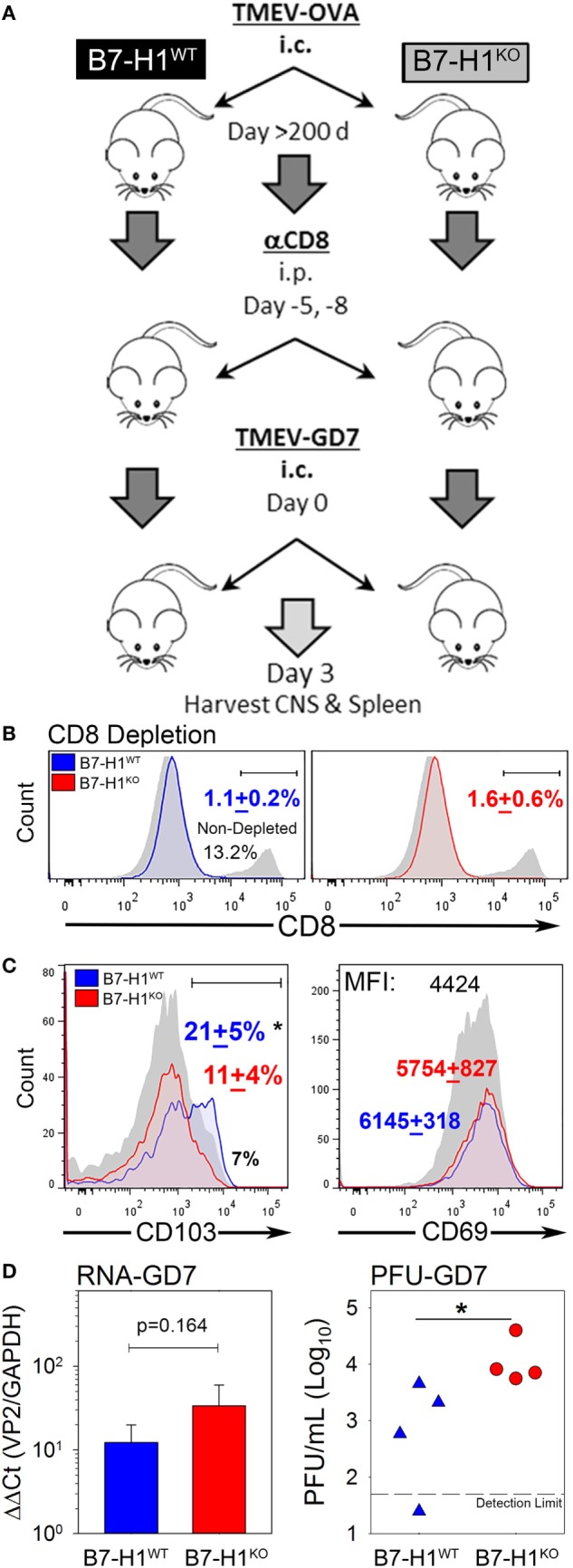
Therapies that target the PD-1/B7-H1 axis have revolutionized cancer treatment, yet precise knowledge of how this pathway provides benefit continues to evolve. Here, we report a novel role for the immune checkpoint ligand B7-H1 in the accumulation of tissue-resident memory CD8 T-cells (T). After intracranial infection, Theiler's murine encephalomyelitis virus (TMEV) generates T that are maintained in the central nervous system (CNS) tissues of B7-H1 animals. Although no differences in acute T-cell responses between B7-H1 and B7-H1 are observed, at long-term periods post-infection the maintenance of CD8 T is diminished in B7-H1 animals. This is accompanied by redistribution of the resident CD8 population from primarily CD103 T to a diminished population of T and a preponderance of non-specified PD-1 CD103 CD8 T-cells. T-cell transfer studies demonstrate that host B7-H1 is necessary for maintaining T and limiting accumulation of PD-1 CD103 CD8 T-cells. The lack of host B7-H1 results in compromised control of a heterologous virus re-challenge demonstrating a functional defect in T mediated virus control. This study reveals a new role for B7-H1 in T and pro-inflammatory PD-1 CD103 CD8 T-cell accumulation in the CNS and gives insight for using B7-H1/PD-1 blockade in modulating long-term T-cell protection.
靶向PD-1/B7-H1轴的疗法彻底改变了癌症治疗方式,但对于该信号通路发挥作用的精确机制仍在不断深入研究。在此,我们报告免疫检查点配体B7-H1在组织驻留记忆性CD8 T细胞(T细胞)蓄积过程中具有新的作用。颅内感染后,泰勒氏鼠脑脊髓炎病毒(TMEV)在B7-H1基因敲除动物的中枢神经系统(CNS)组织中产生并维持T细胞。虽然在B7-H1基因敲除和野生型动物之间未观察到急性T细胞反应的差异,但在感染后的长期阶段,B7-H1基因敲除动物中CD8 T细胞的维持能力下降。这伴随着驻留CD8 T细胞群体从主要为CD103 + T细胞重新分布为数量减少的T细胞以及大量非特异性PD-1 + CD103 - CD8 T细胞。T细胞转移研究表明,宿主B7-H1对于维持T细胞和限制PD-1 + CD103 - CD8 T细胞的蓄积是必需的。缺乏宿主B7-H1会导致对异源病毒再次攻击的控制受损,表明T细胞介导的病毒控制存在功能缺陷。本研究揭示了B7-H1在中枢神经系统中T细胞以及促炎性PD-1 + CD103 - CD8 T细胞蓄积方面的新作用,并为利用B7-H1/PD-1阻断来调节长期T细胞保护提供了思路。