Joint Department of Biomedical Engineering, University of North Carolina at Chapel Hill, NC and North Carolina State University, Raleigh, NC, USA.
Sci Rep. 2017 Nov 29;7(1):16595. doi: 10.1038/s41598-017-16824-1.
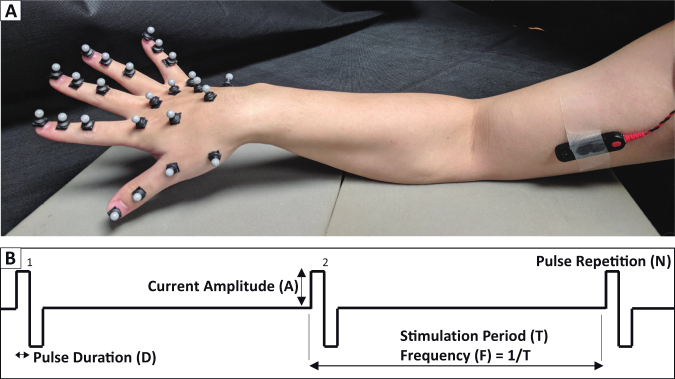
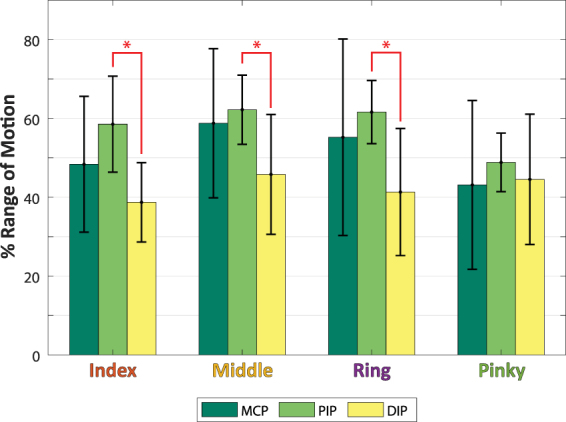
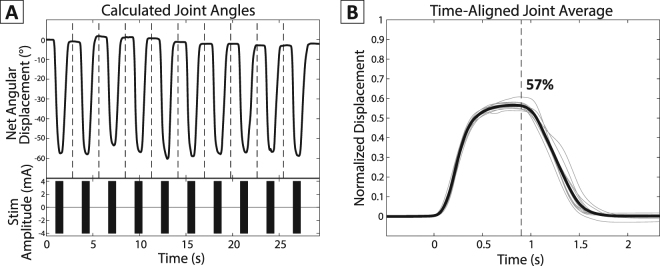
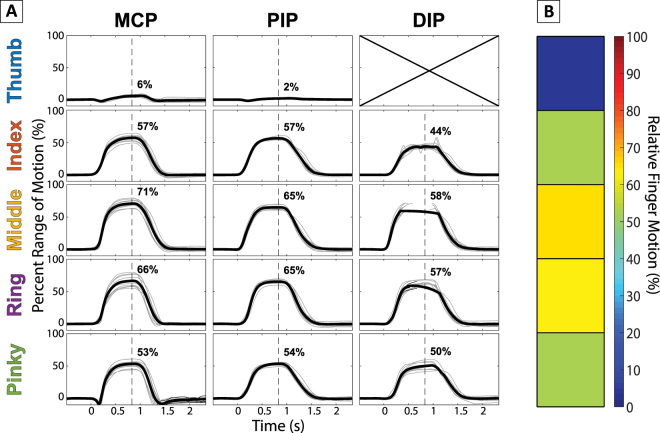
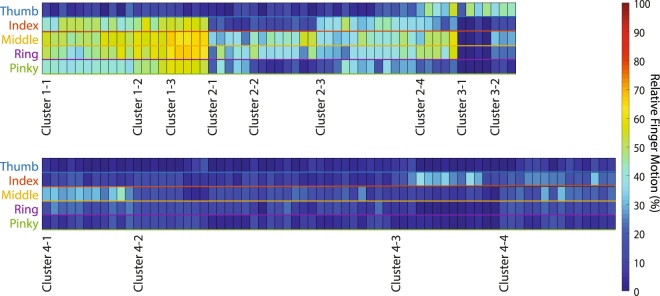
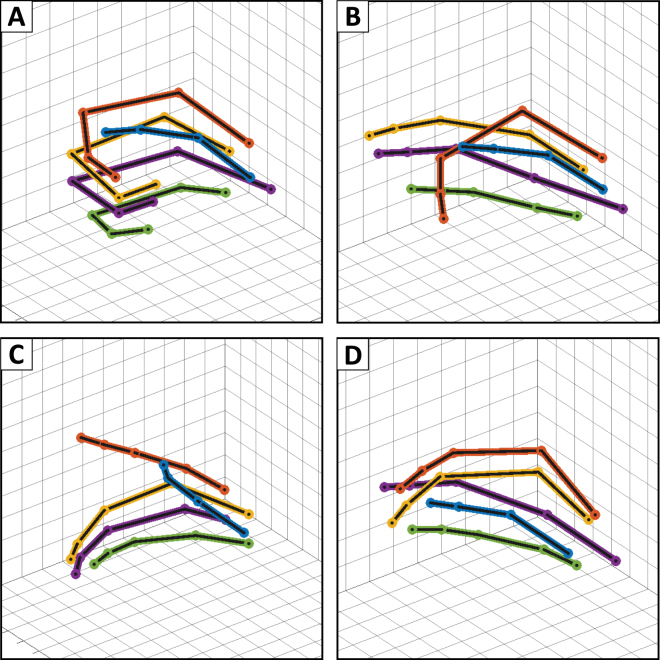
Various neurological conditions, such as stroke or spinal cord injury, result in an impaired control of the hand. One method of restoring this impairment is through functional electrical stimulation (FES). However, traditional FES techniques often lead to quick fatigue and unnatural ballistic movements. In this study, we sought to explore the capabilities of a non-invasive proximal nerve stimulation technique in eliciting various hand grasp patterns. The ulnar and median nerves proximal to the elbow joint were activated transcutanously using a programmable stimulator, and the resultant finger flexion joint angles were recorded using a motion capture system. The individual finger motions averaged across the three joints were analyzed using a cluster analysis, in order to classify the different hand grasp patterns. With low current intensity (<5 mA and 100 µs pulse width) stimulation, our results show that all of our subjects demonstrated a variety of consistent hand grasp patterns including single finger movement and coordinated multi-finger movements. This study provides initial evidence on the feasibility of a proximal nerve stimulation technique in controlling a variety of finger movements and grasp patterns. Our approach could also be developed into a rehabilitative/assistive tool that can result in flexible movements of the fingers.
各种神经状况,如中风或脊髓损伤,会导致手部控制能力受损。恢复这种损伤的一种方法是通过功能性电刺激(FES)。然而,传统的 FES 技术常常导致快速疲劳和不自然的弹道运动。在这项研究中,我们试图探索一种非侵入性的近端神经刺激技术在引发各种手抓握模式方面的能力。使用可编程刺激器经皮激活肘关节近端的尺神经和正中神经,并使用运动捕捉系统记录手指弯曲关节角度。使用聚类分析对三个关节的平均单个手指运动进行分析,以对不同的手抓握模式进行分类。在低电流强度(<5 mA 和 100 µs 脉冲宽度)刺激下,我们的结果表明,所有研究对象都表现出各种一致的手抓握模式,包括单个手指运动和协调的多个手指运动。这项研究初步证明了近端神经刺激技术在控制各种手指运动和抓握模式方面的可行性。我们的方法也可以开发成一种康复/辅助工具,可以实现手指的灵活运动。