Bao Wenquan, Wuyun Tana, Li Tiezhu, Liu Huimin, Jiang Zhongmao, Zhu Xuchun, Du Hongyan, Bai Yu-E
Non-Timber Forest Research and Development Center, Chinese Academy of Forestry, Zhengzhou, Henan, People's Republic of China.
College of Forestry, Inner Mongolia Agricultural University, Hohhot, People's Republic of China.
PLoS One. 2017 Nov 29;12(11):e0188685. doi: 10.1371/journal.pone.0188685. eCollection 2017.
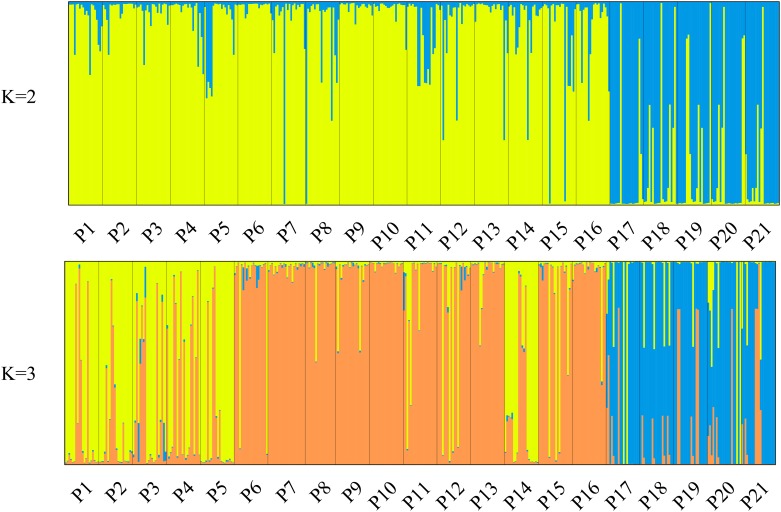
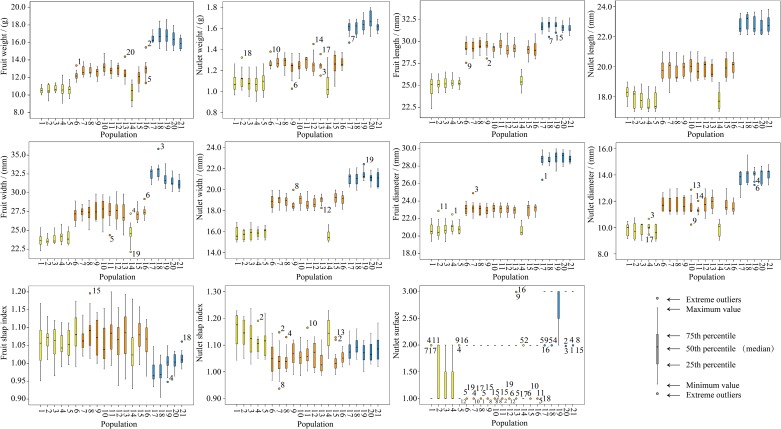
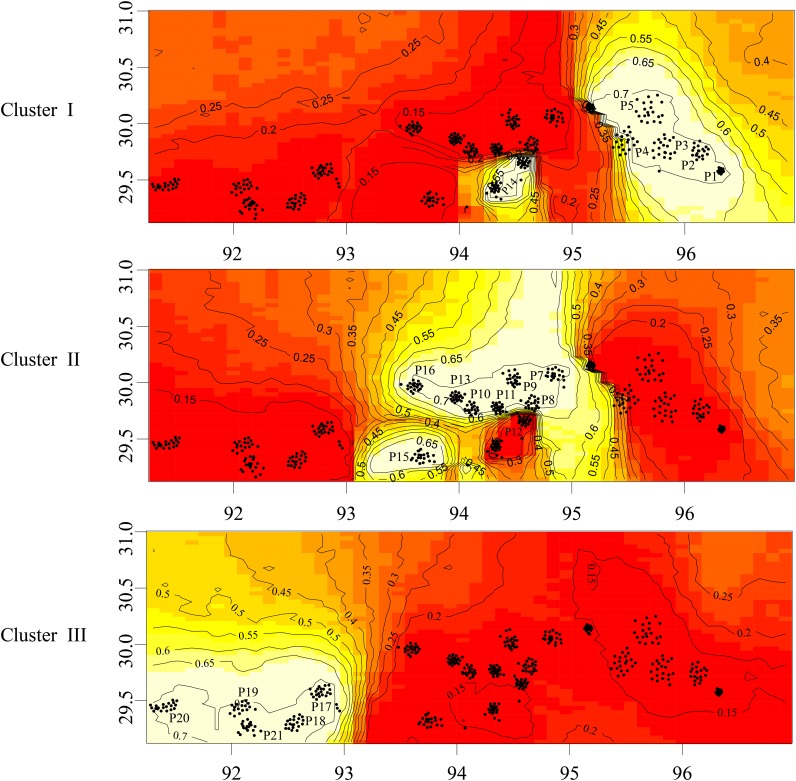
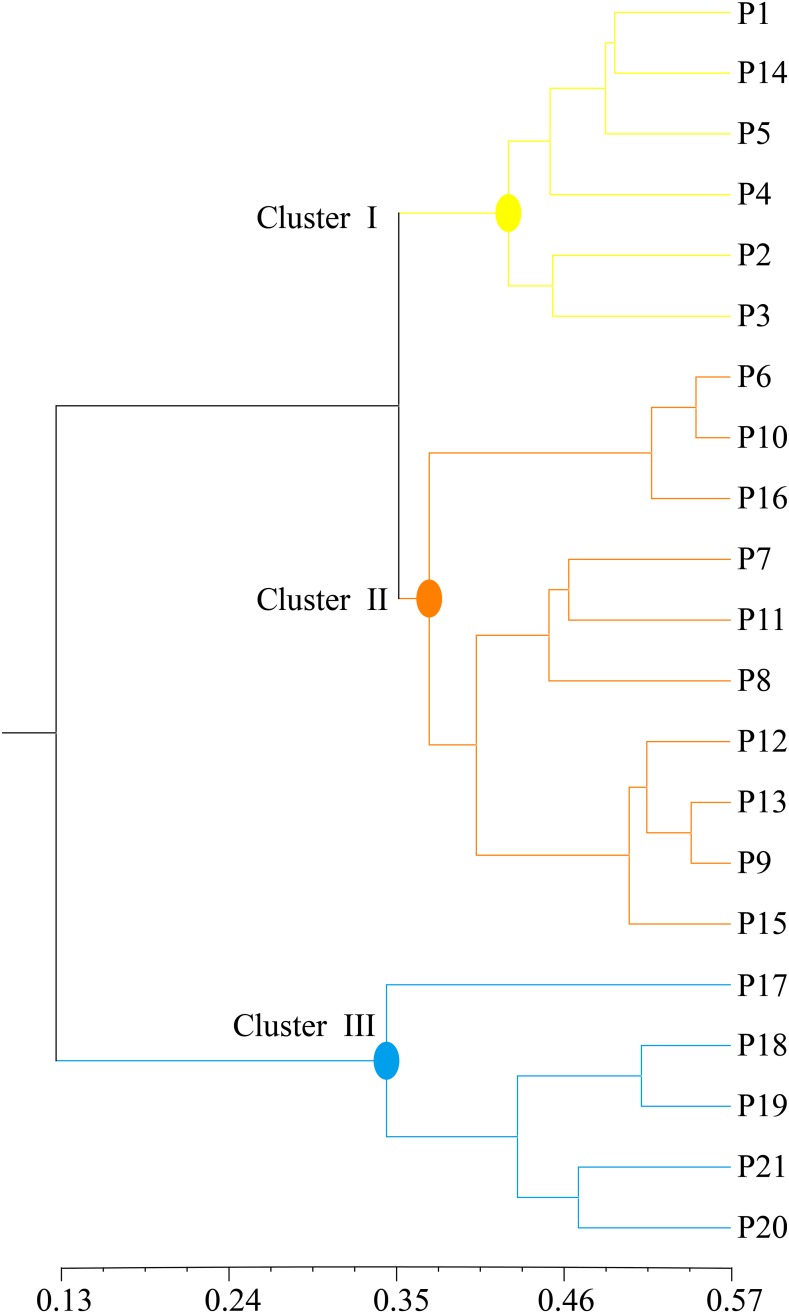
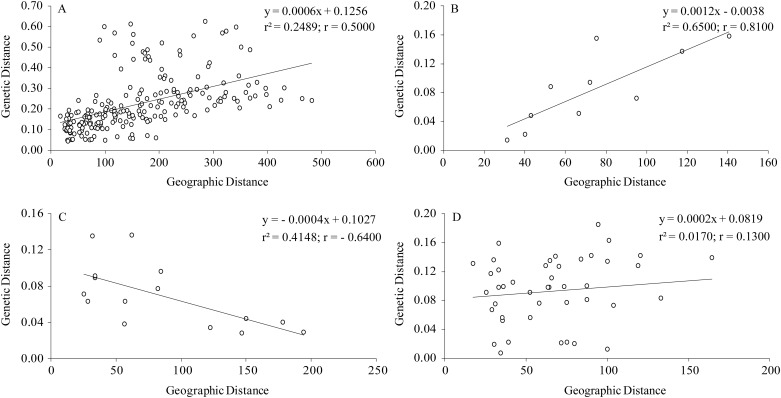
Prunus mira Koehne, an important economic fruit crop with high breeding and medicinal values, and an ancestral species of many cultivated peach species, has recently been declared an endangered species. However, basic information about genetic diversity, population structure, and morphological variation is still limited for this species. In this study, we sampled 420 P. mira individuals from 21 wild populations in the Tibet plateau to conduct a comprehensive analysis of genetic and morphological characteristics. The results of molecular analyses based on simple sequence repeat (SSR) markers indicated moderate genetic diversity and inbreeding (A = 3.8, Ae = 2.5, He = 0.52, Ho = 0.44, I = 0.95, FIS = 0.17) within P. mira populations. STRUCTURE, GENELAND, and phylogenetic analyses assigned the 21 populations to three genetic clusters that were moderately correlated with geographic altitudes, and this may have resulted from significantly different climatic and environmental factors at different altitudinal ranges. Significant isolation-by-distance was detected across the entire distribution of P. mira populations, but geographic altitude might have more significant effects on genetic structure than geographic distance in partial small-scale areas. Furthermore, clear genetic structure, high genetic differentiation, and restricted gene flow were detected between pairwise populations from different geographic groups, indicating that geographic barriers and genetic drift have significant effects on P. mira populations. Analyses of molecular variance based on the SSR markers indicated high variation (83.7% and 81.7%), whereas morphological analyses revealed low variation (1.30%-36.17%) within the populations. Large and heavy fruits were better adapted than light fruits and nutlets to poor climate and environmental conditions at high altitudes. Based on the results of molecular and morphological analyses, we classified the area into three conservation units and proposed several conservation strategies for wild P. mira populations in the Tibet plateau.
光核桃是一种具有重要经济价值、高育种价值和药用价值的水果作物,也是许多栽培桃品种的祖先物种,最近被宣布为濒危物种。然而,关于该物种的遗传多样性、种群结构和形态变异的基础信息仍然有限。在本研究中,我们从青藏高原的21个野生种群中采集了420个光核桃个体,对其遗传和形态特征进行了综合分析。基于简单序列重复(SSR)标记的分子分析结果表明,光核桃种群内存在中等程度的遗传多样性和近亲繁殖(A = 3.8,Ae = 2.5,He = 0.52,Ho = 0.44,I = 0.95,FIS = 0.17)。STRUCTURE、GENELAND和系统发育分析将21个种群分为三个遗传簇,这些遗传簇与地理海拔高度存在中等程度的相关性,这可能是由于不同海拔范围内显著不同的气候和环境因素导致的。在光核桃种群的整个分布范围内检测到显著的距离隔离,但在部分小尺度区域,地理海拔对遗传结构的影响可能比地理距离更显著。此外,在来自不同地理组的成对种群之间检测到明显的遗传结构、高遗传分化和有限的基因流,这表明地理障碍和遗传漂变对光核桃种群有显著影响。基于SSR标记的分子方差分析表明种群内变异较高(83.7%和81.7%),而形态分析显示种群内变异较低(1.30%-36.17%)。在高海拔地区,大而重的果实比轻的果实和小坚果更能适应恶劣的气候和环境条件。基于分子和形态分析的结果,我们将该区域划分为三个保护单元,并为青藏高原野生光核桃种群提出了几种保护策略。