Wang Lei-Yun, Cui Jia-Jia, Zhu Tao, Shao Wei-Hua, Zhao Yi, Wang Sai, Zhang Yu-Peng, Wu Ji-Chu, Zhang Le
Department of Clinical Pharmacology, XiangYa Hospital, Central South University, Changsha 410008, P.R. China.
Institute of Clinical Pharmacology, Central South University, Hunan Key Laboratory of Pharmacogenetics, Changsha 410078, P.R. China.
Oncotarget. 2017 Sep 8;8(54):92055-92063. doi: 10.18632/oncotarget.20739. eCollection 2017 Nov 3.
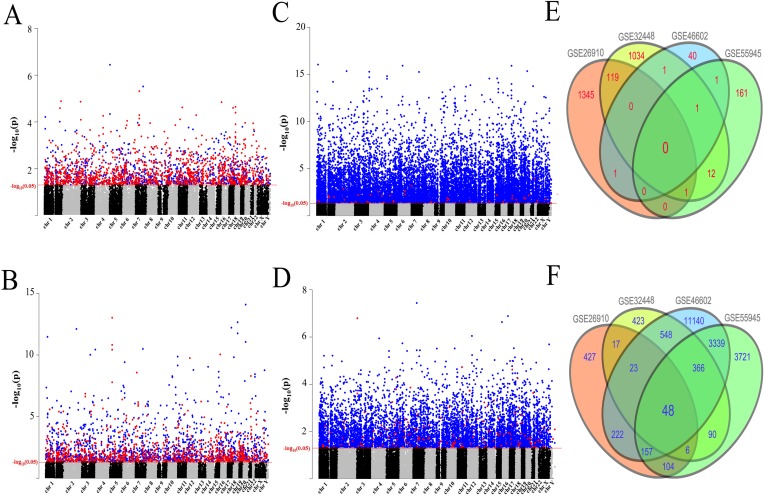
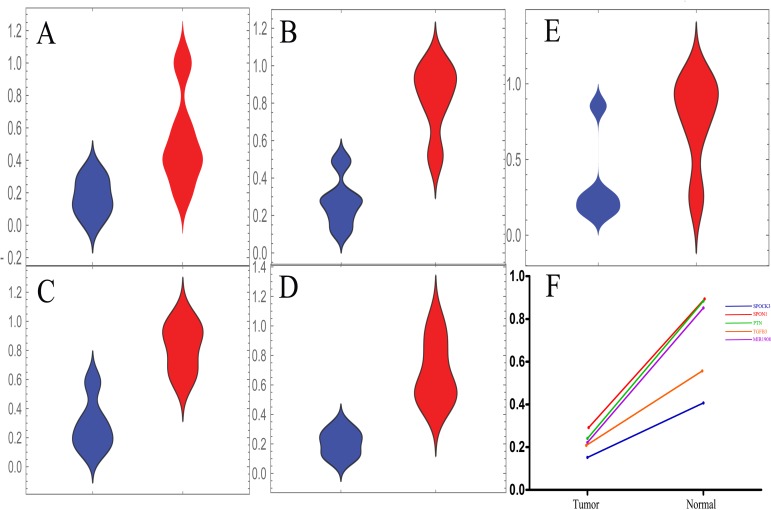
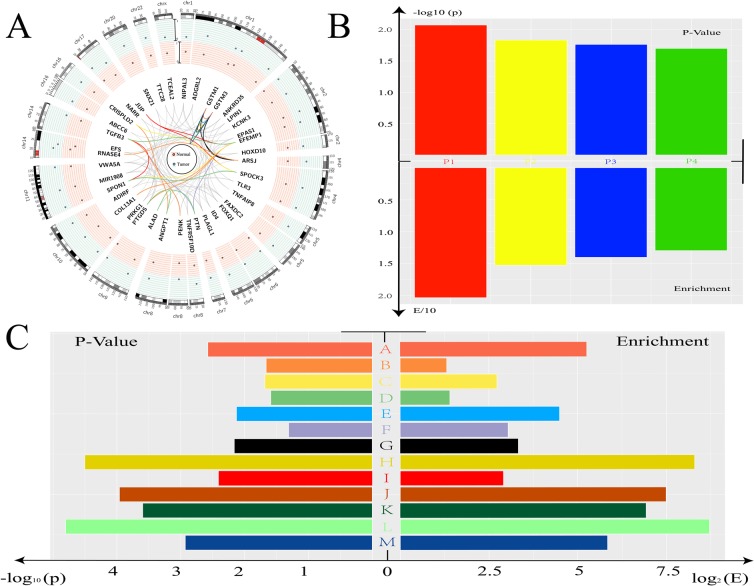
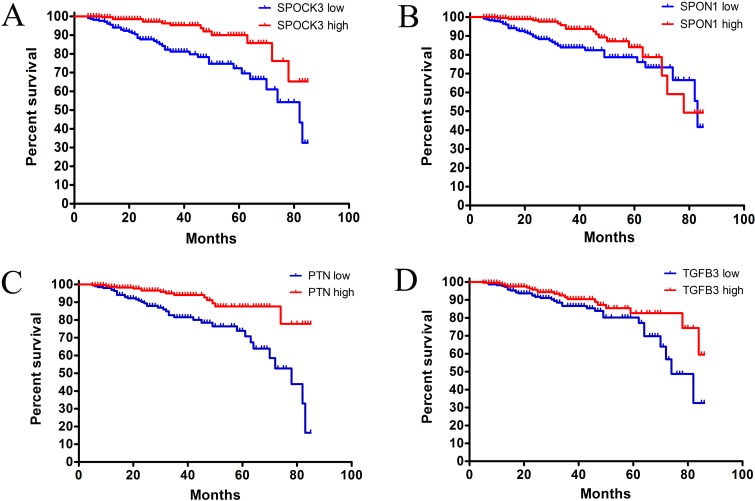
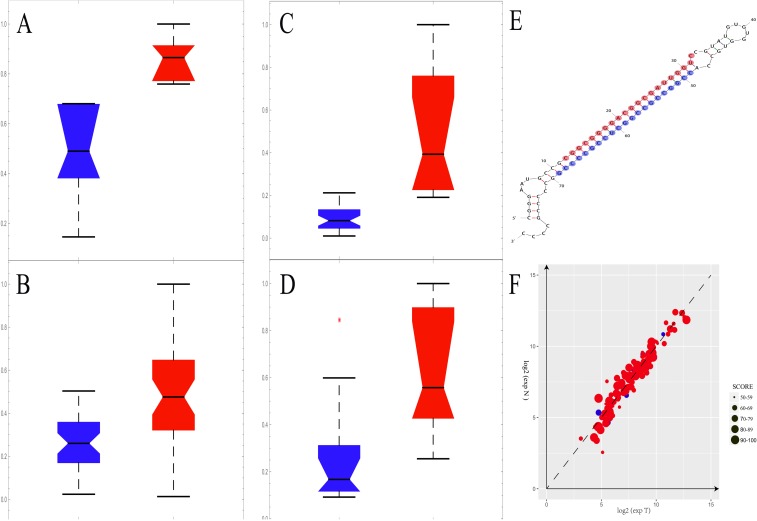
Prostate cancer is a threat to men and usually occurs in aged males. Though prostate specific antigen level and Gleason score are utilized for evaluation of the prostate cancer in clinic, the biomarkers for this malignancy have not been widely recognized. Furthermore, the outcome varies across individuals receiving comparable treatment regimens and the underlying mechanism is still unclear. We supposed that genetic feature may be responsible for, at least in part, this process and conducted a two-cohort study to compare the genetic difference in tumorous and normal tissues of prostate cancer patients. The Gene Expression Omnibus dataset were used and a total of 41 genes were found significantly differently expressed in tumor tissues as compared with normal prostate tissues. Four genes (SPOCK3, SPON1, PTN and TGFB3) were selected for further evaluation after Gene Ontology analysis, Kyoto Encyclopedia of Genes and Genomes pathway analysis and clinical association analysis. MIR1908 was also found decreased expression level in prostate cancer whose target genes were found expressing in both prostate tumor and normal tissues. These results indicated that these potential biomarkers deserve attention in prostate cancer patients and the underlying mechanism should be further investigated.
前列腺癌对男性构成威胁,通常发生在老年男性中。尽管临床上利用前列腺特异性抗原水平和 Gleason 评分来评估前列腺癌,但这种恶性肿瘤的生物标志物尚未得到广泛认可。此外,接受相似治疗方案的个体的治疗结果存在差异,其潜在机制仍不清楚。我们推测遗传特征可能至少部分地导致了这一过程,并进行了一项双队列研究,以比较前列腺癌患者肿瘤组织和正常组织中的基因差异。使用了基因表达综合数据库,发现共有 41 个基因在肿瘤组织中与正常前列腺组织相比有显著差异表达。经过基因本体分析、京都基因与基因组百科全书通路分析和临床关联分析后,选择了四个基因(SPOCK3、SPON1、PTN 和 TGFB3)进行进一步评估。还发现 MIR1908 在前列腺癌中的表达水平降低,其靶基因在前列腺肿瘤组织和正常组织中均有表达。这些结果表明,这些潜在的生物标志物在前列腺癌患者中值得关注,其潜在机制应进一步研究。