Urabe Fumihiko, Kosaka Nobuyoshi, Sawa Yurika, Ito Kagenori, Kimura Takahiro, Egawa Shin, Ochiya Takahiro, Yamamoto Yusuke
Department of Molecular and Cellular Medicine, Institute of Medical Science, Tokyo Medical University, Tokyo, Japan.
Department of Urology, The Jikei University School of Medicine, Tokyo, Japan.
Cancer Sci. 2020 Sep;111(9):3258-3267. doi: 10.1111/cas.14535. Epub 2020 Jul 18.
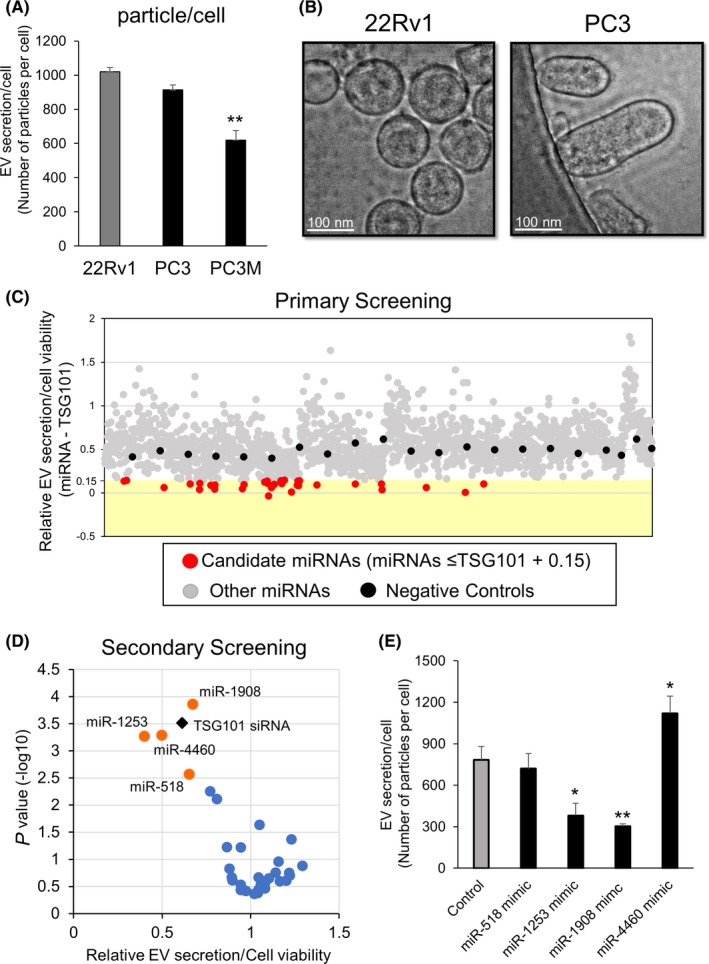
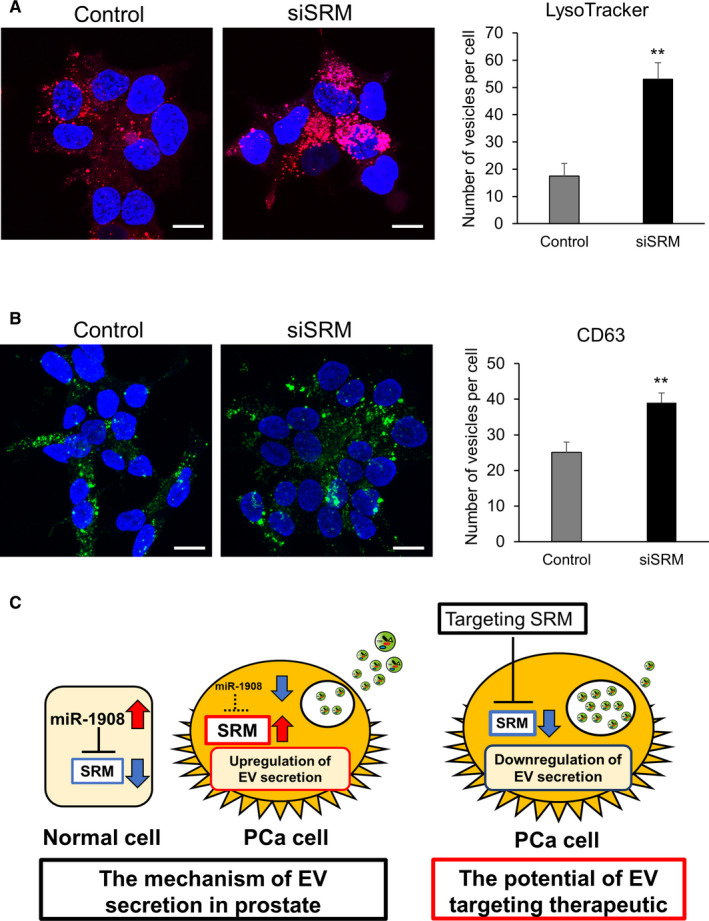
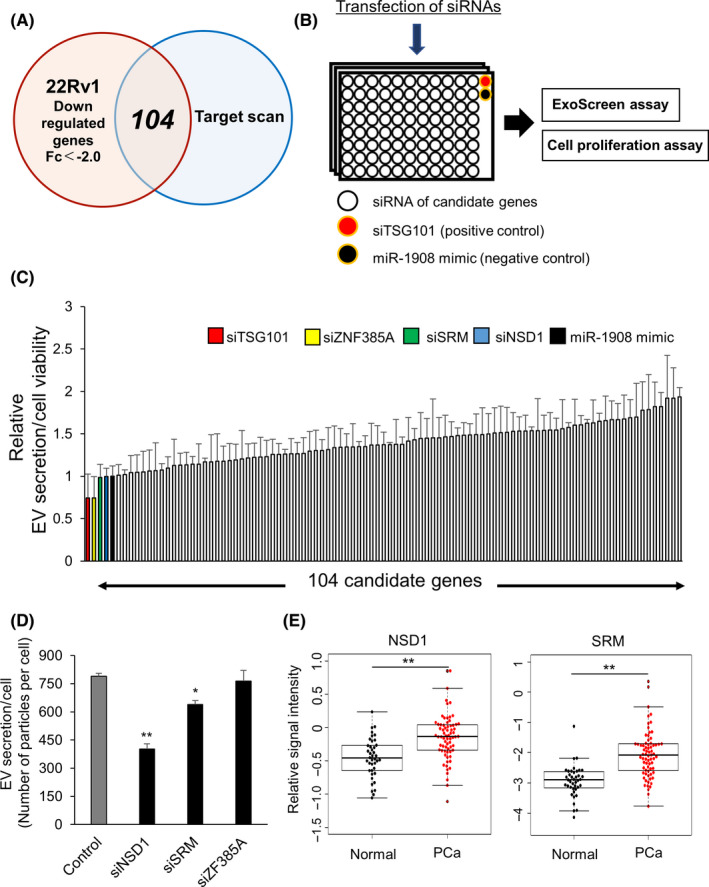
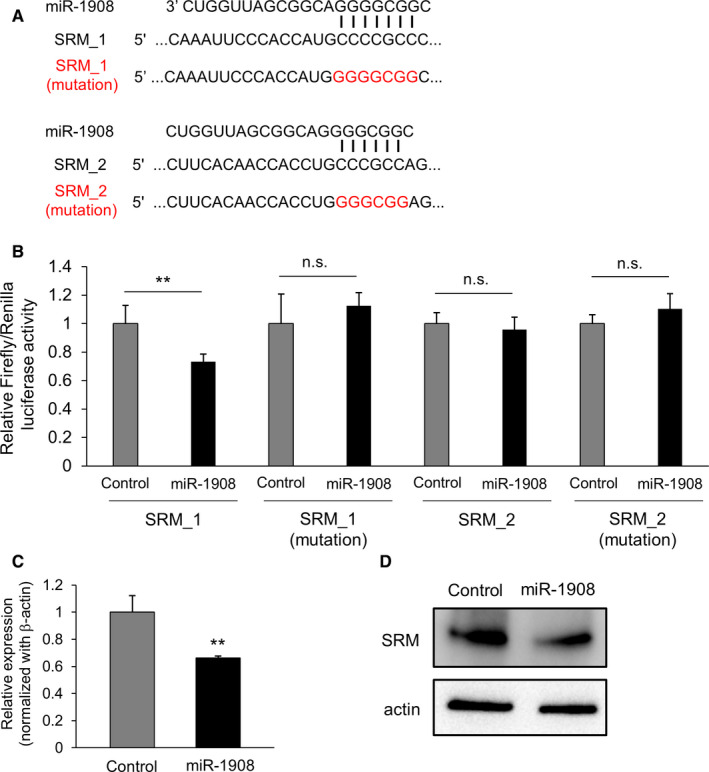
Targeting extracellular vesicle (EV) secretion can have potential clinical implications for cancer therapy, however the precise regulatory mechanisms of EV secretion are not fully understood. Recently, we have shown a novel pathway of EV biogenesis in PCa cell lines, PC3 and PC3M. However, as the characteristics of EVs are divergent even among PCa cell lines, we hypothesized that other pathways or common regulatory pathways of EV biogenesis still exist. Here, we performed quantitative high-throughput screening to determine the key regulatory genes involved in EV biogenesis in 22Rv1 cells, which secrete a different type of EVs. In total, 1728 miRNAs were screened and miR-1908 was selected as the potential miRNA regulating EV biogenesis in 22Rv1 cells. Subsequently, we investigated target genes of miR-1908 using siRNA screening and identified that spermidine synthase (SRM) was the key regulator of EV secretion in 22Rv1 cells. Attenuation of SRM expression significantly inhibited secretion of EVs in 22Rv1 cells, and overexpression of SRM was confirmed in PCa tissues. Furthermore, we found that the number of endosome compartments was increased in cellular cytoplasm after knockdown of the SRM gene. In conclusion, our results showed that miR-1908-mediated regulation of SRM can control secretion of EVs in PCa. In addition, these data suggested that the EV secretion pathway was dependent on cellular characteristics.
靶向细胞外囊泡(EV)分泌可能对癌症治疗具有潜在的临床意义,然而,EV分泌的确切调控机制尚未完全明确。最近,我们在前列腺癌细胞系PC3和PC3M中发现了一种新的EV生物发生途径。然而,由于即使在前列腺癌细胞系中,EV的特征也存在差异,我们推测可能还存在其他的EV生物发生途径或共同调控途径。在此,我们进行了定量高通量筛选,以确定参与22Rv1细胞(该细胞分泌不同类型的EV)中EV生物发生的关键调控基因。总共筛选了1728个miRNA,并选择miR-1908作为调控22Rv1细胞中EV生物发生的潜在miRNA。随后,我们使用siRNA筛选研究了miR-1908的靶基因,并确定亚精胺合酶(SRM)是22Rv1细胞中EV分泌的关键调节因子。SRM表达的减弱显著抑制了22Rv1细胞中EV的分泌,并且在前列腺癌组织中证实了SRM的过表达。此外,我们发现敲低SRM基因后,细胞质中的内体区室数量增加。总之,我们的结果表明,miR-1908介导的SRM调控可以控制前列腺癌中EV的分泌。此外,这些数据表明EV分泌途径依赖于细胞特征。