Kwon Mi Jeong, Kim Ryong Nam, Song Kyoung, Jeon Sinyoung, Jeong Hae Min, Kim Joo Seok, Han Jinil, Hong Sungyoul, Oh Ensel, Choi Jong-Sun, An Jungsuk, Pollack Jonathan R, Choi Yoon-La, Park Cheol-Keun, Shin Young Kee
College of Pharmacy, Kyungpook National University, Daegu, Korea.
Research Institute of Pharmaceutical Sciences, College of Pharmacy, Kyungpook National University, Daegu, Korea.
Oncotarget. 2017 Sep 21;8(54):92209-92226. doi: 10.18632/oncotarget.21150. eCollection 2017 Nov 3.
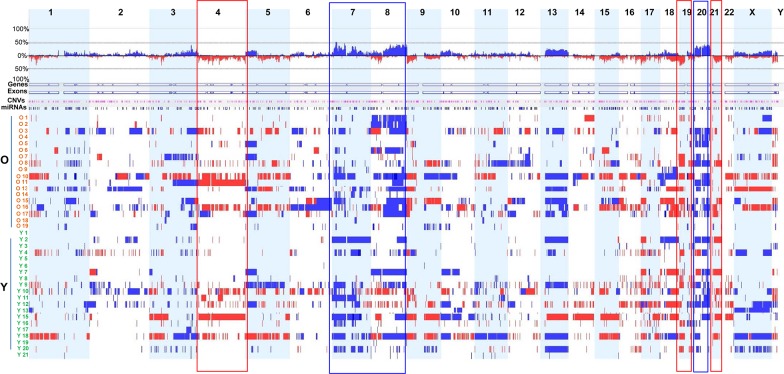
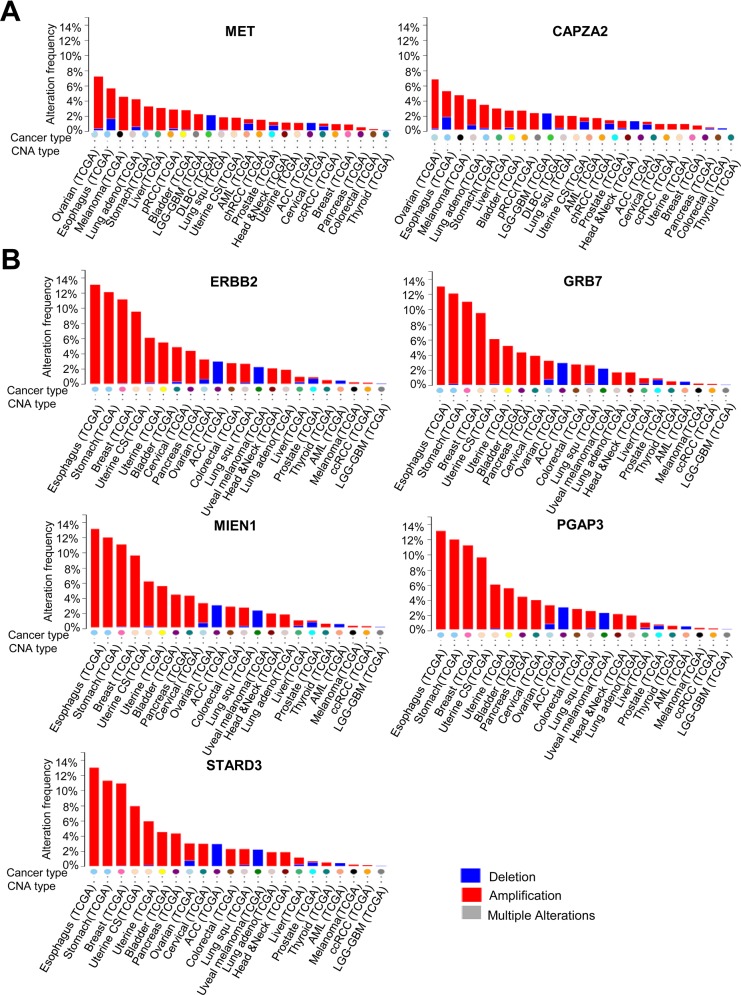
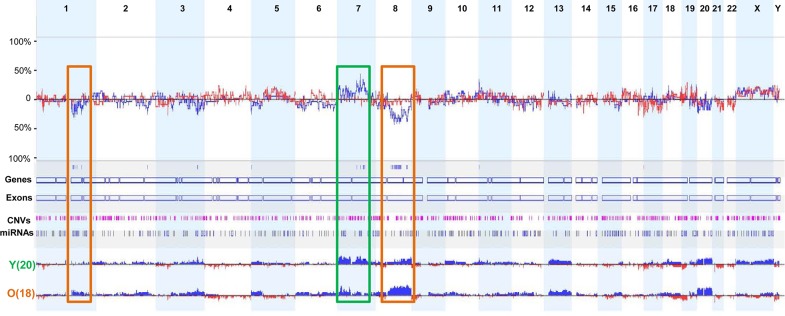
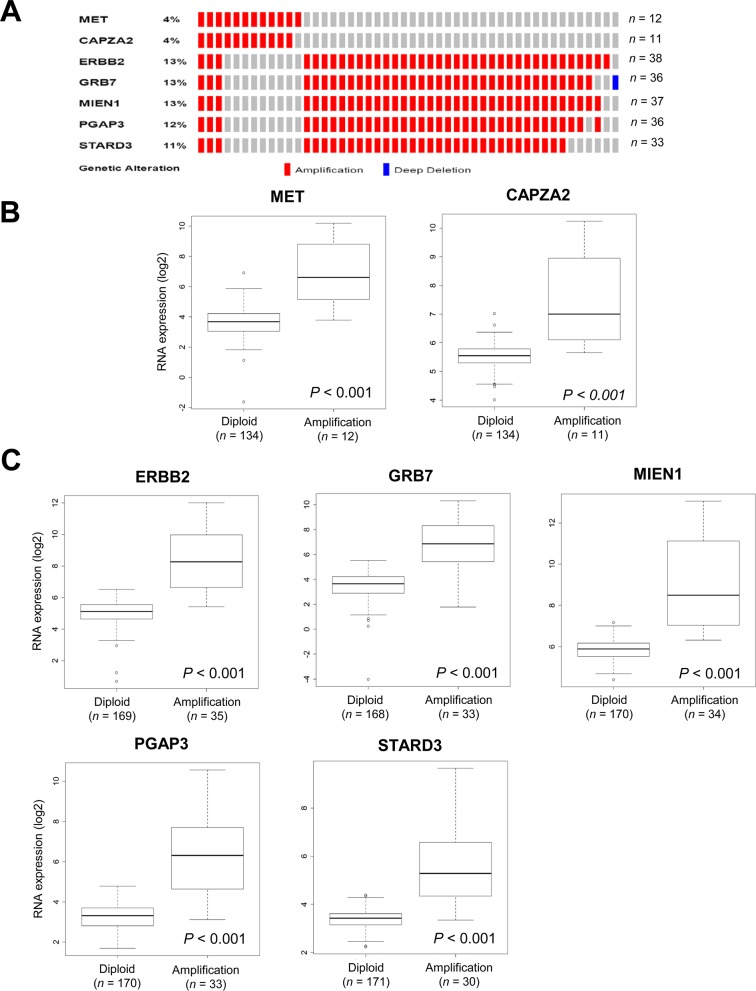
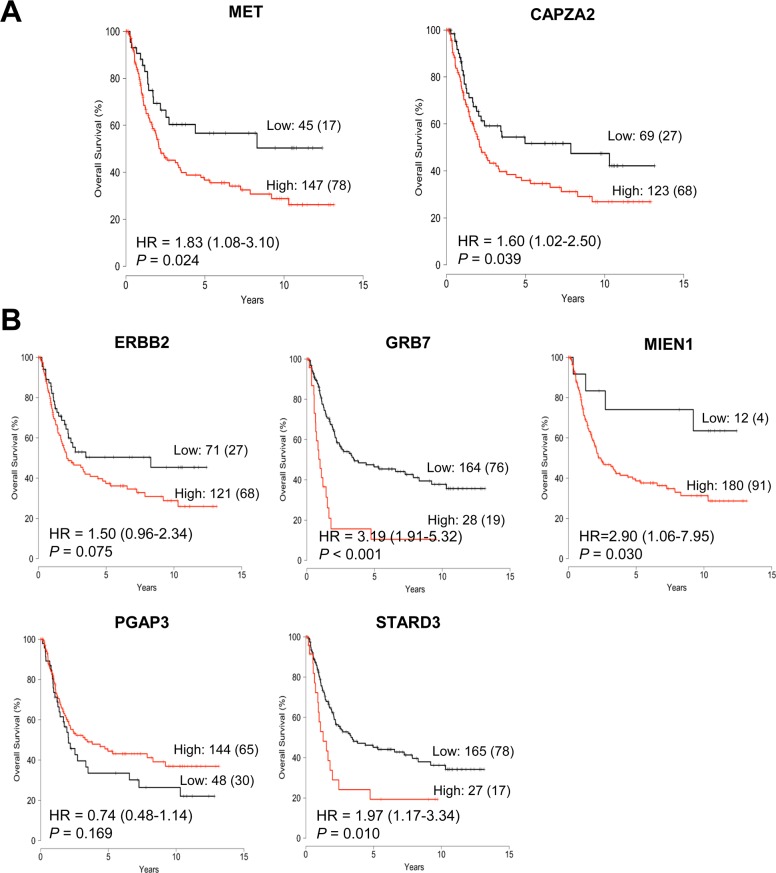
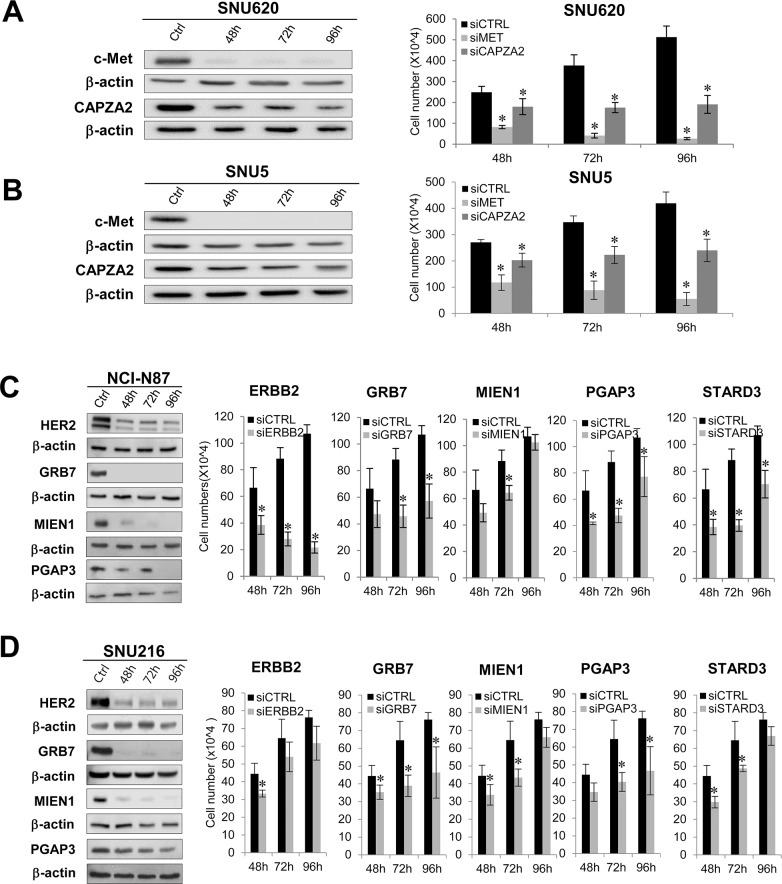
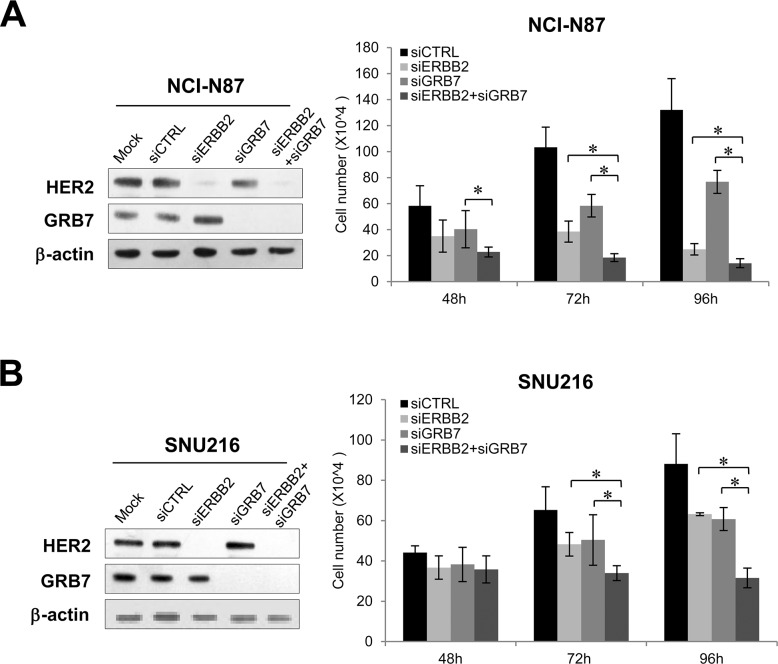
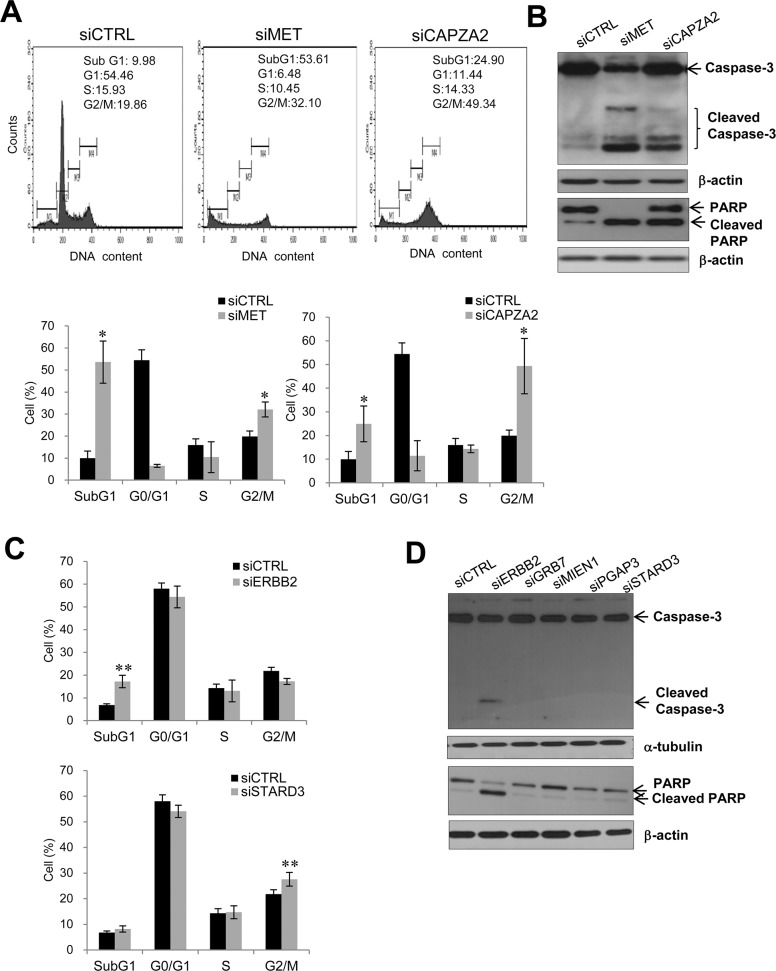
Gastric cancer (GC), one of the most common cancers worldwide, has a high mortality rate due to limited treatment options. Identifying novel and promising molecular targets is a major challenge that must be overcome if treatment of advanced GC is to be successful. Here, we used comparative genomic hybridization and gene expression microarrays to examine genome-wide DNA copy number alterations (CNAs) and global gene expression in 38 GC samples from old and young patients. We identified frequent CNAs, which included copy number gains on chromosomes 3q, 7p, 8q, 20p, and 20q and copy number losses on chromosomes 19p and 21p. The most frequently gained region was 7p21.1 (55%), whereas the most frequently deleted region was 21p11.1 (50%). Recurrent highly amplified regions 17q12 and 7q31.1-7q31.31 harbored two well-known oncogenes: and . Correlation analysis of CNAs and gene expression levels identified (co-amplified with ) and genes , , , and (co-amplified with ) as potential candidate cancer-promoting genes (CPGs). Public dataset analysis confirmed co-amplification of these genes with or in GC tissue samples, and revealed that high expression (except for ) was significantly associated with shorter overall survival. Knockdown of these genes using small interfering RNA led to significant suppression of GC cell proliferation and migration. Reduced GC cell proliferation mediated by knockdown was attributable to attenuated cell cycle progression and increased apoptosis. This study identified novel candidate CPGs co-amplified with or , and suggests that they play a functional role in GC.
胃癌(GC)是全球最常见的癌症之一,由于治疗选择有限,其死亡率很高。如果要成功治疗晚期GC,识别新的、有前景的分子靶点是必须克服的主要挑战。在这里,我们使用比较基因组杂交和基因表达微阵列来检测38例老年和年轻患者的GC样本中的全基因组DNA拷贝数改变(CNA)和整体基因表达。我们鉴定出频繁的CNA,包括3q、7p、8q、20p和20q染色体上的拷贝数增加以及19p和21p染色体上的拷贝数减少。最常增加的区域是7p21.1(55%),而最常缺失的区域是21p11.1(50%)。反复高度扩增的区域17q12和7q31.1 - 7q31.31包含两个著名的癌基因: 和 。CNA与基因表达水平的相关性分析确定 (与 共扩增)以及基因 、 、 和 (与 共扩增)为潜在的候选促癌基因(CPG)。公共数据集分析证实这些基因在GC组织样本中与 或 共扩增,并显示高表达( 除外)与较短的总生存期显著相关。使用小干扰RNA敲低这些基因导致GC细胞增殖和迁移受到显著抑制。 敲低介导的GC细胞增殖减少归因于细胞周期进程减弱和细胞凋亡增加。本研究鉴定出与 或 共扩增的新型候选CPG,并表明它们在GC中发挥功能作用。