Ibrahim Mostafa, Bonfiglio Susan, Schlögl Mathias, Vinales Karyne L, Piaggi Paolo, Venti Colleen, Walter Mary, Krakoff Jonathan, Thearle Marie S
Phoenix Epidemiology and Clinical Research Branch, National Institute of Diabetes and Digestive and Kidney Diseases, National Institutes of Health, Phoenix, Arizona, USA.
Department of Geriatrics and Aging Research, University Hospital Zurich, Zurich, Switzerland.
Obesity (Silver Spring). 2018 Jan;26(1):141-149. doi: 10.1002/oby.22068. Epub 2017 Nov 28.
This study sought to understand how the dietary source of carbohydrates, either high-fructose corn syrup (HFCS) or complex carbohydrates, affects energy expenditure (EE) measures, appetitive sensations, and hormones during 24 hours of overfeeding.
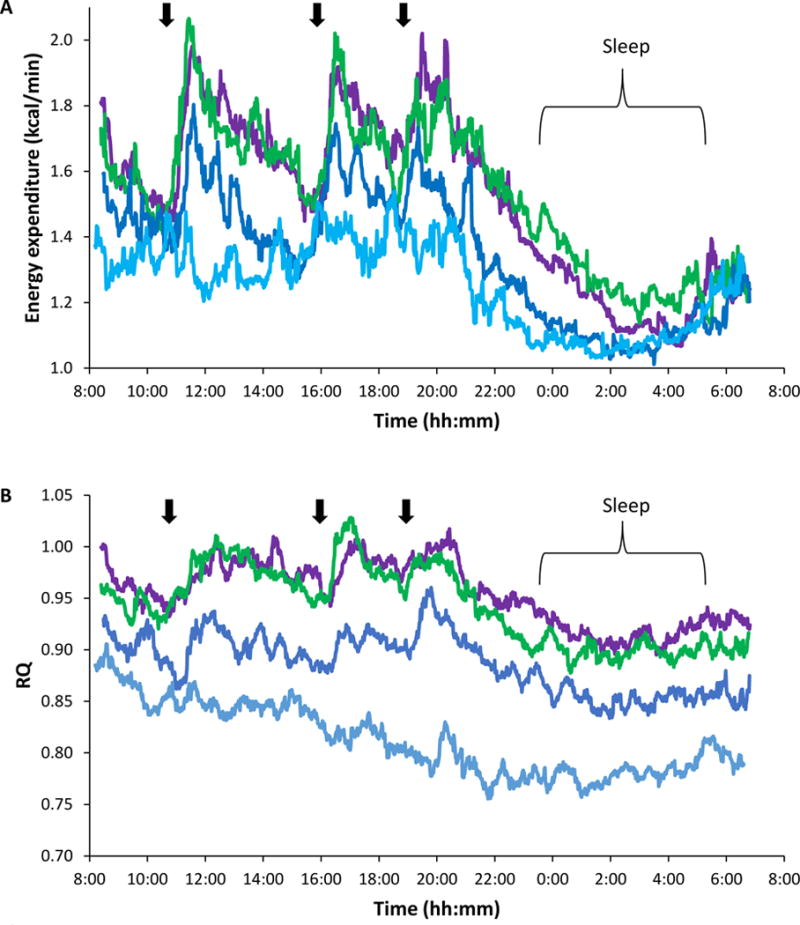
Seventeen healthy participants with normal glucose regulation had 24-hour EE measures and fasting blood and 24-hour urine collection during four different 1-day diets, including an energy-balanced diet, fasting, and two 75% carbohydrate diets (5% fat) given at 200% of energy requirements with either HFCS or whole-wheat foods as the carbohydrate source. In eight volunteers, hunger was assessed with visual analog scales the morning after the diets.
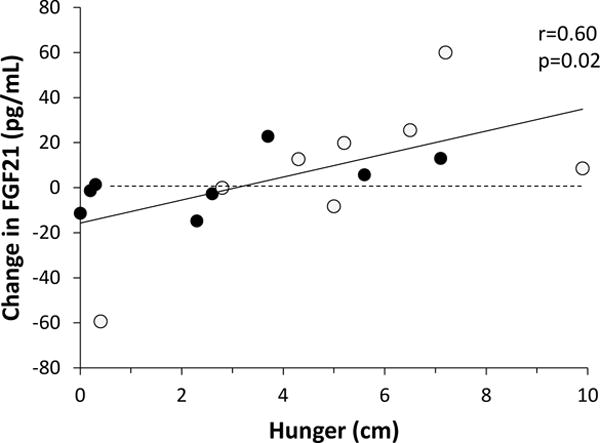
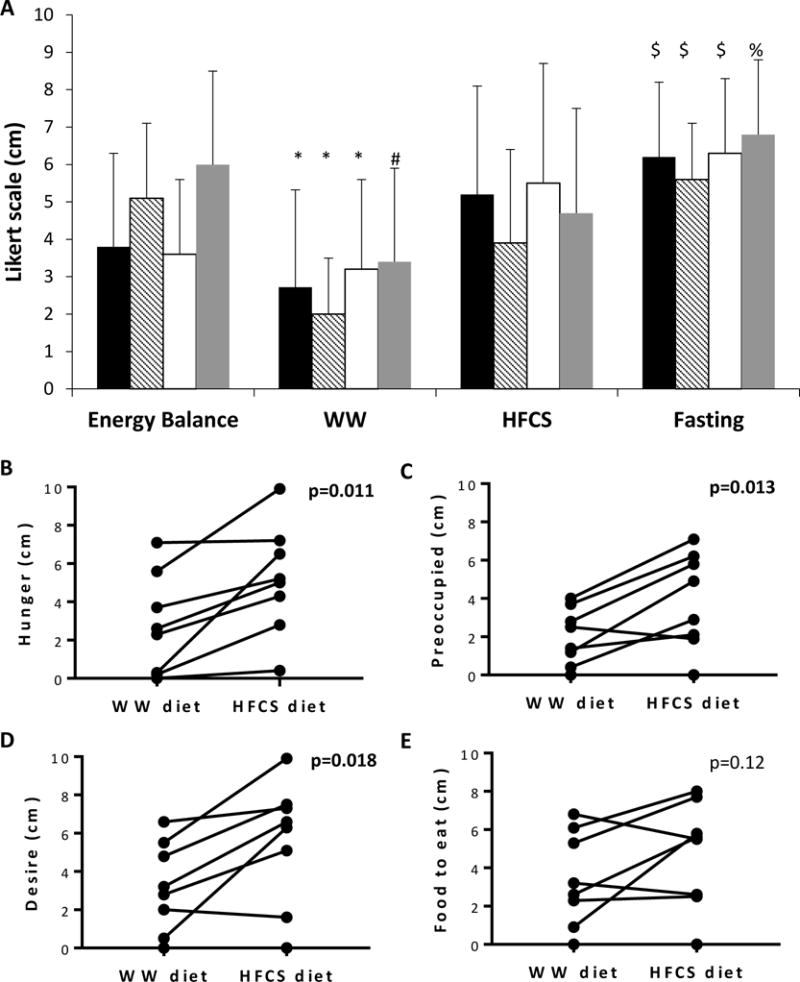
Compared with energy balance, 24-hour EE increased 12.8% ± 6.9% with carbohydrate overfeeding (P < 0.0001). No differences in 24-hour EE or macronutrient utilization were observed between the two high-carbohydrate diets; however, sleeping metabolic rate was higher after the HFCS diet (Δ = 35 ± 48 kcal [146 ± 200 kJ]; P = 0.01). Insulin, ghrelin, and triglycerides increased the morning after both overfeeding diets. Urinary cortisol concentrations (82.8 ± 35.9 vs. 107.6 ± 46.9 nmol/24 h; P = 0.01) and morning-after hunger scores (Δ = 2.4 ± 2.0 cm; P = 0.01) were higher with HFCS overfeeding.
The dietary carbohydrate source while overeating did not affect 24-hour EE, but HFCS overconsumption may predispose individuals to further overeating due to increased glucocorticoid release and increased hunger the following morning.
本研究旨在了解碳水化合物的饮食来源,即高果糖玉米糖浆(HFCS)或复合碳水化合物,在24小时过量进食期间如何影响能量消耗(EE)指标、食欲感受和激素水平。
17名葡萄糖调节正常的健康参与者在四种不同的1天饮食期间进行了24小时的能量消耗测量、空腹血液和24小时尿液收集,这四种饮食包括能量平衡饮食、禁食,以及两种75%碳水化合物饮食(5%脂肪),能量摄入量为能量需求的200%,碳水化合物来源分别为HFCS或全麦食品。在八名志愿者中,在饮食后的早晨用视觉模拟量表评估饥饿感。
与能量平衡相比,碳水化合物过量喂养时24小时能量消耗增加了12.8%±6.9%(P<0.0001)。两种高碳水化合物饮食之间在24小时能量消耗或常量营养素利用方面未观察到差异;然而,HFCS饮食后睡眠代谢率更高(Δ=35±48千卡[146±200千焦];P=0.01)。两种过量喂养饮食后的早晨,胰岛素、胃饥饿素和甘油三酯均升高。HFCS过量喂养时尿皮质醇浓度(82.8±35.9对107.6±46.9纳摩尔/24小时;P=0.01)和饮食后早晨的饥饿评分(Δ=2.4±2.0厘米;P=0.01)更高。
暴饮暴食时饮食中的碳水化合物来源不影响24小时能量消耗,但过量摄入HFCS可能会使个体因糖皮质激素释放增加和次日早晨饥饿感增强而更容易进一步暴饮暴食。