Department of Food and Life Science, Pukyong National University, Busan 48513, Korea.
Department of Food Science and Human Nutrition, Chonbuk National University, Jeonju 54896, Korea.
Mar Drugs. 2017 Dec 1;15(12):368. doi: 10.3390/md15120368.
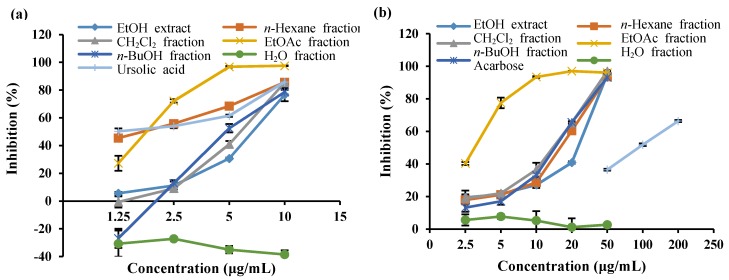
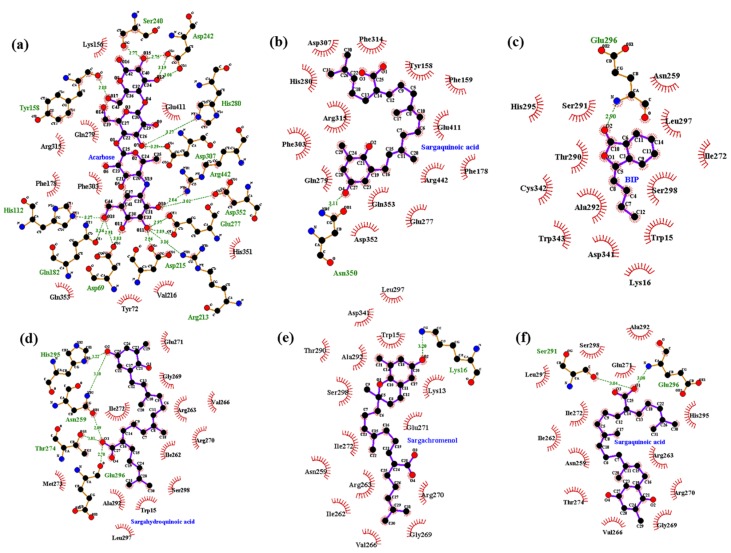
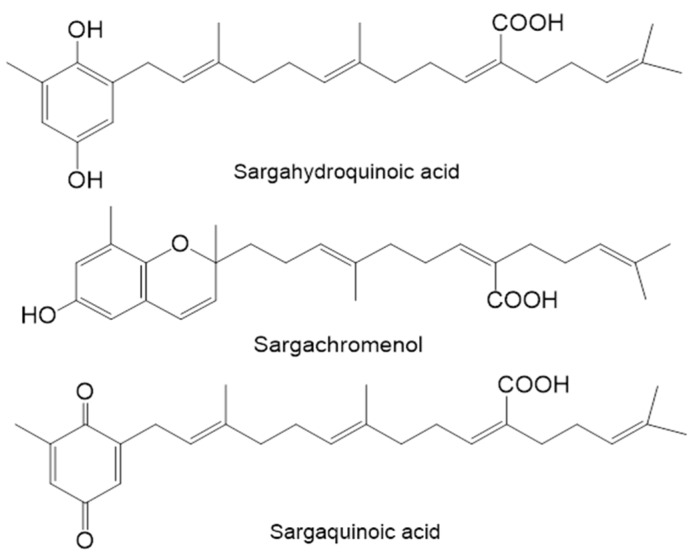
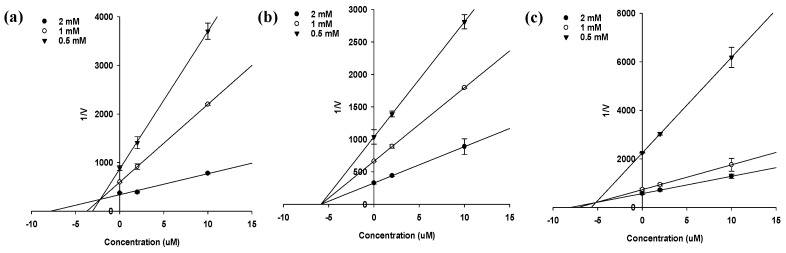
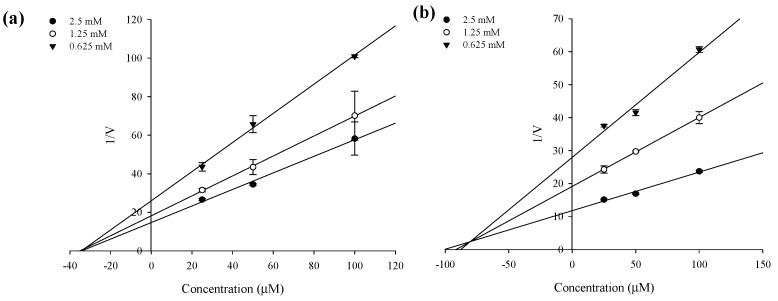
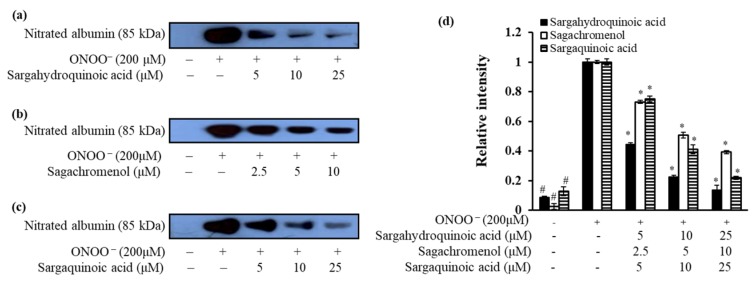
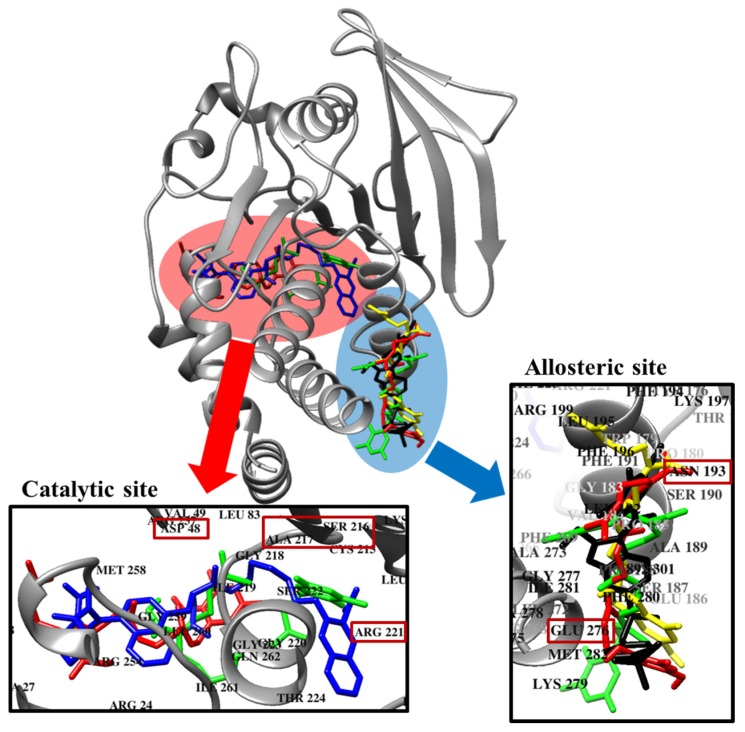
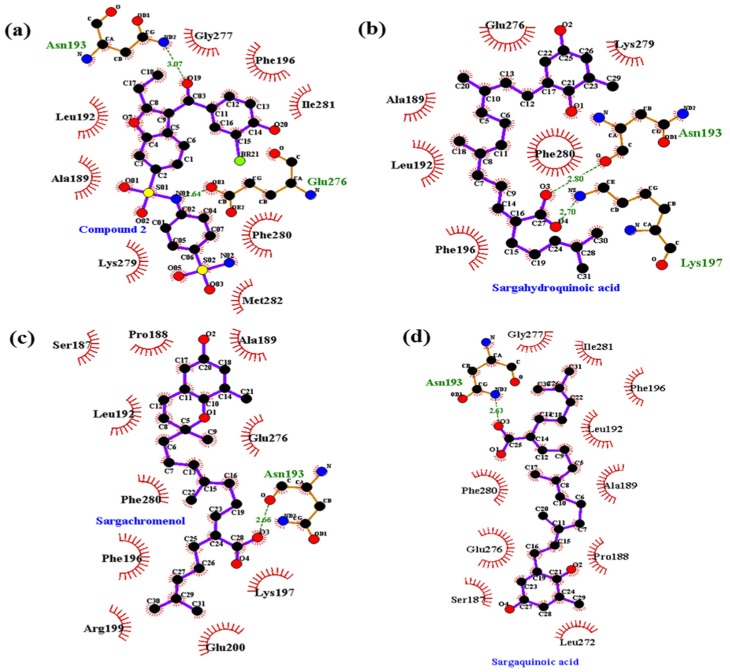
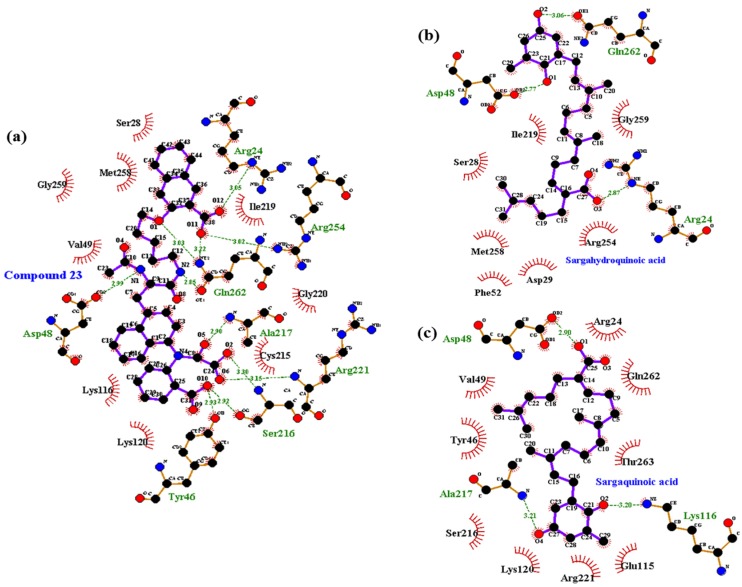
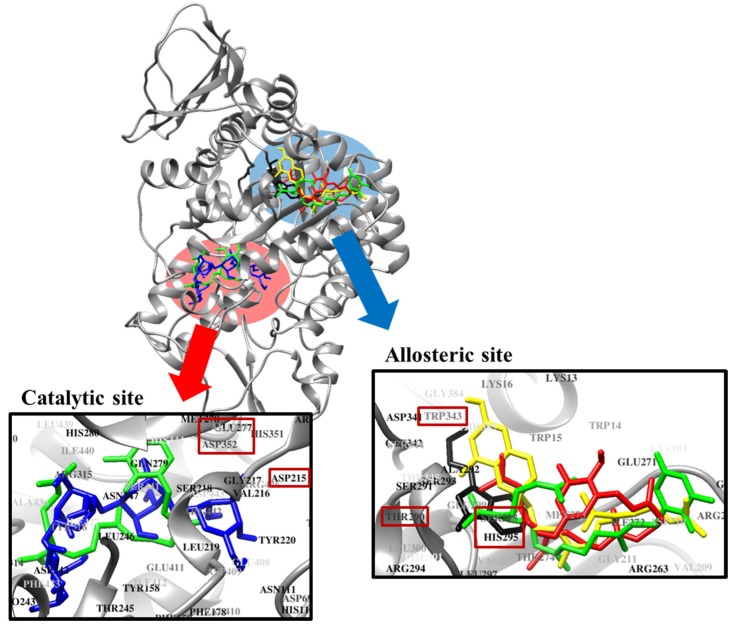
C. Agardh (Phaeophyceae, Fucales) is a marine brown alga that belongs to the family Sargassaceae. It is widely distributed throughout coastal areas of Korea and Japan. has been found to contain high concentrations of plastoquinones, which have strong anti-cancer, anti-inflammatory, antioxidant, and neuroprotective activity. This study aims to investigate the anti-diabetic activity of and its major constituents through inhibition of protein tyrosine phosphatase 1B (PTP1B), α-glucosidase, and ONOO-mediated albumin nitration. ethanolic extract and fractions exhibited broad PTP1B and α-glucosidase inhibitory activity (IC, 1.837.04 and 3.1624.16 µg/mL for PTP1B and α-glucosidase, respectively). In an attempt to identify bioactive compounds, three plastoquinones (sargahydroquinoic acid, sargachromenol and sargaquinoic acid) were isolated from the active -hexane fraction of . . All three plastoquinones exhibited dose-dependent inhibitory activity against PTP1B in the IC range of 5.14-14.15 µM, while sargachromenol and sargaquinoic acid showed dose-dependent inhibitory activity against α-glucosidase (IC 42.41 ± 3.09 and 96.17 ± 3.48 µM, respectively). In the kinetic study of PTP1B enzyme inhibition, sargahydroquinoic acid and sargaquinoic acid led to mixed-type inhibition, whereas sargachromenol displayed noncompetitive-type inhibition. Moreover, plastoquinones dose-dependently inhibited ONOO-mediated albumin nitration. Docking simulations of these plastoquinones demonstrated negative binding energies and close proximity to residues in the binding pocket of PTP1B and α-glucosidase, indicating that these plastoquinones have high affinity and tight binding capacity towards the active site of the enzymes. These results demonstrate that . and its major plastoquinones may have the potential as functional food ingredients for the prevention and treatment of type 2 diabetes.
C. Agardh(褐藻门,马尾藻目)是一种广泛分布于韩国和日本沿海地区的海洋褐藻,属于马尾藻科。它已被发现含有高浓度的质体醌,具有很强的抗癌、抗炎、抗氧化和神经保护活性。本研究旨在通过抑制蛋白酪氨酸磷酸酶 1B(PTP1B)、α-葡萄糖苷酶和 ONOO 介导的白蛋白硝化来研究 的抗糖尿病活性及其主要成分。 乙醇提取物及其馏分对 PTP1B 和 α-葡萄糖苷酶均表现出广泛的抑制活性(IC50 值分别为 1.83-7.04 和 3.16-24.16 µg/mL)。为了鉴定生物活性化合物,从 活性正己烷馏分中分离出三种质体醌(鲨烯氢醌、鲨烯色醇和鲨烯醌)。三种质体醌均对 PTP1B 表现出剂量依赖性抑制活性,IC50 值在 5.14-14.15 µM 范围内,而鲨烯色醇和鲨烯醌对 α-葡萄糖苷酶表现出剂量依赖性抑制活性(IC50 值分别为 42.41 ± 3.09 和 96.17 ± 3.48 µM)。在 PTP1B 酶抑制的动力学研究中,鲨烯氢醌和鲨烯醌导致混合抑制类型,而鲨烯色醇显示非竞争性抑制类型。此外,质体醌剂量依赖性地抑制 ONOO 介导的白蛋白硝化。这些质体醌的对接模拟表明,它们具有负结合能,并且与 PTP1B 和 α-葡萄糖苷酶结合口袋中的残基接近,表明这些质体醌对酶的活性部位具有高亲和力和紧密结合能力。这些结果表明, 可能具有作为预防和治疗 2 型糖尿病的功能性食品成分的潜力。