Department of Food and Life Science, Pukyong National University, Busan 48513, Korea.
Department of Food Science and Nutrition, Changshin University, Gyeongsangnam-do, Changwon 51352, Korea.
Mar Drugs. 2019 Mar 14;17(3):166. doi: 10.3390/md17030166.
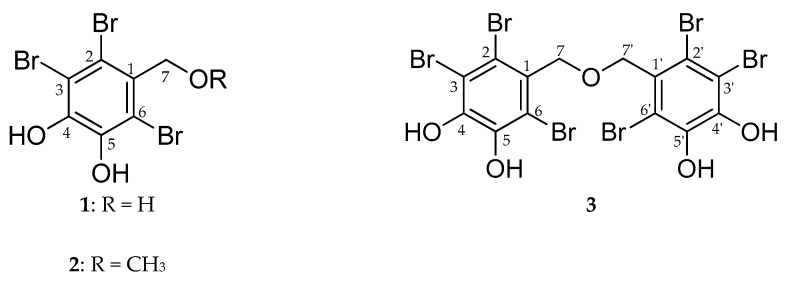
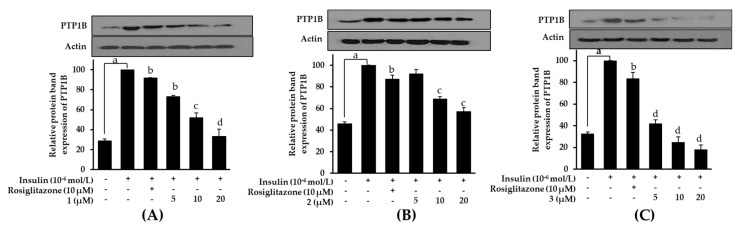
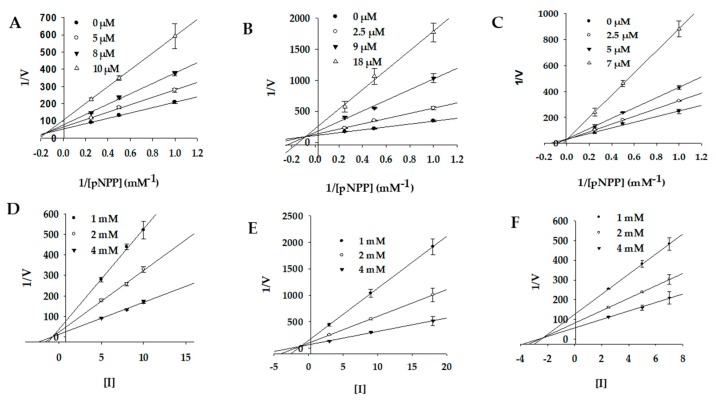
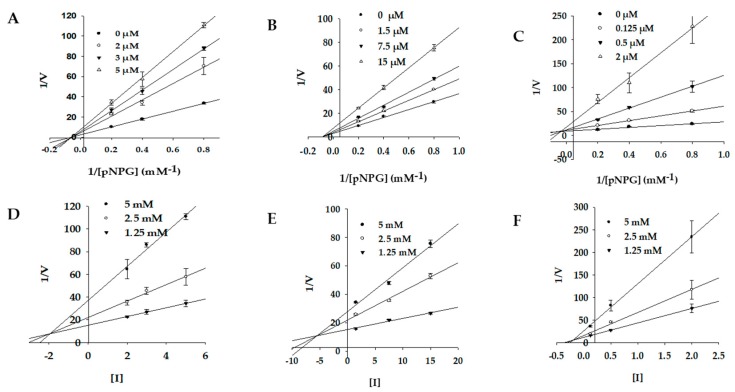
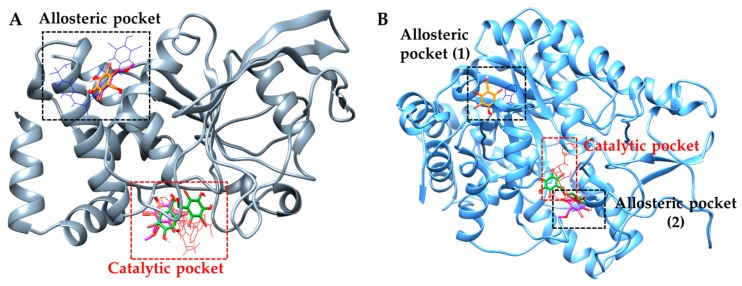
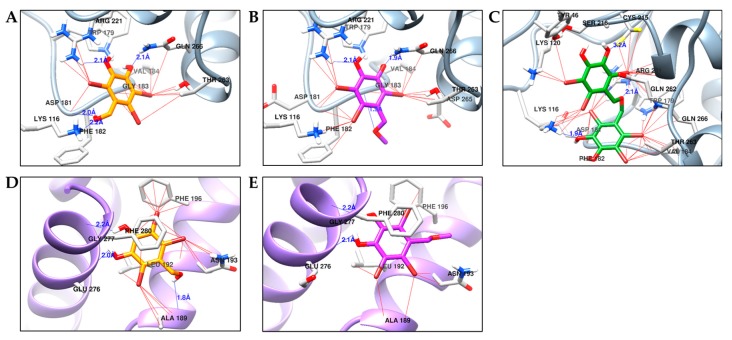
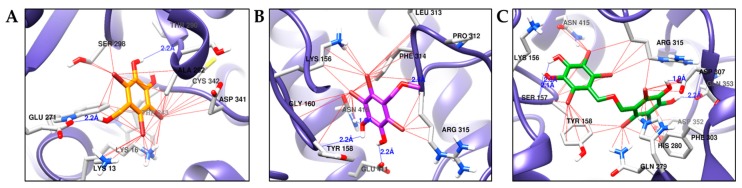
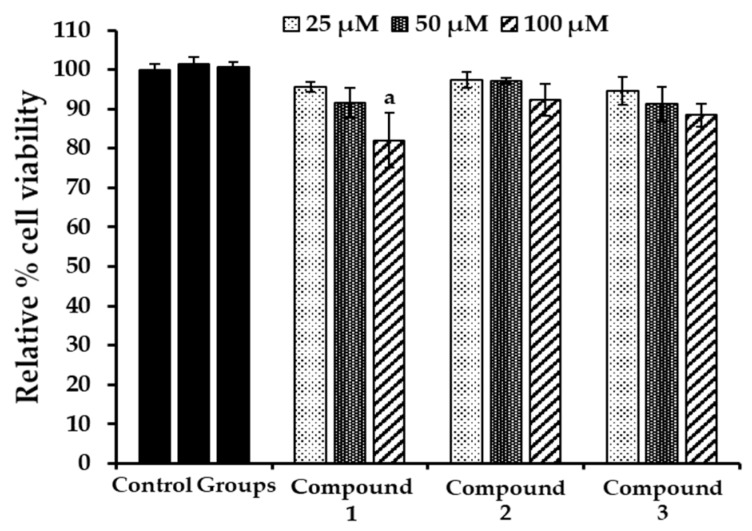
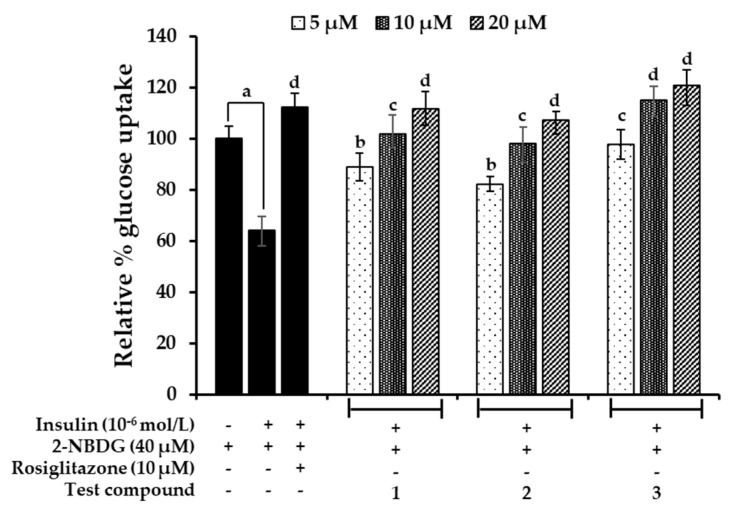
The marine alga, (Harvey) Yamada, is a good source of bromophenols with numerous biological activities. This study aims to characterize the anti-diabetic potential of 2,3,6-tribromo-4,5-dihydroxybenzyl derivatives isolated from via their inhibition of tyrosine phosphatase 1B (PTP1B) and α-glucosidase. Additionally, this study uses in silico modeling and glucose uptake potential analysis in insulin-resistant (IR) HepG2 cells to reveal the mechanism of anti-diabetic activity. This bioassay-guided isolation led to the discovery of three potent bromophenols that act against PTP1B and α-glucosidase: 2,3,6-tribromo-4,5-dihydroxybenzyl alcohol (), 2,3,6-tribromo-4,5-dihydroxybenzyl methyl ether (), and bis-(2,3,6-tribromo-4,5-dihydroxybenzyl methyl ether) (). All compounds inhibited the target enzymes by 50% at concentrations below 10 μM. The activity of and was comparable to ursolic acid (IC; 8.66 ± 0.82 μM); however, was more potent (IC; 5.29 ± 0.08 μM) against PTP1B. Interestingly, the activity of ⁻ against α-glucosidase was 30⁻110 times higher than acarbose (IC; 212.66 ± 0.35 μM). Again, was the most potent α-glucosidase inhibitor (IC; 1.92 ± 0.02 μM). Similarly, ⁻ showed concentration-dependent glucose uptake in insulin-resistant HepG2 cells and downregulated PTP1B expression. Enzyme kinetics revealed different modes of inhibition. In silico molecular docking simulations demonstrated the importance of the 7⁻OH group for H-bond formation and bromine/phenyl ring number for halogen-bond interactions. These results suggest that bromophenols from , especially highly brominated , are inhibitors of PTP1B and α-glucosidase, enhance insulin sensitivity and glucose uptake, and may represent a novel class of anti-diabetic drugs.
海洋藻类,(山田),是溴酚类化合物的良好来源,具有许多生物活性。本研究旨在通过对酪氨酸磷酸酶 1B(PTP1B)和α-葡萄糖苷酶的抑制作用,对从 中分离得到的 2,3,6-三溴-4,5-二羟基苄基衍生物的抗糖尿病潜力进行表征。此外,本研究还使用计算机模拟和胰岛素抵抗(IR)HepG2 细胞中的葡萄糖摄取潜力分析来揭示抗糖尿病活性的机制。这种基于生物测定的分离方法导致发现了三种对 PTP1B 和 α-葡萄糖苷酶有作用的强效溴酚类化合物:2,3,6-三溴-4,5-二羟基苄基醇()、2,3,6-三溴-4,5-二羟基苄基甲醚()和双(2,3,6-三溴-4,5-二羟基苄基甲醚)()。所有化合物在低于 10 μM 的浓度下即可抑制 50%的靶酶。和 的活性与熊果酸(IC;8.66±0.82 μM)相当;然而,(IC;5.29±0.08 μM)对 PTP1B 的活性更强。有趣的是,与阿卡波糖(IC;212.66±0.35 μM)相比, ⁻ 对 α-葡萄糖苷酶的活性高 30-110 倍。同样,(IC;1.92±0.02 μM)是最有效的 α-葡萄糖苷酶抑制剂。同样, ⁻ 在胰岛素抵抗的 HepG2 细胞中表现出浓度依赖性的葡萄糖摄取,并下调 PTP1B 的表达。酶动力学显示出不同的抑制模式。计算机分子对接模拟表明 7-OH 基团对于形成氢键以及溴原子/苯环数对于形成卤键相互作用很重要。这些结果表明,海洋藻类中的溴酚类化合物,特别是高度溴化的 ,是 PTP1B 和 α-葡萄糖苷酶的抑制剂,可增强胰岛素敏感性和葡萄糖摄取,并可能代表一类新型的抗糖尿病药物。