Department of Pediatrics, Faculdade de Medicina, University of São Paulo (FMUSP), São Paulo, 05403-000, Brazil.
Department of Pediatrics, Faculdade de Medicina, University of São Paulo (FMUSP), São Paulo, 05403-000, Brazil
Dis Model Mech. 2018 Jan 29;11(1):dmm029074. doi: 10.1242/dmm.029074.
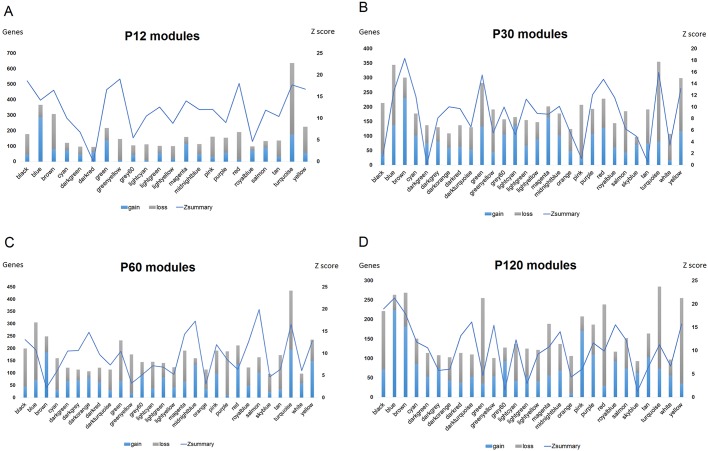
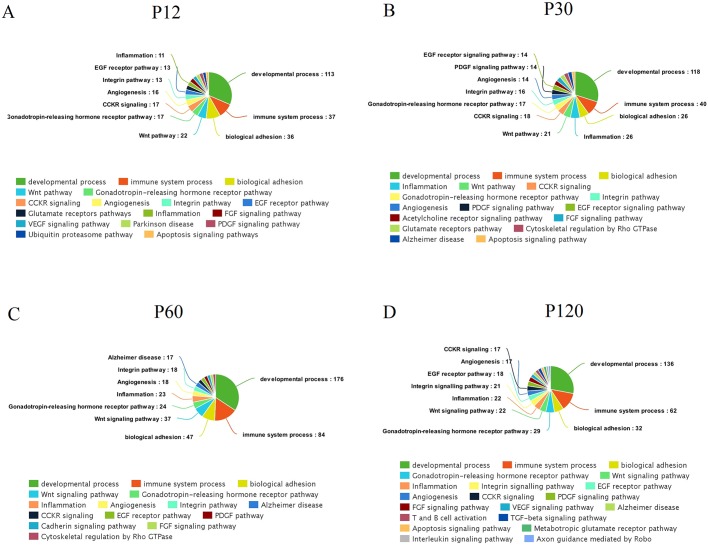
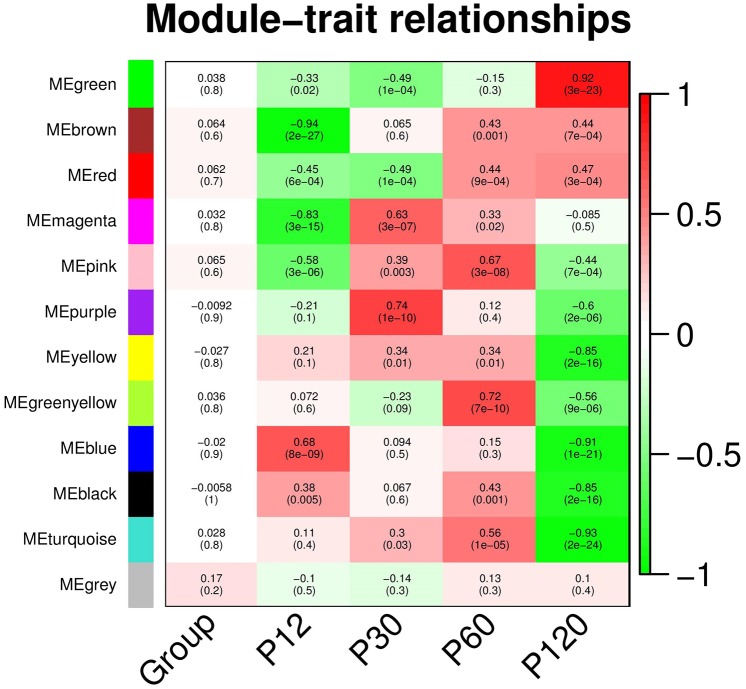
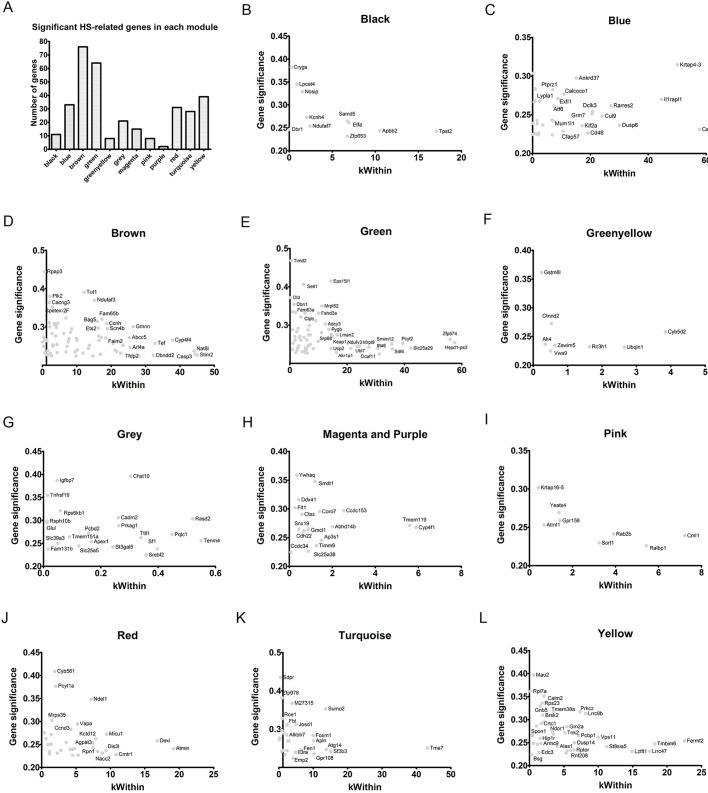
Complex febrile seizures during infancy constitute an important risk factor for development of epilepsy. However, little is known about the alterations induced by febrile seizures that make the brain susceptible to epileptic activity. In this context, the use of animal models of hyperthermic seizures (HS) could allow the temporal analysis of brain molecular changes that arise after febrile seizures. Here, we investigated temporal changes in hippocampal gene coexpression networks during the development of rats submitted to HS. Total RNA samples were obtained from the ventral hippocampal CA3 region at four time points after HS at postnatal day (P) 11 and later used for gene expression profiling. Temporal endpoints were selected for investigating the acute (P12), latent (P30 and P60) and chronic (P120) stages of the HS model. A weighted gene coexpression network analysis was used to characterize modules of coexpressed genes, as these modules might contain genes with similar functions. The transcriptome analysis pipeline consisted of building gene coexpression networks, identifying network modules and hubs, performing gene-trait correlations and examining changes in module connectivity. Modules were functionally enriched to identify functions associated with HS. Our data showed that HS induce changes in developmental, cell adhesion and immune pathways, such as Wnt, Hippo, Notch, Jak-Stat and Mapk. Interestingly, modules involved in cell adhesion, neuronal differentiation and synaptic transmission were activated as early as 1 day after HS. These results suggest that HS trigger transcriptional alterations that could lead to persistent neurogenesis, tissue remodeling and inflammation in the CA3 hippocampus, making the brain prone to epileptic activity.
婴儿期复杂热性惊厥是癫痫发生的一个重要危险因素。然而,人们对导致大脑易发生癫痫活动的热性惊厥引起的改变知之甚少。在这种情况下,使用高热惊厥(HS)动物模型可以允许对热性惊厥后出现的大脑分子变化进行时间分析。在这里,我们研究了在 HS 后发育过程中大鼠海马基因共表达网络的时间变化。在 HS 后第 11 天和之后的四个时间点从腹侧海马 CA3 区获得总 RNA 样本,并用于基因表达谱分析。选择时间终点来研究 HS 模型的急性(P12)、潜伏(P30 和 P60)和慢性(P120)阶段。使用加权基因共表达网络分析来描述共表达基因模块,因为这些模块可能包含具有相似功能的基因。转录组分析流程包括构建基因共表达网络、识别网络模块和枢纽、进行基因-性状相关性分析以及检查模块连接性的变化。对模块进行功能富集,以确定与 HS 相关的功能。我们的数据表明,HS 诱导发育、细胞黏附和免疫途径的变化,如 Wnt、Hippo、Notch、Jak-Stat 和 Mapk。有趣的是,参与细胞黏附、神经元分化和突触传递的模块早在 HS 后 1 天就被激活。这些结果表明,HS 引发的转录改变可能导致 CA3 海马体中的持续神经发生、组织重塑和炎症,使大脑易发生癫痫活动。