College of Forestry, Northwest A&F University, Yangling, Shaanxi, 712100, China.
College of Life Science, Northwest A&F University, Yangling, Shaanxi, 712100, China.
Sci Rep. 2017 Dec 1;7(1):16754. doi: 10.1038/s41598-017-15911-7.
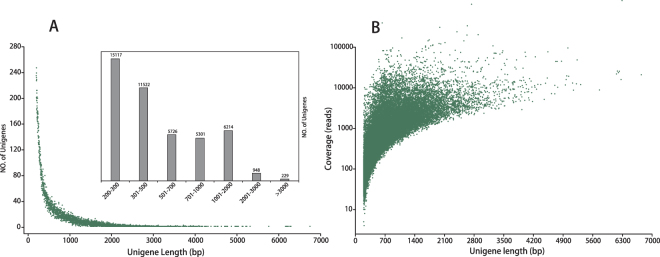
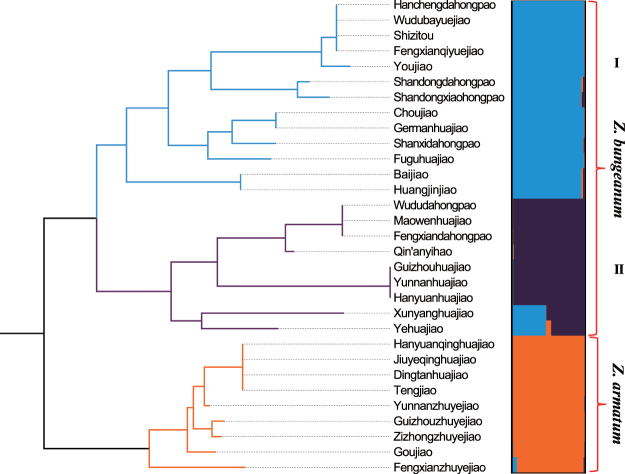
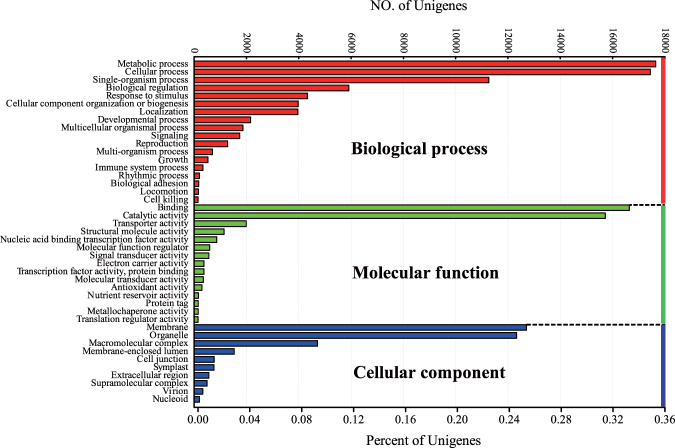
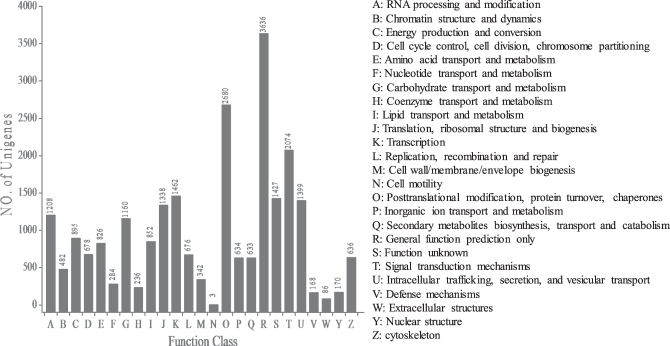
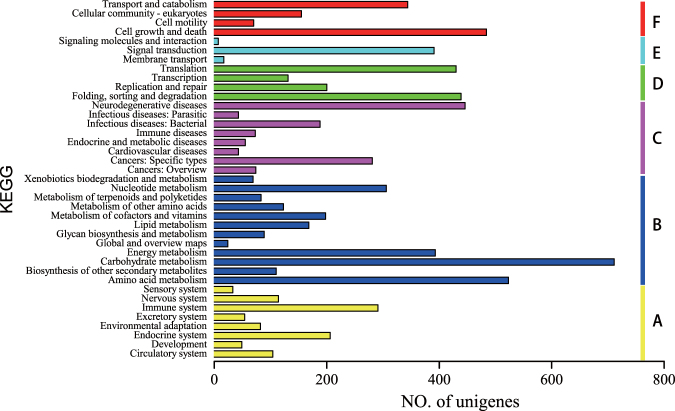
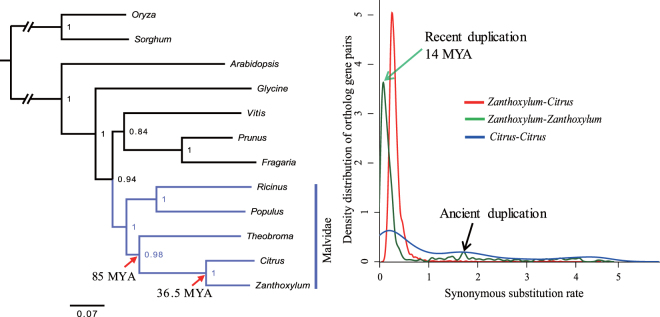
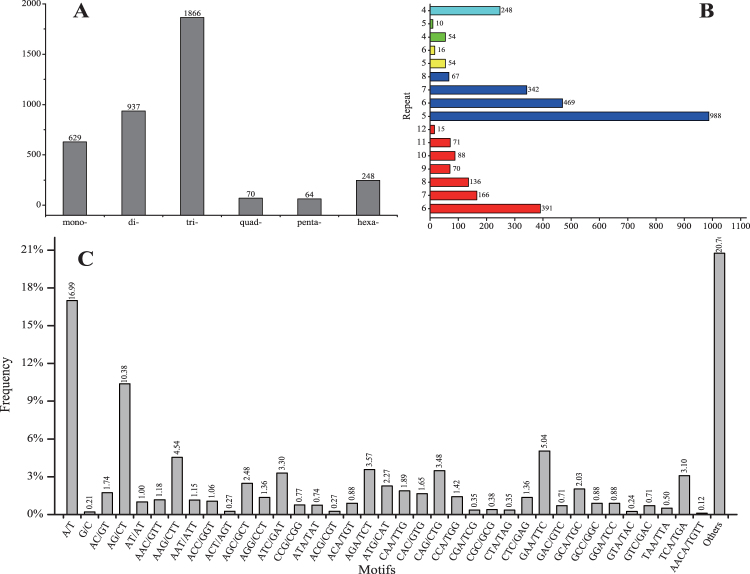
Zanthoxylum, an ancient economic crop in Asia, has a satisfying aromatic taste and immense medicinal values. A lack of genomic information and genetic markers has limited the evolutionary analysis and genetic improvement of Zanthoxylum species and their close relatives. To better understand the evolution, domestication, and divergence of Zanthoxylum, we present a de novo transcriptome analysis of an elite cultivar of Z. bungeanum using Illumina sequencing; we then developed simple sequence repeat markers for identification of Zanthoxylum. In total, we predicted 45,057 unigenes and 22,212 protein coding sequences, approximately 90% of which showed significant similarities to known proteins in databases. Phylogenetic analysis indicated that Zanthoxylum is relatively recent and estimated to have diverged from Citrus ca. 36.5-37.7 million years ago. We also detected a whole-genome duplication event in Zanthoxylum that occurred 14 million years ago. We found no protein coding sequences that were significantly under positive selection by Ka/Ks. Simple sequence repeat analysis divided 31 Zanthoxylum cultivars and landraces into three major groups. This Zanthoxylum reference transcriptome provides crucial information for the evolutionary study of the Zanthoxylum genus and the Rutaceae family, and facilitates the establishment of more effective Zanthoxylum breeding programs.
花椒,亚洲一种古老的经济作物,具有令人满意的芳香味道和巨大的药用价值。由于缺乏基因组信息和遗传标记,限制了花椒属物种及其近缘种的进化分析和遗传改良。为了更好地了解花椒属植物的进化、驯化和分化,我们使用 Illumina 测序对花椒属的一个优良品种进行了从头转录组分析;然后我们开发了简单序列重复标记来鉴定花椒属植物。总共预测了 45057 个 unigenes 和 22212 个蛋白质编码序列,其中约 90%与数据库中的已知蛋白具有显著相似性。系统发育分析表明,花椒属植物相对较新,估计与柑橘属分化于约 3650-3770 万年前。我们还检测到花椒属植物发生了一次全基因组复制事件,发生在 1400 万年前。我们没有发现明显受到正选择影响的蛋白质编码序列。简单序列重复分析将 31 个花椒品种和地方品种分为三大类。这个花椒参考转录组为花椒属和芸香科的进化研究提供了重要信息,并有助于建立更有效的花椒属植物育种计划。