Ecology and Evolutionary Biology, Princeton University,Princeton, NJ,USA.
Public Health Foundation of India,Gurgaon, Haryana,India.
Epidemiol Infect. 2018 Jan;146(1):65-77. doi: 10.1017/S0950268817002527. Epub 2017 Dec 4.
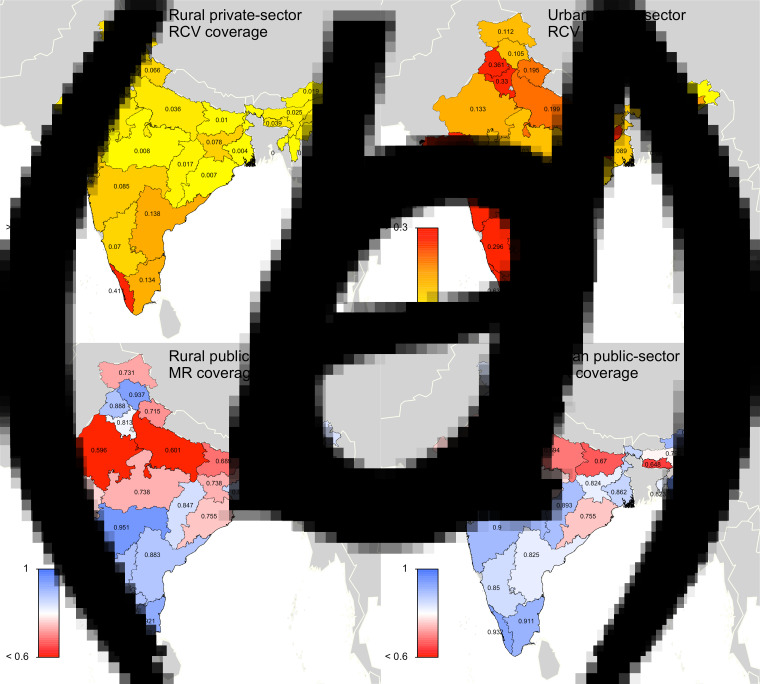
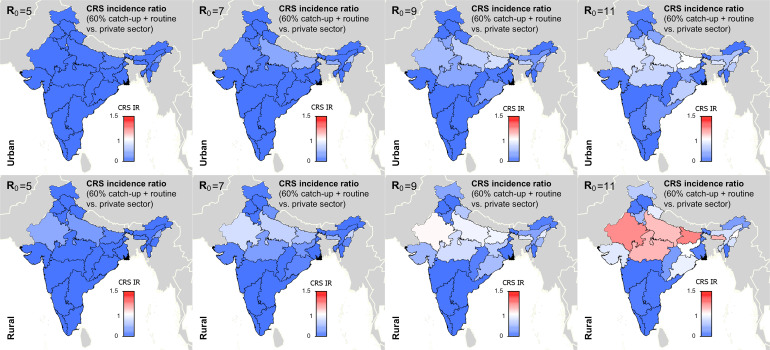
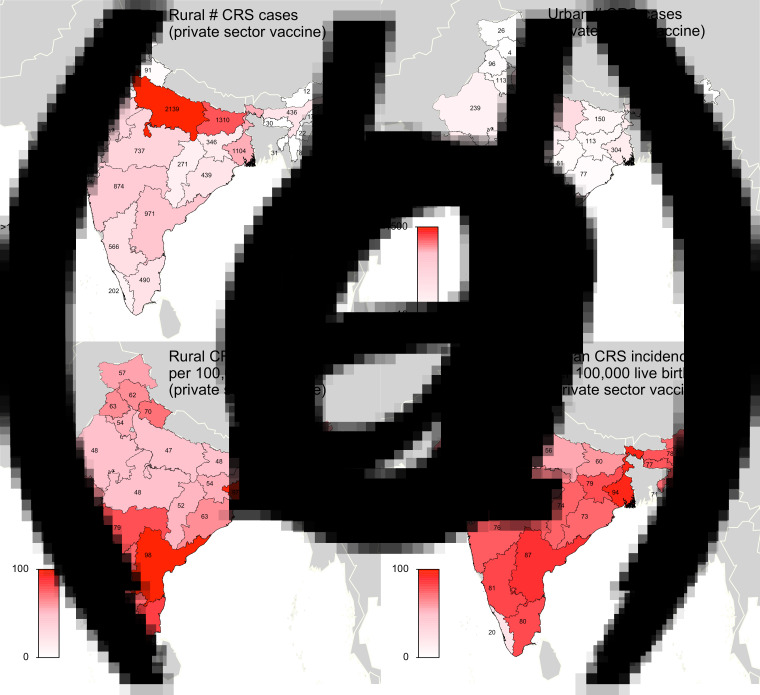
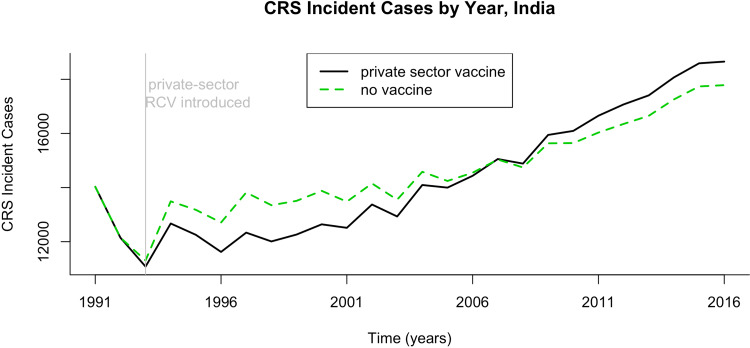
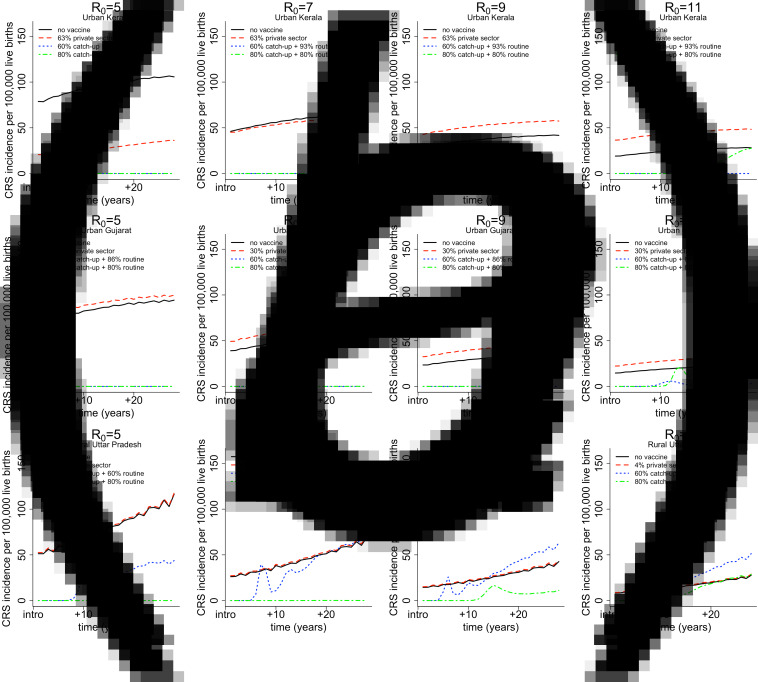
Rubella virus infection typically presents as a mild illness in children; however, infection during pregnancy may cause the birth of an infant with congenital rubella syndrome (CRS). As of February 2017, India began introducing rubella-containing vaccine (RCV) into the public-sector childhood vaccination programme. Low-level RCV coverage among children over several years can result in an increase in CRS incidence by increasing the average age of infection without sufficiently reducing rubella incidence. We evaluated the impact of RCV introduction on CRS incidence across India's heterogeneous demographic and epidemiological contexts. We used a deterministic age-structured model that reflects Indian states' rural and urban area-specific demography and vaccination coverage levels to simulate rubella dynamics and estimate CRS incidence with and without RCV introduction to the public sector. Our analysis suggests that current low-level private-sector vaccination has already slightly increased the burden of CRS in India. We additionally found that the effect of public-sector RCV introduction depends on the basic reproductive number, R 0, of rubella. If R 0 is five, a value empirically estimated from an array of settings, CRS incidence post-RCV introduction will likely decrease. However, if R 0 is seven or nine, some states may experience short-term or annual increases in CRS, even if a long-term total reduction in cases (30 years) is expected. Investment in population-based serological surveys and India's fever/rash surveillance system will be key to monitoring the success of the vaccination programme.
风疹病毒感染通常在儿童中表现为轻度疾病;然而,妊娠期间的感染可能导致先天性风疹综合征(CRS)婴儿的出生。截至 2017 年 2 月,印度开始在公共部门儿童免疫规划中引入含风疹疫苗(RCV)。多年来,儿童 RCV 接种率较低可能会导致感染平均年龄增加,而未能充分降低风疹发病率,从而导致 CRS 发病率上升。我们评估了 RCV 引入对印度异质人口统计学和流行病学背景下 CRS 发病率的影响。我们使用了一种确定性的年龄结构模型,该模型反映了印度各州农村和城市特定地区的人口统计学和疫苗接种覆盖率水平,以模拟风疹的动态,并在不引入 RCV 的情况下模拟和估计公共部门的 CRS 发病率。我们的分析表明,目前私营部门的低水平疫苗接种已经略微增加了印度 CRS 的负担。我们还发现,公共部门 RCV 引入的效果取决于风疹的基本繁殖数,R 0。如果 R 0 为 5,这是从多个环境中得出的经验值,那么 RCV 引入后 CRS 的发病率可能会下降。然而,如果 R 0 为 7 或 9,即使预计在 30 年内病例总数(30 年)将减少,一些州可能会出现 CRS 的短期或年度增加。对基于人群的血清学调查和印度发热/皮疹监测系统的投资将是监测疫苗接种计划成功的关键。