Pellefigues Christophe, Tang Shiau-Choot, Schmidt Alfonso, White Ruby F, Lamiable Olivier, Connor Lisa M, Ruedl Christiane, Dobrucki Jurek, Le Gros Graham, Ronchese Franca
Malaghan Institute of Medical Research, Wellington, New Zealand.
School of Biological Sciences, Nanyang Technological University, Singapore, Singapore.
Front Immunol. 2017 Nov 16;8:1575. doi: 10.3389/fimmu.2017.01575. eCollection 2017.
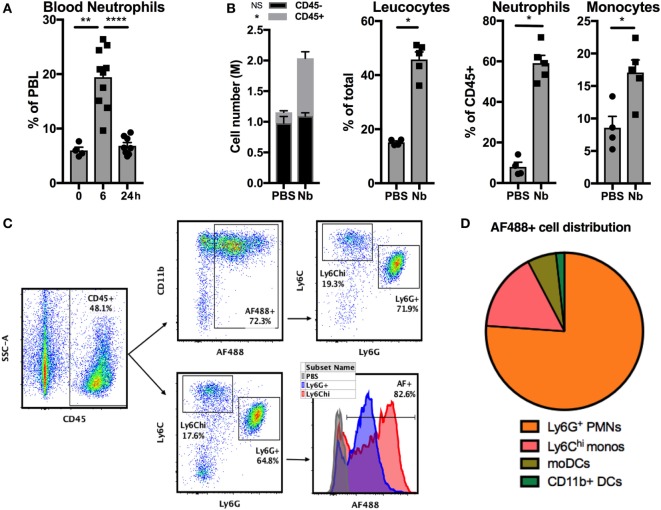
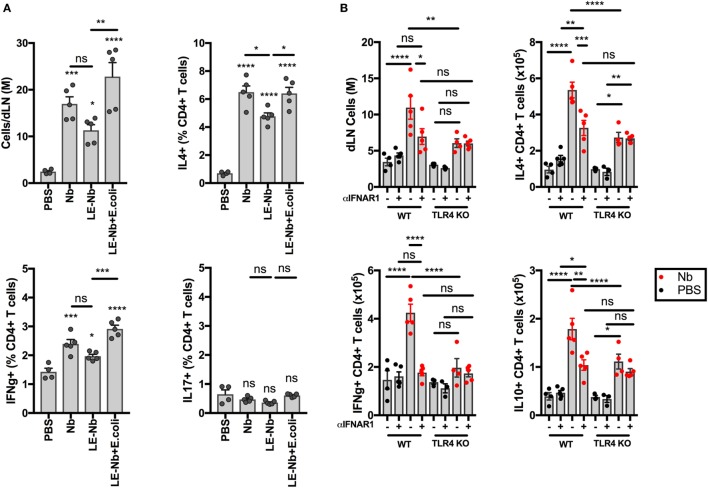
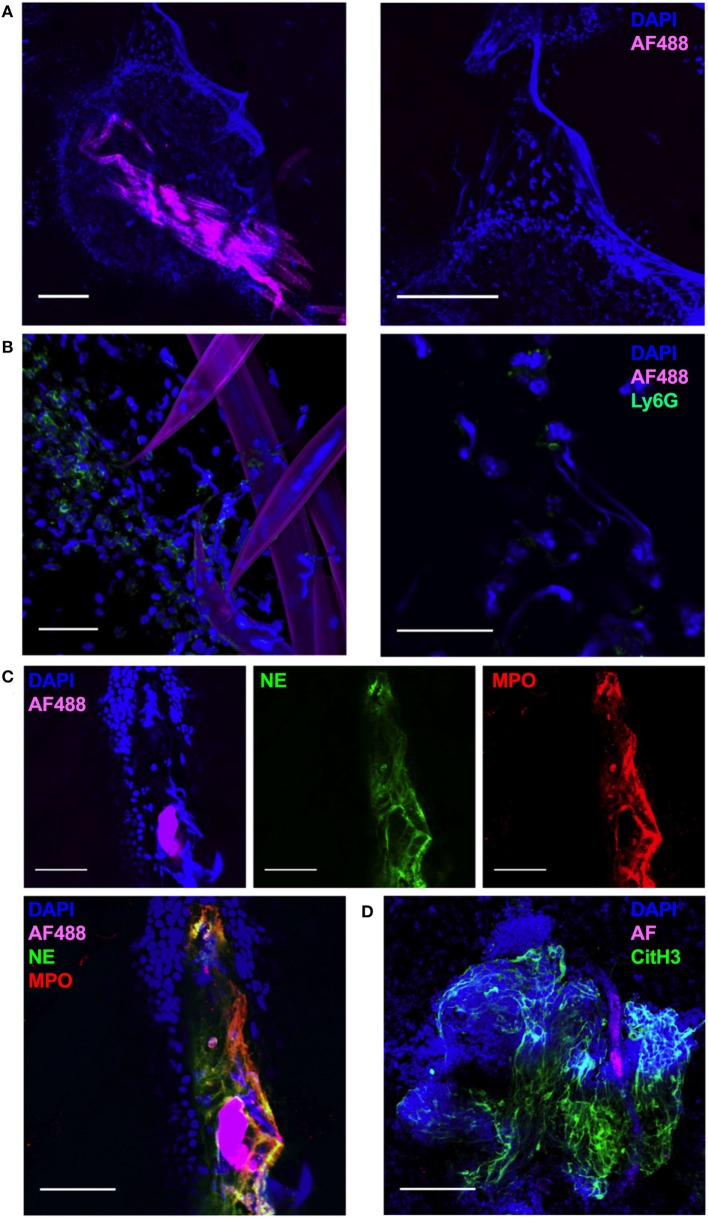
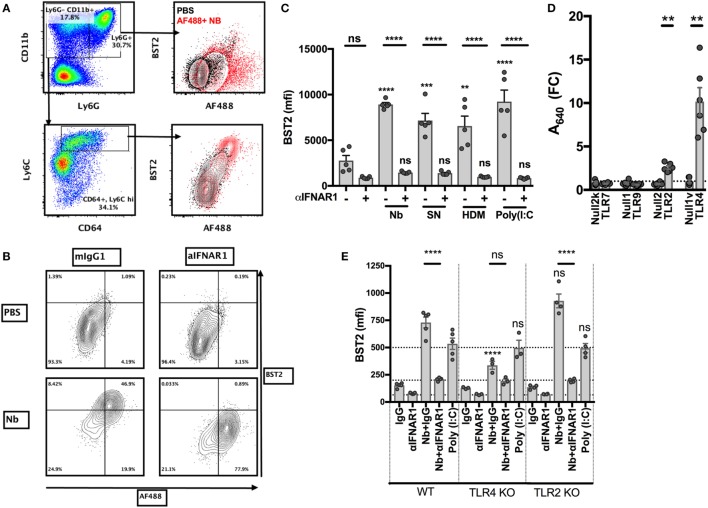
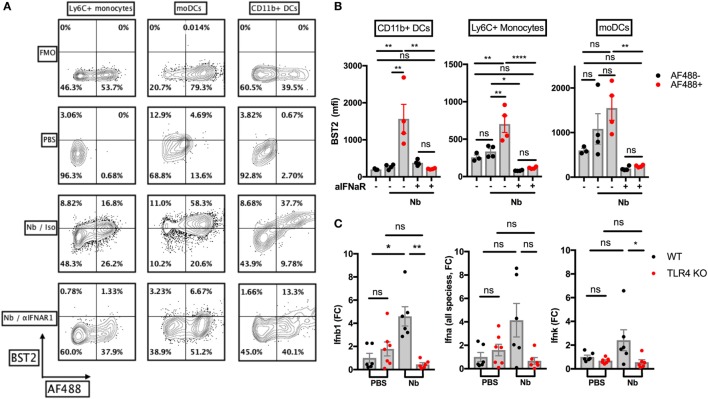
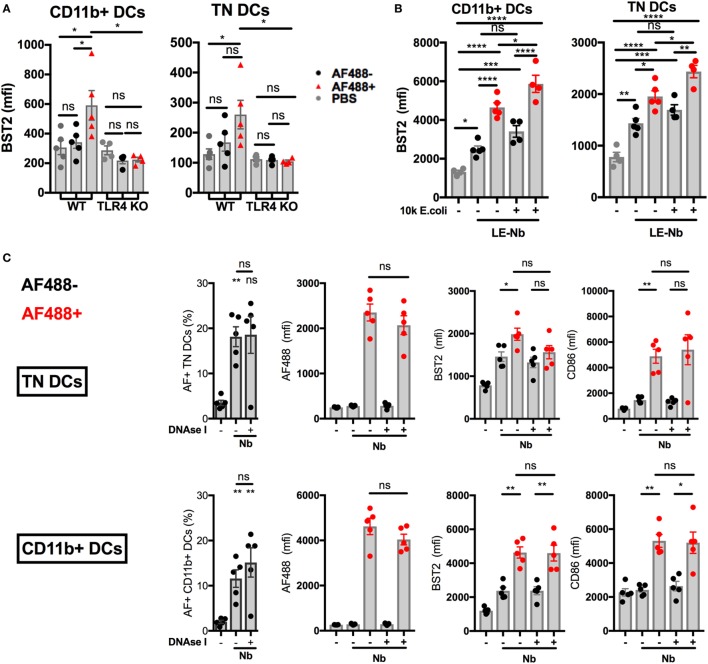
The induction of Th2 responses is thought to be multifactorial, and emerge from specific pathways distinct from those associated with antagonistic antibacterial or antiviral Th1 responses. Here, we show that the recognition of non-viable (Nb) in the skin induces a strong recruitment of monocytes and neutrophils and the release of neutrophil extracellular traps (NETs). Nb also activates toll-like receptor 4 (TLR4) signaling with expression of transcripts in the skin and the development of an IFN type I signature on helminth antigen-bearing dendritic cells in draining lymph nodes. Co-injection of Nb together with about 10,000 Gram-negative bacteria amplified this TLR4-dependent but NET-independent IFN type I response and enhanced the development of Th2 responses. Thus, a limited activation of antibacterial signaling pathways is able to boost antihelminthic responses, suggesting a role for bacterial sensing in the optimal induction of Th2 immunity.
Th2反应的诱导被认为是多因素的,并且源自与拮抗性抗菌或抗病毒Th1反应相关的特定途径不同的途径。在这里,我们表明,皮肤中对无活力(Nb)的识别会诱导单核细胞和中性粒细胞的强烈募集以及中性粒细胞胞外陷阱(NETs)的释放。Nb还通过皮肤中转录本的表达激活Toll样受体4(TLR4)信号,并在引流淋巴结中携带蠕虫抗原的树突状细胞上形成I型干扰素特征。将Nb与约10,000个革兰氏阴性细菌共同注射可放大这种依赖TLR4但不依赖NET的I型干扰素反应,并增强Th2反应的发展。因此,抗菌信号通路的有限激活能够增强抗蠕虫反应,这表明细菌感知在Th2免疫的最佳诱导中起作用。