Lee Hyun Ah, Song Bo Ram, Kim Hye Ryeong, Kim Ji Eun, Yun Woo Bin, Park Jin Ju, Lee Mi Lim, Choi Jun Young, Lee Hee Seob, Hwang Dae Youn
Department of Biomaterials Science, College of Natural Resources and Life Science/Life and Industry Convergence Research Institute, Pusan National University, Miryang, Gyeongsangnam-do 627-706, Republic of Korea.
Department of Food Science and Nutrition, College of Human Ecology, Pusan National University, Busan 609-735, Republic of Korea.
Exp Ther Med. 2017 Nov;14(5):4986-4994. doi: 10.3892/etm.2017.5200. Epub 2017 Sep 25.
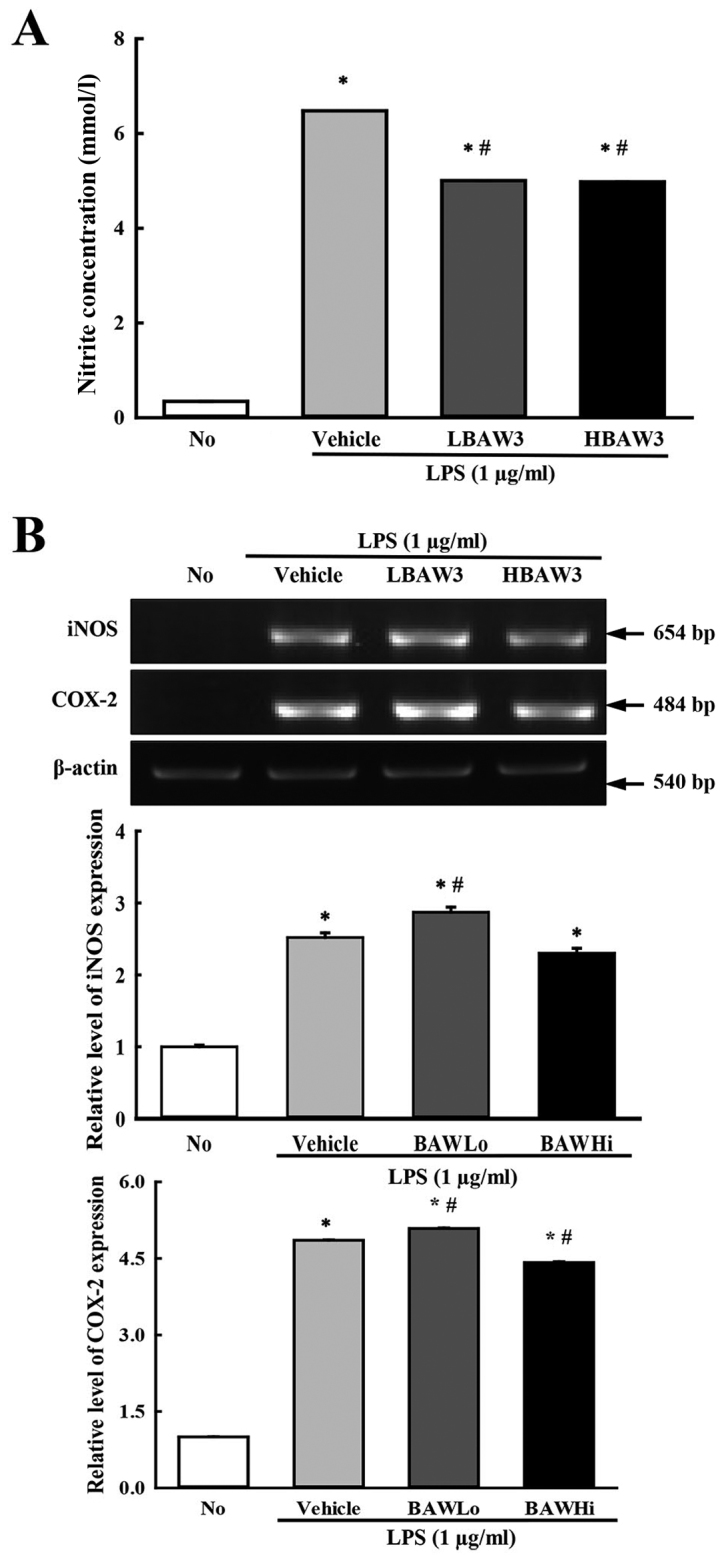
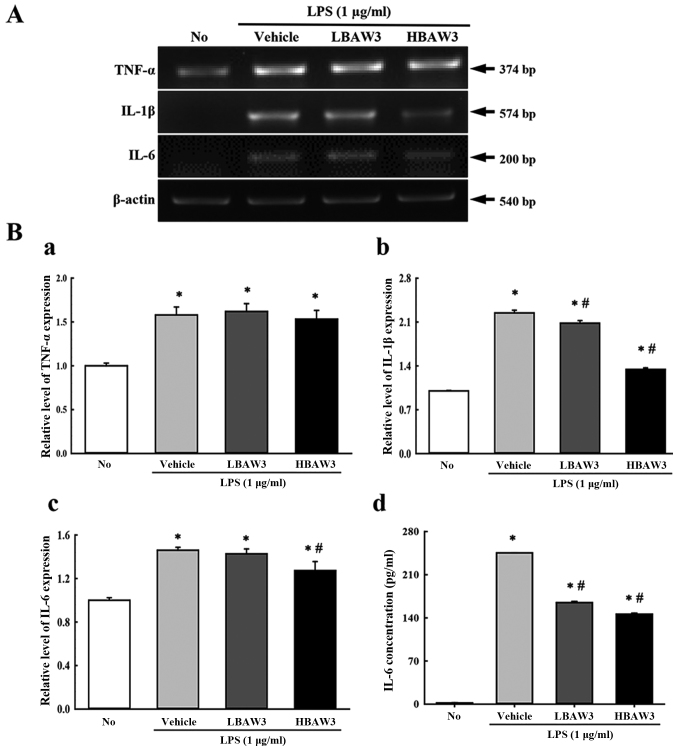
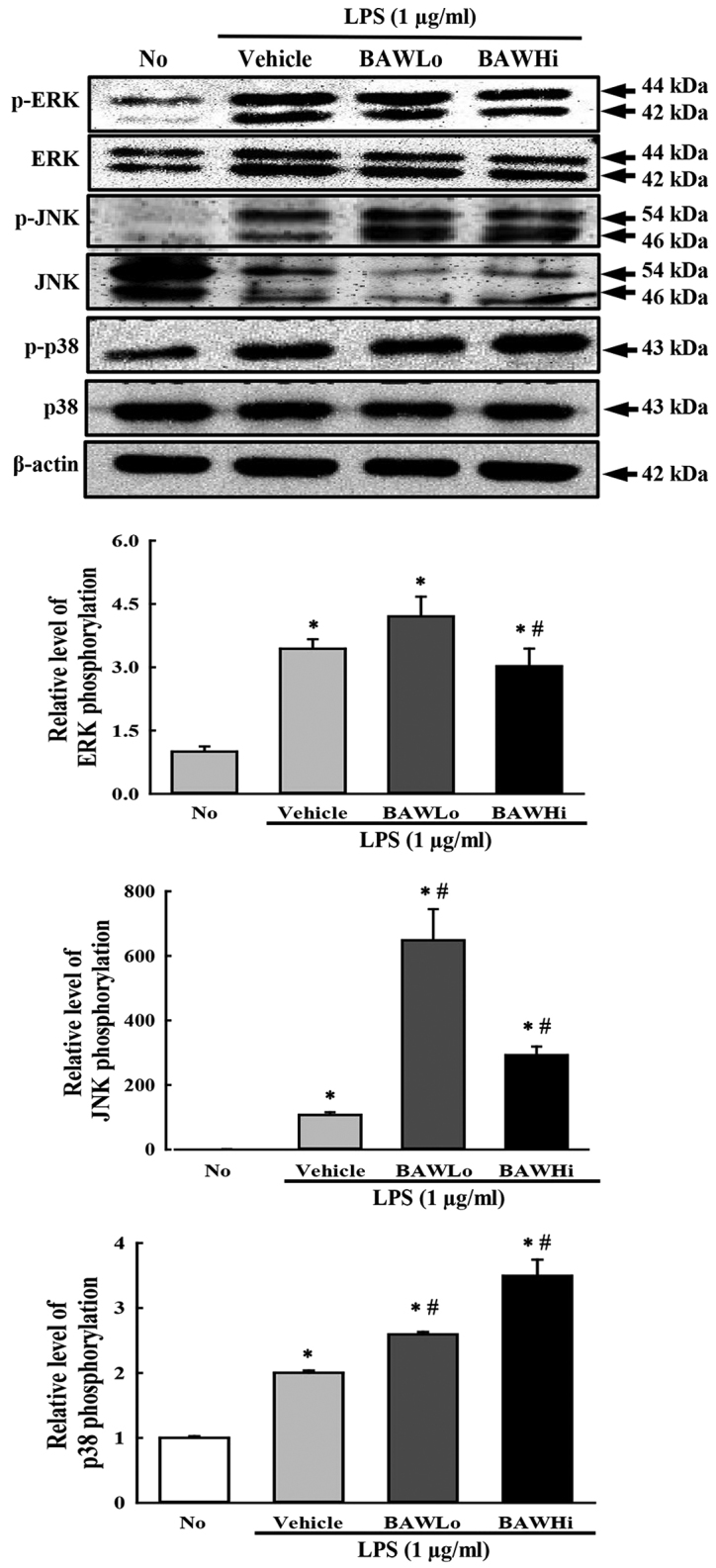
Roots of have been widely used to treat fever, cough, kidney disease, breast cancer, inflammatory and brain disease, although the effects of their fermented products have not been assessed until now. To investigate the anti-inflammatory effects on macrophages of a butanol extract from roots fermented with (BAW), alterations in the inducible nitric oxide synthase (iNOS)-mediated cyclooxygenase-2 (COX-2) induction pathway and inflammatory cytokine expression were measured in lipopolysaccharide (LPS)-activated RAW264.7 cells following pretreatment with BAW. Briefly, was selected from two bacterial strains for the fermentation of roots based on its hyaluronidase inhibition and NO suppression rates. Following fermentation with , the level of various key components including total phenols and protodioscin were significantly enhanced in BAW. In addition, BAW exhibited high free radical scavenging activity (IC=31.62 µg/ml) and induced a decrease of intracellular ROS production in RAW264.7 cells following DCFH-DA staining. Significant suppressions in the expression level of important members of the iNOS-mediated COX-2 induction pathway and the phosphorylation of mitogen-activated protein kinase members were detected. The expressions of pro-inflammatory and anti-inflammatory cytokines were recovered in BAW pretreated RAW264.7 cells. Overall, these results suggest that BAW may suppress inflammatory responses through differential regulation of the iNOS-mediated COX-2 induction pathway and inflammatory cytokine expressions in LPS-activated RAW264.7 cells.
[植物名称]的根已被广泛用于治疗发热、咳嗽、肾脏疾病、乳腺癌、炎症和脑部疾病,尽管其发酵产物的效果至今尚未评估。为了研究[植物名称]根经[细菌名称]发酵后的丁醇提取物(BAW)对巨噬细胞的抗炎作用,在用BAW预处理后,在脂多糖(LPS)激活的RAW264.7细胞中测量了诱导型一氧化氮合酶(iNOS)介导的环氧化酶-2(COX-2)诱导途径的变化和炎性细胞因子的表达。简而言之,基于其透明质酸酶抑制率和NO抑制率,从两种细菌菌株中选择[细菌名称]用于[植物名称]根的发酵。经[细菌名称]发酵后,BAW中包括总酚和原薯蓣皂苷在内的各种关键成分的水平显著提高。此外,BAW表现出高自由基清除活性(IC = 31.62 µg/ml),并且在DCFH-DA染色后诱导RAW264.7细胞内ROS产生减少。检测到iNOS介导的COX-2诱导途径的重要成员的表达水平以及丝裂原活化蛋白激酶成员的磷酸化有显著抑制。在BAW预处理的RAW264.7细胞中促炎和抗炎细胞因子的表达得到恢复。总体而言,这些结果表明BAW可能通过对LPS激活的RAW264.7细胞中iNOS介导的COX-2诱导途径和炎性细胞因子表达的差异调节来抑制炎症反应。