Lupoli Roberta, Lembo Erminia, Saldalamacchia Gennaro, Avola Claudia Kesia, Angrisani Luigi, Capaldo Brunella
Department of Clinical Medicine and Surgery, Federico II University, 80131 Naples, Italy.
Department of Public Health, Federico II University, 80131 Naples, Italy.
World J Diabetes. 2017 Nov 15;8(11):464-474. doi: 10.4239/wjd.v8.i11.464.
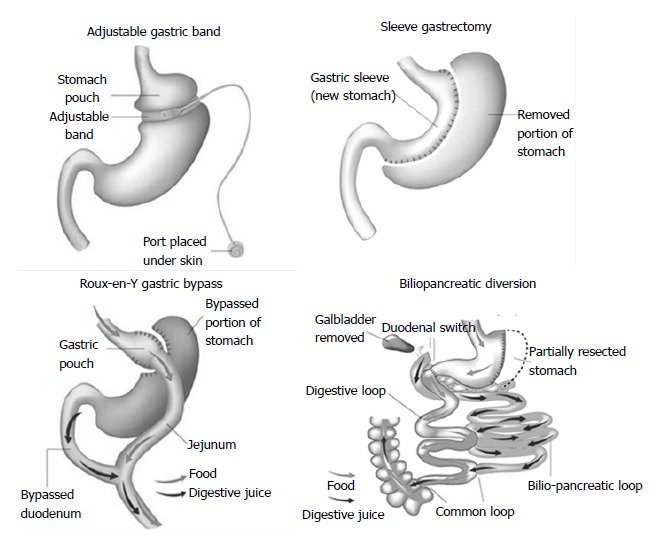
Bariatric surgery is recognized as a highly effective therapy for obesity since it accomplishes sustained weight loss, reduction of obesity-related comorbidities and mortality, and improvement of quality of life. Overall, bariatric surgery is associated with a 42% reduction of the cardiovascular risk and 30% reduction of all-cause mortality. This review focuses on some nutritional consequences that can occur in bariatric patients that could potentially hinder the clinical benefits of this therapeutic option. All bariatric procedures, to variable degrees, alter the anatomy and physiology of the gastrointestinal tract; this alteration makes these patients more susceptible to developing nutritional complications, namely, deficiencies of macro- and micro-nutrients, which could lead to disabling diseases such as anemia, osteoporosis, protein malnutrition. Of note is the evidence that most obese patients present a number of nutritional deficits already prior to surgery, the most important being vitamin D and iron deficiencies. This finding prompts the need for a complete nutritional assessment and, eventually, an adequate correction of pre-existing deficits before surgery. Another critical issue that follows bariatric surgery is post-operative weight regain, which is commonly associated with the relapse of obesity-related co-morbidities. Nu-tritional complications associated with bariatric surgery can be prevented by life-long nutritional monitoring with the administration of multi-vitamins and mineral supplements according to the patient's needs.
减肥手术被认为是治疗肥胖症的一种高效疗法,因为它能实现持续减重、降低与肥胖相关的合并症及死亡率,并改善生活质量。总体而言,减肥手术可使心血管疾病风险降低42%,全因死亡率降低30%。本综述聚焦于减肥手术患者可能出现的一些营养问题,这些问题可能会妨碍这一治疗方案的临床益处。所有减肥手术都会在不同程度上改变胃肠道的解剖结构和生理功能;这种改变使这些患者更容易出现营养并发症,即宏量和微量营养素缺乏,这可能导致贫血、骨质疏松、蛋白质营养不良等致残性疾病。值得注意的是,有证据表明,大多数肥胖患者在手术前就已存在一些营养缺乏问题,其中最重要的是维生素D和铁缺乏。这一发现促使有必要在手术前进行全面的营养评估,并最终对已存在的营养缺乏问题进行适当纠正。减肥手术后的另一个关键问题是术后体重反弹,这通常与肥胖相关合并症的复发有关。通过根据患者需求终身进行营养监测并补充多种维生素和矿物质补充剂,可以预防与减肥手术相关的营养并发症。