Xie Xuemei, Peng Li, Zhu Jin, Zhou Yang, Li Lingyu, Chen Yanlin, Yu Shanshan, Zhao Yong
Department of Pathology, Chongqing Medical University, Chongqing, China.
Key Laboratory of Neurobiology, Chongqing Medical University, Chongqing, China.
Front Mol Neurosci. 2017 Nov 21;10:383. doi: 10.3389/fnmol.2017.00383. eCollection 2017.
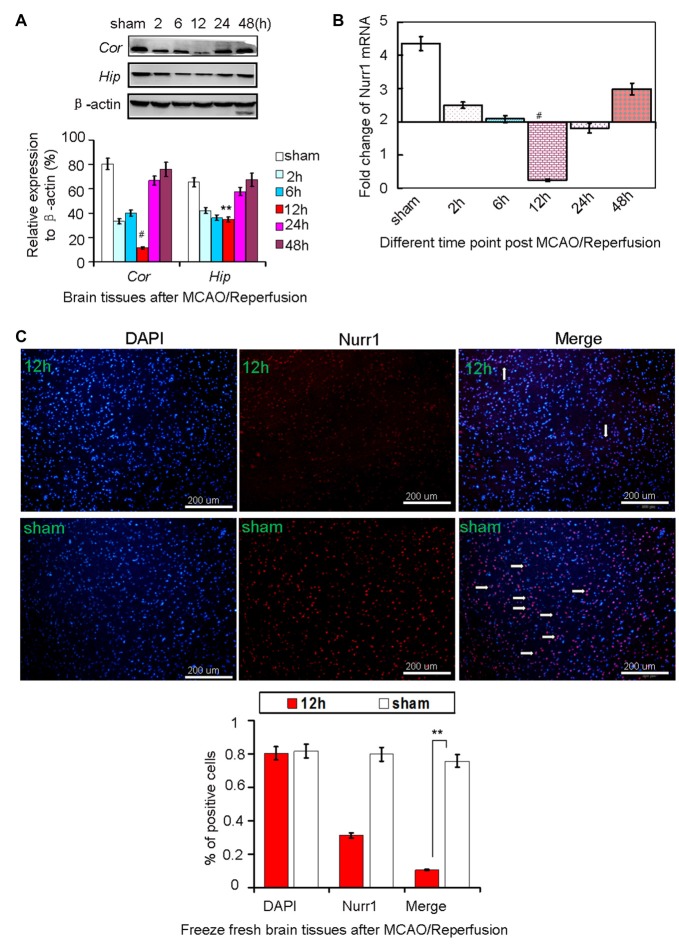
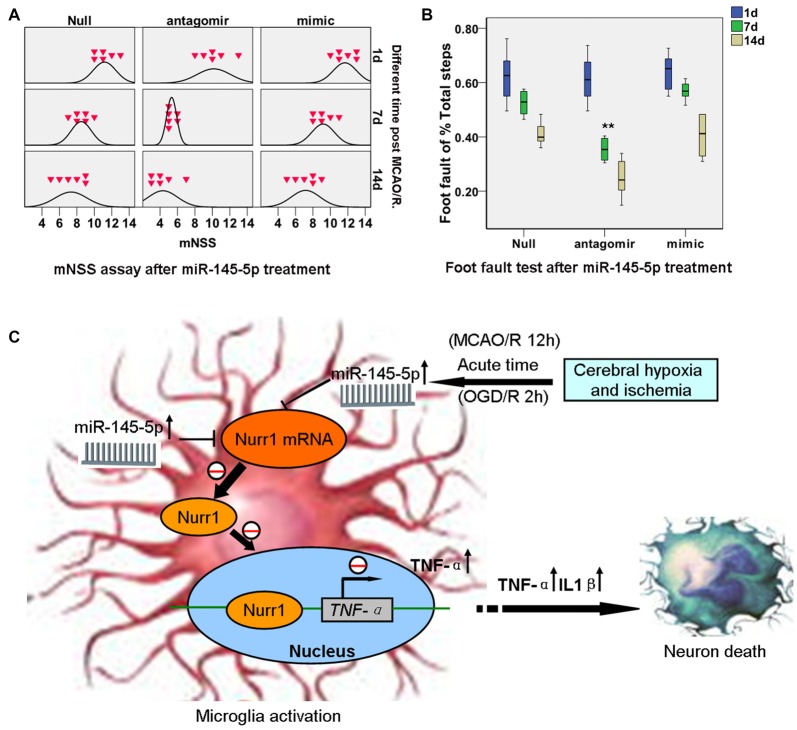
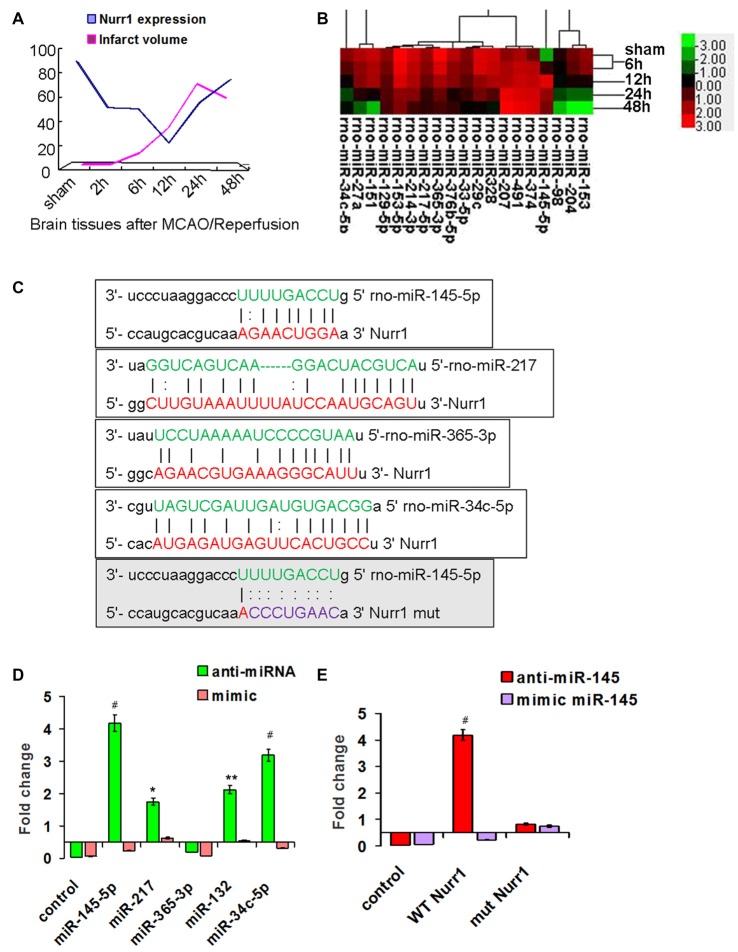
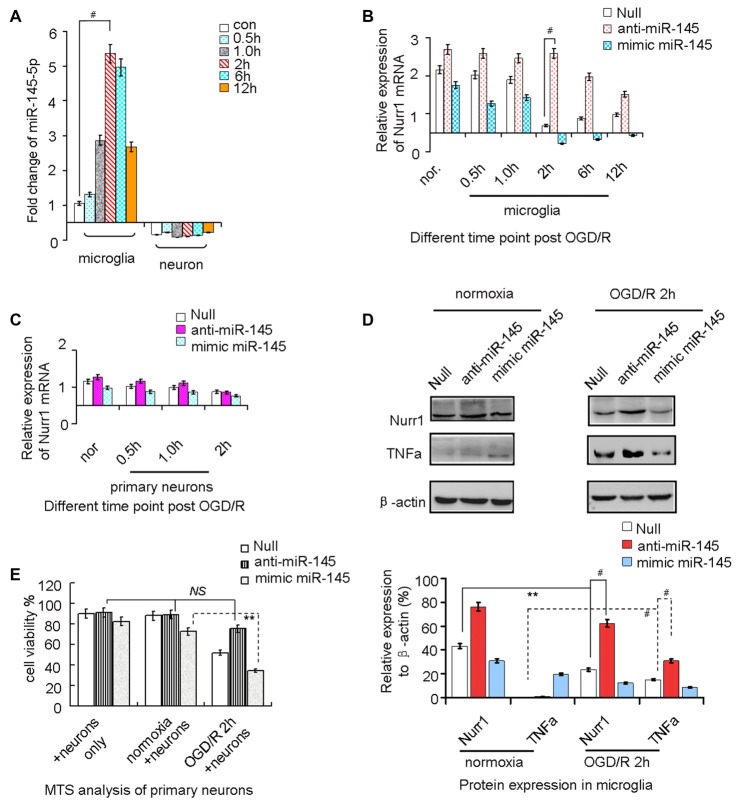
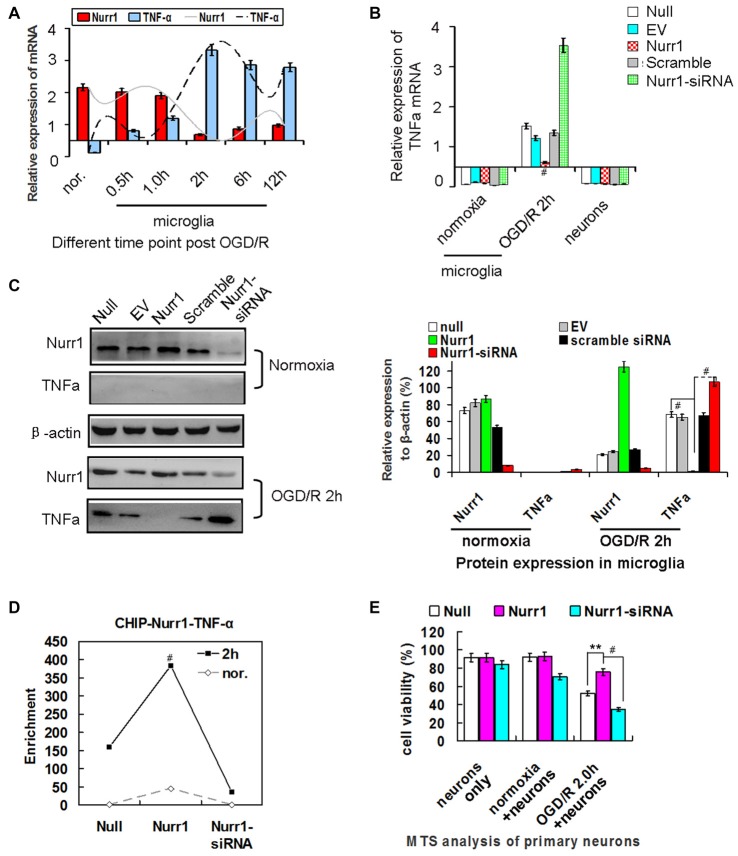
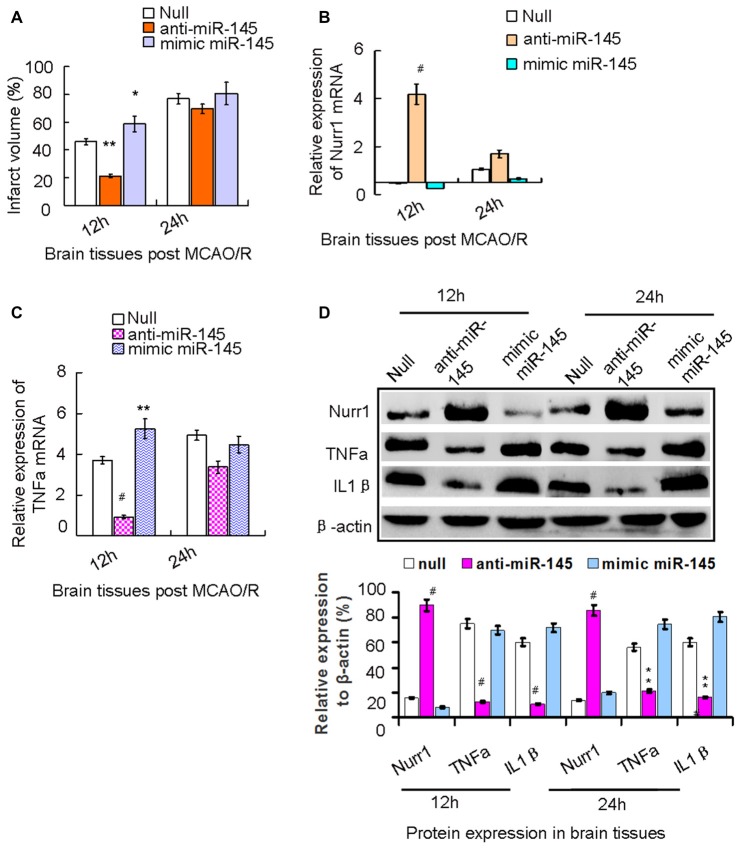
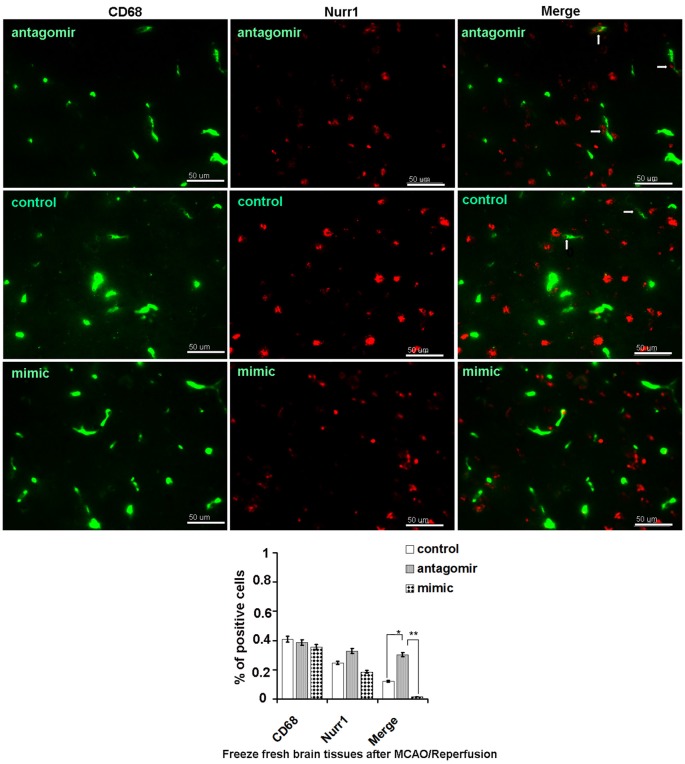
Nurr1 is a member of the nuclear receptor 4 family of orphan nuclear receptors that is decreased in inflammatory responses and leads to neurons death in Parkinson's disease. Abnormal expression of Nurr1 have been attributed to various signaling pathways, but little is known about microRNAs (miRNAs) regulation of Nurr1 in ischemia/reperfusion injury. To investigate the post transcriptional regulatory networks of Nurr1, we used a miRNA screening approach and identified miR-145-5p as a putative regulator of Nurr1. By using computer predictions, we identified and confirmed a miRNA recognition element in the 3'UTR of Nurr1 that was responsible for miR-145-5p-mediated suppression. We next demonstrated that overexpression of Nurr1 inhibited TNF-α expression in microglia by trans-repression and finally attenuated ischemia/reperfusion-induced inflammatory and cytotoxic response of neurons. Results of further study revealed that anti-miR-145-5p administration brought about increasing expression of Nurr1 and reduction of infarct volume in acute cerebral ischemia. Administration of anti-miR-145-5p promotes neurological outcome of rats post MCAO/R. It might be an effective therapeutic strategy to relieve neurons injury upon ischemia/reperfusion of rats through interrupting the axis signaling of miR-145-5p- Nurr1-TNF-α in acute phase.
Nurr1是孤儿核受体核受体4家族的成员,在炎症反应中减少,并导致帕金森病中的神经元死亡。Nurr1的异常表达归因于各种信号通路,但关于微小RNA(miRNA)在缺血/再灌注损伤中对Nurr1的调节知之甚少。为了研究Nurr1的转录后调控网络,我们采用了miRNA筛选方法,并确定miR-145-5p是Nurr1的假定调节因子。通过计算机预测,我们在Nurr1的3'UTR中鉴定并确认了一个miRNA识别元件,该元件负责miR-145-5p介导的抑制作用。接下来,我们证明Nurr1的过表达通过反式抑制作用抑制了小胶质细胞中TNF-α的表达,并最终减轻了缺血/再灌注诱导的神经元炎症和细胞毒性反应。进一步的研究结果表明,给予抗miR-145-5p可导致急性脑缺血中Nurr1表达增加和梗死体积减小。给予抗miR-145-5p可促进MCAO/R后大鼠的神经功能转归。在急性期通过中断miR-145-5p-Nurr1-TNF-α轴信号传导来减轻大鼠缺血/再灌注后的神经元损伤可能是一种有效的治疗策略。