de Souza Renata Perotto, Valentina Mariana Vieira Dalla, Leal Bruna Ferreira, Oliveira Sílvia Dias, Ferreira Carlos Alexandre Sanchez
Laboratório de Imunologia e Microbiologia, Escola de Ciências da Saúde e da Vida, Pontifícia Universidade Católica do Rio Grande do Sul (PUCRS), Porto Alegre, RS, Brazil.
Programa de Pós-graduação em Biologia Celular e Molecular, Escola de Ciências da Saúde e da Vida, Pontifícia Universidade Católica do Rio Grande do Sul (PUCRS), Porto Alegre, RS, Brazil.
Parasitology. 2024 Aug;151(9):1063-1073. doi: 10.1017/S0031182024001410.
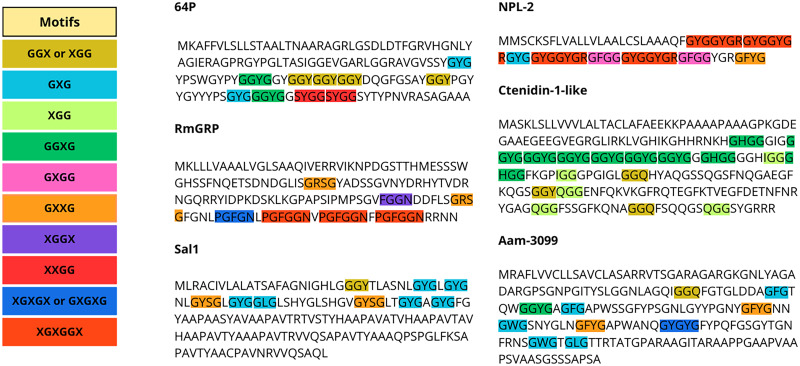
Glycine-rich proteins (GRPs) are arbitrarily defined as those containing 20% or more glycine residues and constitute a superfamily divided into subfamilies based on their structure and/or function. GRPs have been identified in a diverse array of organisms and have been shown to possess a number of distinctive biological characteristics, including nucleic acid binding, adhesive glue-like properties, antimicrobial activity, involvement in the stress response and in the formation of cuticle components. In ticks, their expression has been described and studied mainly in the salivary glands, and their primary function is usually associated with cement formation and/or structure. Conversely, several GRPs are present in all tick developmental stages, and the expression of many GRP genes is modulated by physiological processes and immune challenges, such as feeding and pathogen infection. Considering that some tick GRPs appear to play essential roles in the tick life cycle, they have been evaluated as immune targets, with a focus on their potential application in vaccine development. This review highlights the roles that tick GRPs may perform beyond the formation and maintenance of the cement scaffold, including structural characterization, locations and functional relevance, hypothetical functions, and their potential use in anti-tick vaccine development.
富含甘氨酸的蛋白质(GRPs)被随意定义为那些含有20%或更多甘氨酸残基的蛋白质,它们构成了一个超家族,并根据其结构和/或功能分为不同的亚家族。GRPs已在各种各样的生物体中被鉴定出来,并已被证明具有许多独特的生物学特性,包括核酸结合、类似粘性胶水的特性、抗菌活性、参与应激反应以及角质层成分的形成。在蜱虫中,它们的表达主要在唾液腺中被描述和研究,其主要功能通常与黏合剂的形成和/或结构有关。相反,几种GRPs存在于蜱虫的所有发育阶段,许多GRP基因的表达受到生理过程和免疫挑战的调节,如进食和病原体感染。鉴于一些蜱虫GRPs似乎在蜱虫生命周期中发挥着重要作用,它们已被评估为免疫靶点,重点关注其在疫苗开发中的潜在应用。这篇综述强调了蜱虫GRPs在黏合剂支架形成和维持之外可能发挥的作用,包括结构特征、位置和功能相关性、假设功能以及它们在抗蜱疫苗开发中的潜在用途。