Konstanz Research School Chemical Biology, University of Konstanz, Baden-Württemberg, Konstanz, Germany.
PLoS One. 2017 Dec 6;12(12):e0188005. doi: 10.1371/journal.pone.0188005. eCollection 2017.
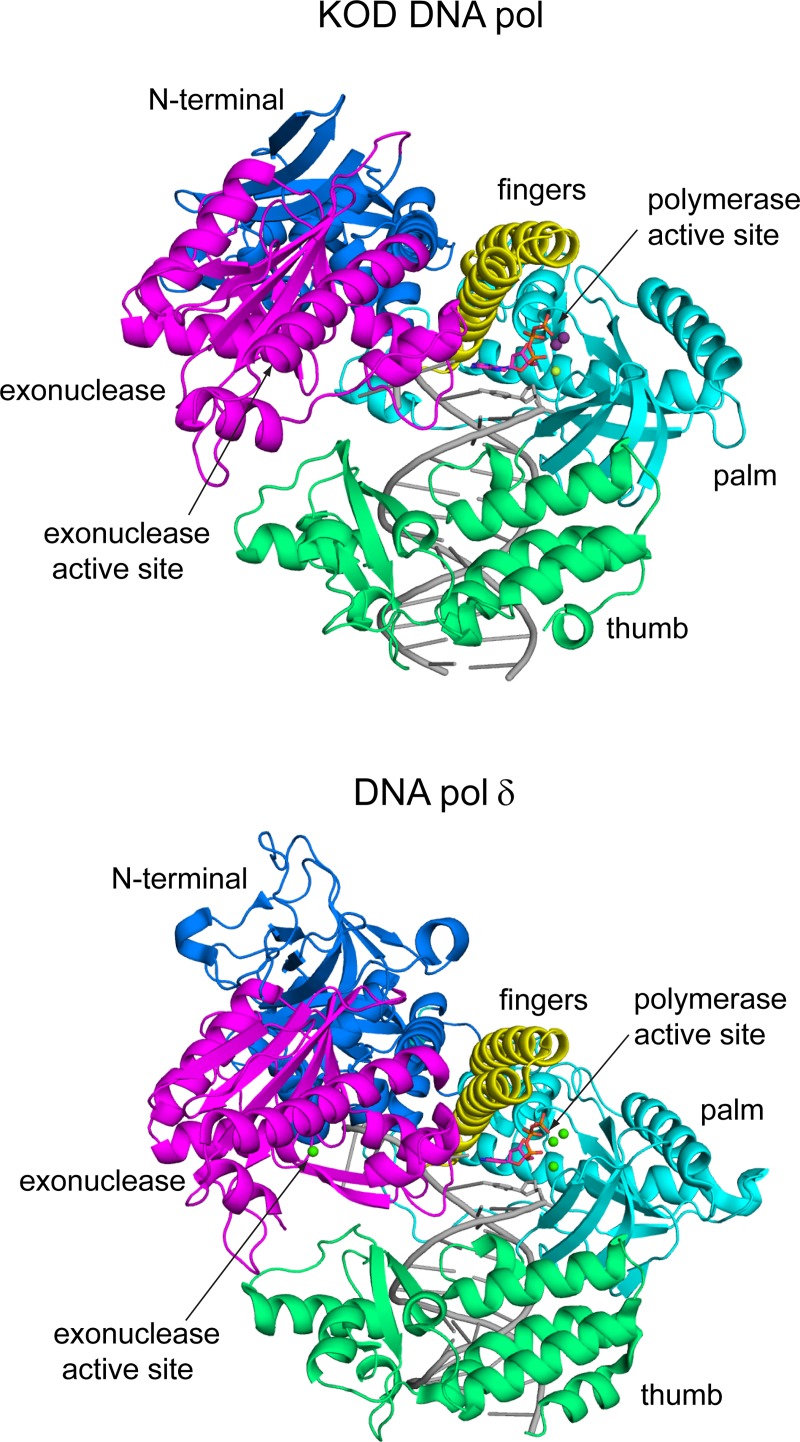
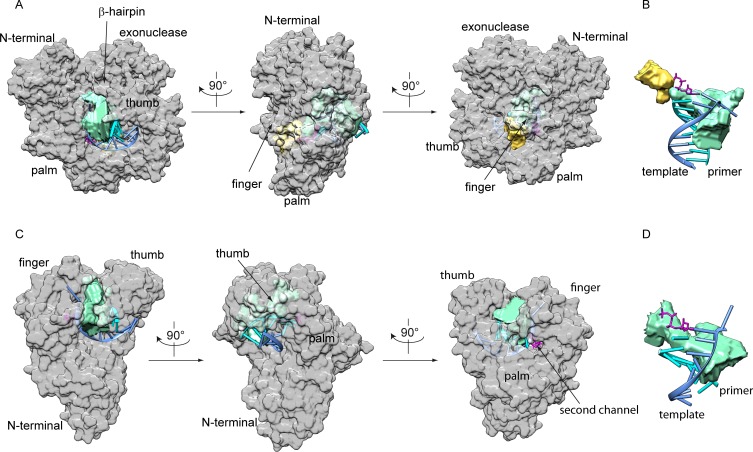
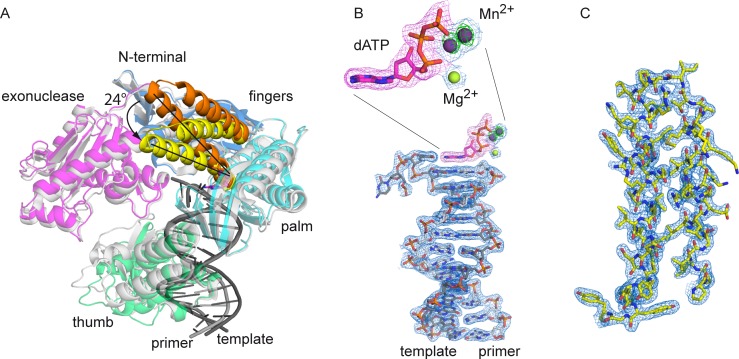
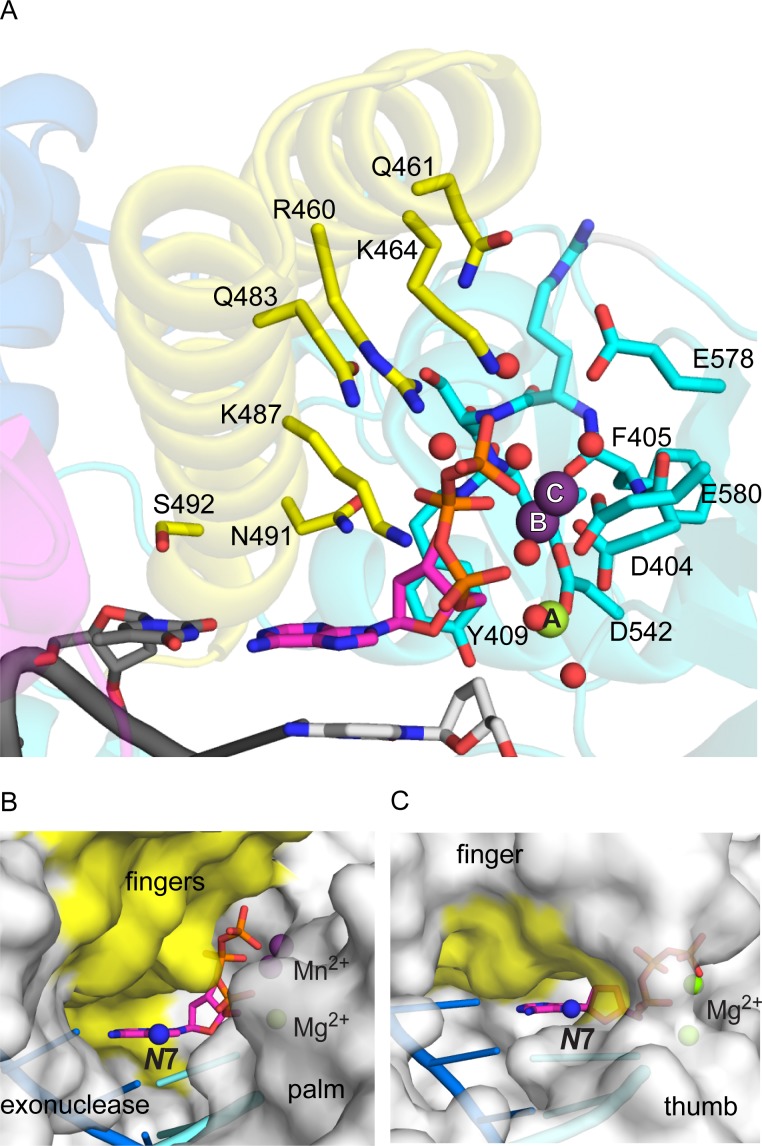
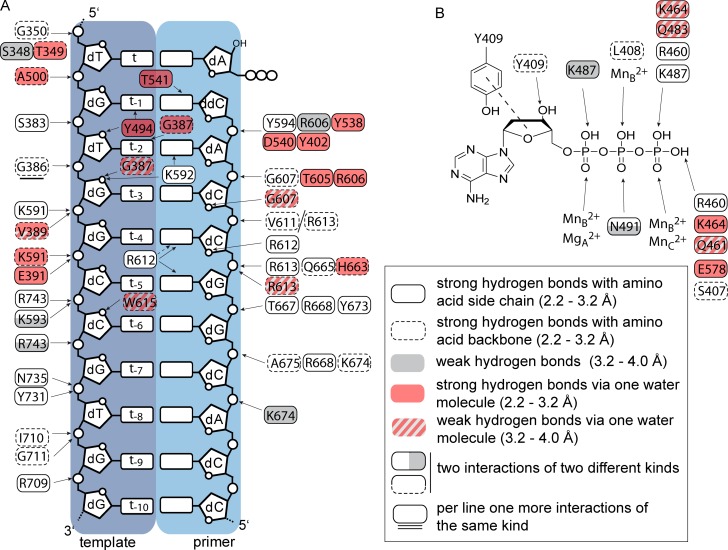
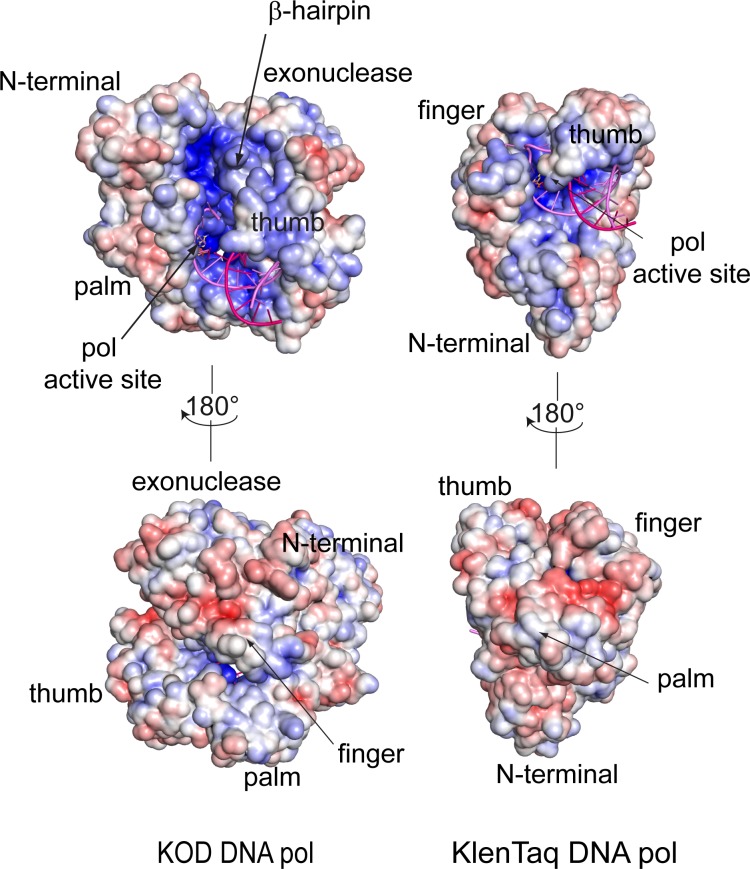
Archaeal B-family polymerases drive biotechnology by accepting a wide substrate range of chemically modified nucleotides. By now no structural data for archaeal B-family DNA polymerases in a closed, ternary complex are available, which would be the basis for developing next generation nucleotides. We present the ternary crystal structures of KOD and 9°N DNA polymerases complexed with DNA and the incoming dATP. The structures reveal a third metal ion in the active site, which was so far only observed for the eukaryotic B-family DNA polymerase δ and no other B-family DNA polymerase. The structures reveal a wide inner channel and numerous interactions with the template strand that provide space for modifications within the enzyme and may account for the high processivity, respectively. The crystal structures provide insights into the superiority over other DNA polymerases concerning the acceptance of modified nucleotides.
古菌 B 族聚合酶通过接受广泛的化学修饰核苷酸的底物范围来推动生物技术。到目前为止,还没有封闭的三元复合物中古菌 B 族 DNA 聚合酶的结构数据,这将是开发下一代核苷酸的基础。我们展示了 KOD 和 9°N DNA 聚合酶与 DNA 和进入的 dATP 形成的三元复合物的晶体结构。这些结构揭示了活性位点中的第三个金属离子,迄今为止仅在真核 B 族 DNA 聚合酶 δ 中观察到,而在其他 B 族 DNA 聚合酶中没有观察到。这些结构揭示了一个宽阔的内部通道和与模板链的众多相互作用,为酶内的修饰提供了空间,这可能分别解释了其高的延伸性。晶体结构为理解古菌 B 族聚合酶在接受修饰核苷酸方面的优越性提供了线索。