Department of Internal and Vascular Medicine, Academic Medical Center-University of Amsterdam, Amsterdam, the Netherlands.
Laboratory of Microbiology, Wageningen University, Wageningen, the Netherlands.
PLoS One. 2017 Dec 6;12(12):e0188475. doi: 10.1371/journal.pone.0188475. eCollection 2017.
Environmental factors driving the development of type 1 diabetes (T1D) are still largely unknown. Both animal and human studies have shown an association between altered fecal microbiota composition, impaired production of short-chain fatty acids (SCFA) and T1D onset. However, observational evidence on SCFA and fecal and oral microbiota in adults with longstanding T1D vs healthy controls (HC) is lacking.
We included 53 T1D patients without complications or medication and 50 HC matched for age, sex and BMI. Oral and fecal microbiota, fecal and plasma SCFA levels, markers of intestinal inflammation (fecal IgA and calprotectin) and markers of low-grade systemic inflammation were measured.
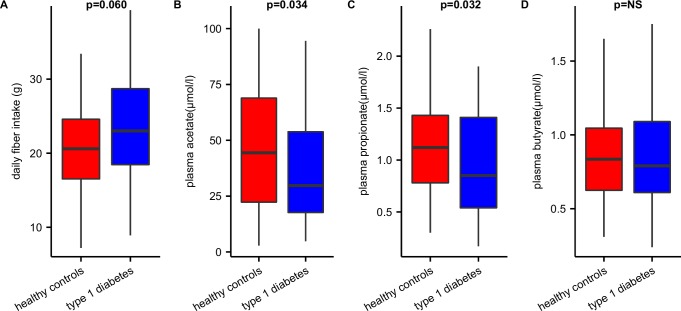
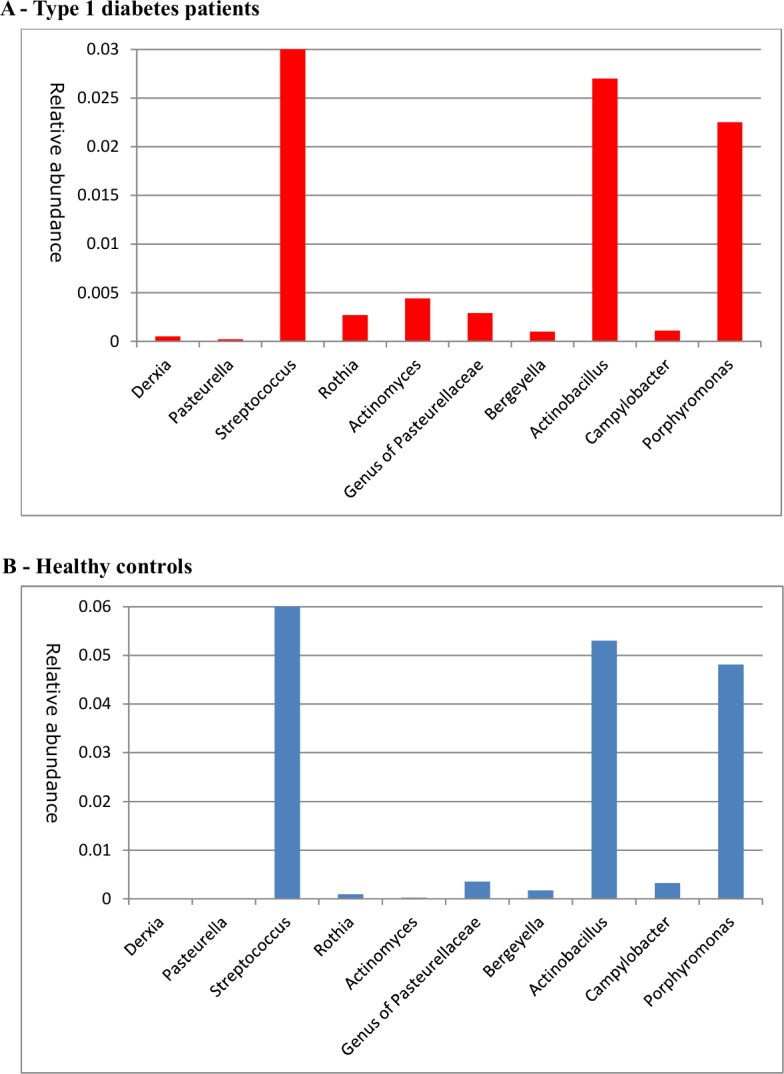
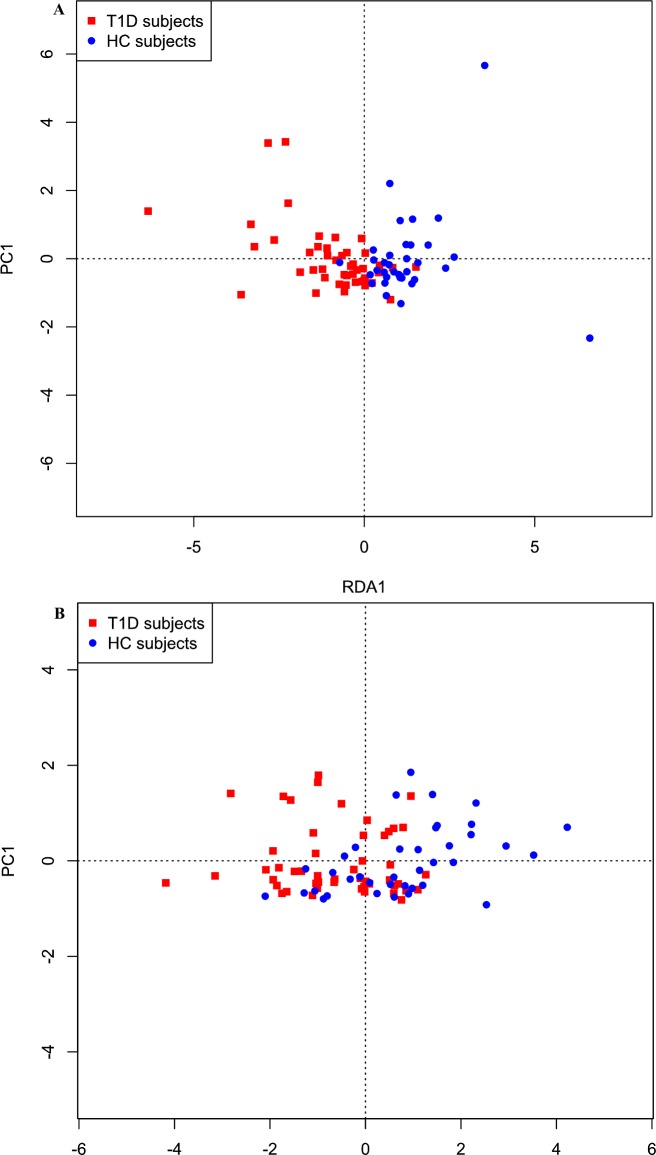
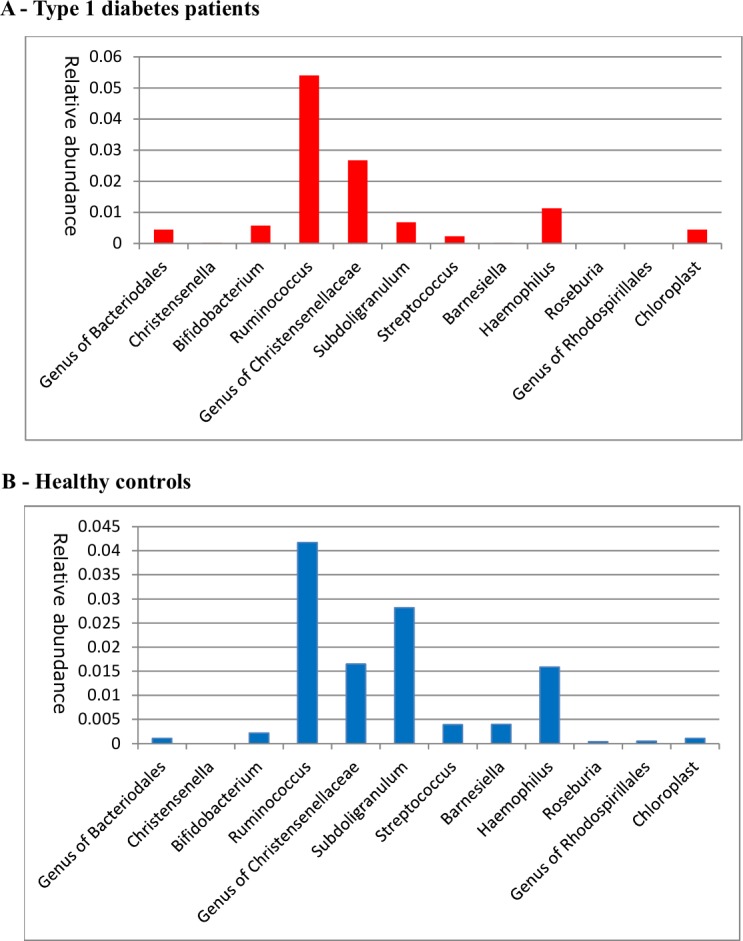
Oral microbiota were markedly different in T1D (eg abundance of Streptococci) compared to HC. Fecal analysis showed decreased butyrate producing species in T1D and less butyryl-CoA transferase genes. Also, plasma levels of acetate and propionate were lower in T1D, with similar fecal SCFA. Finally, fecal strains Christensenella and Subdoligranulum correlated with glycemic control, inflammatory parameters and SCFA.
We conclude that T1D patients harbor a different amount of intestinal SCFA (butyrate) producers and different plasma acetate and propionate levels. Future research should disentangle cause and effect and whether supplementation of SCFA-producing bacteria or SCFA alone can have disease-modifying effects in T1D.
导致 1 型糖尿病(T1D)发展的环境因素仍知之甚少。动物和人类研究都表明,粪便微生物群落组成的改变、短链脂肪酸(SCFA)产生受损与 T1D 发病之间存在关联。然而,关于 SCFA 以及长期 T1D 患者与健康对照者(HC)的粪便和口腔微生物群的观察性证据尚缺乏。
我们纳入了 53 名无并发症或药物治疗的 T1D 患者和 50 名年龄、性别和 BMI 相匹配的 HC。测量了口腔和粪便微生物群、粪便和血浆 SCFA 水平、肠道炎症标志物(粪便 IgA 和钙卫蛋白)和低水平全身炎症标志物。
与 HC 相比,T1D 患者的口腔微生物群明显不同(例如链球菌的丰度)。粪便分析显示 T1D 中丁酸产生物种减少,而丁酰辅酶 A 转移酶基因减少。此外,T1D 患者的血浆乙酸盐和丙酸盐水平较低,粪便 SCFA 相似。最后,粪便菌株 Christensenella 和 Subdoligranulum 与血糖控制、炎症参数和 SCFA 相关。
我们得出结论,T1D 患者肠道 SCFA(丁酸)产生菌的数量不同,血浆中乙酸盐和丙酸盐的水平也不同。未来的研究应阐明因果关系以及 SCFA 产生菌或 SCFA 单独补充是否能对 T1D 产生疾病修饰作用。