Mejía-León María Esther, Petrosino Joseph F, Ajami Nadim Jose, Domínguez-Bello María Gloria, de la Barca Ana María Calderón
Department of Nutrition and Metabolism, Centro de Investigación en Alimentación y Desarrollo, A.C., Hermosillo, Sonora, México.
Alkek Center for Metagenomics and Microbiome Research, Department of Molecular Virology and Microbiology, Baylor College of Medicine, Houston, Texas, USA.
Sci Rep. 2014 Jan 22;4:3814. doi: 10.1038/srep03814.
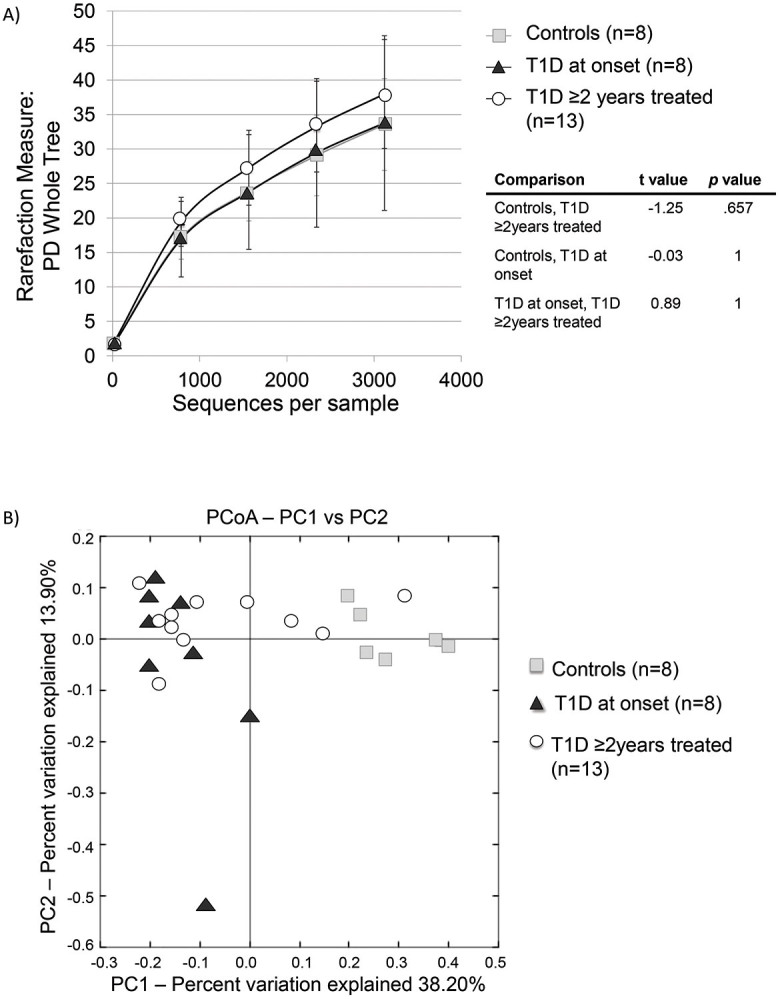
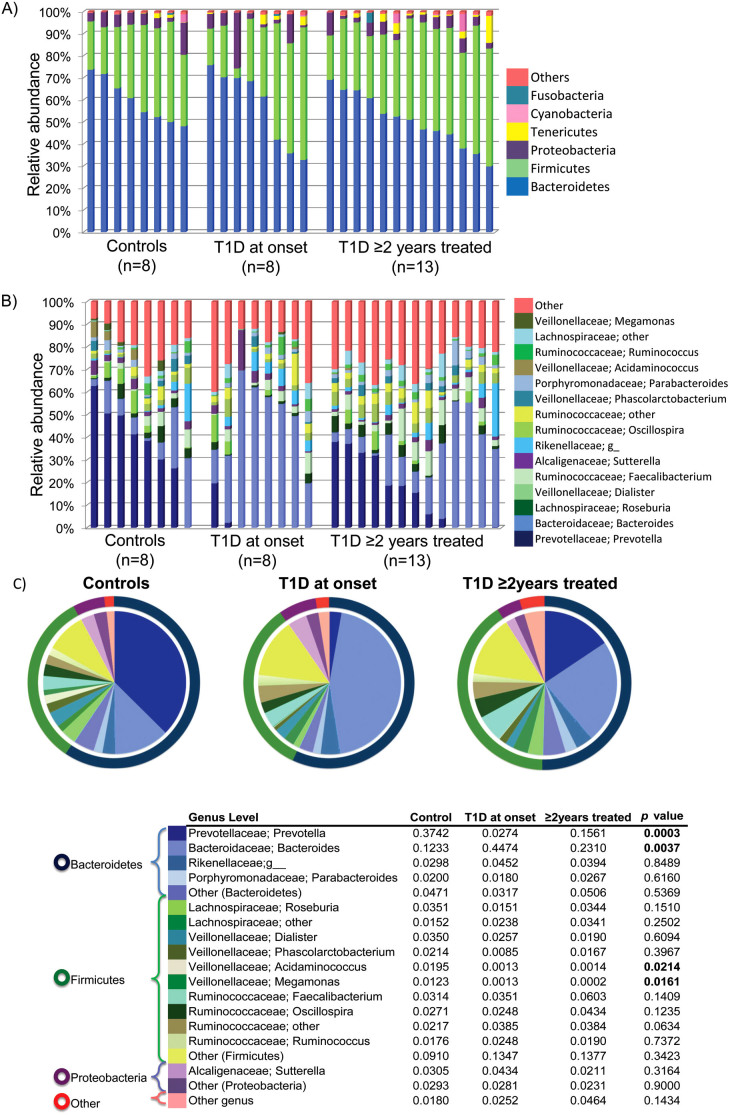
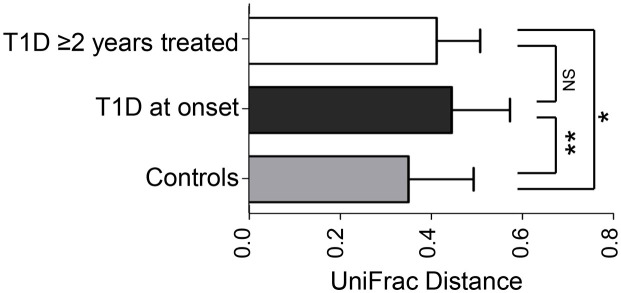
Dysbiosis of the intestinal microbiota affecting the gut barrier could be triggering Type 1 Diabetes (T1D), the second most frequent autoimmune disease in childhood. This study compared the structure of the fecal microbiota in 29 mestizo children aged 7-18 years, including 8 T1D at onset, 13 T1D after 2 years treatment, and 8 healthy controls. Clinical information was collected, predisposing haplotypes were determined; the fecal DNA was extracted, the V4 region of the 16S rRNA gene amplified and 454-pyrosequenced. The newly diagnosed T1D cases had high levels of the genus Bacteroides (p < 0.004), whereas the control group had a gut microbiota dominated by Prevotella. Children with T1D treated for ≥2 years had levels of Bacteroides and Prevotella compared to those of the control group. The gut microbiota of newly diagnosed T1D cases is altered, but whether it is involved in disease causation or is a consequence of host selection remains unclear.
影响肠道屏障的肠道微生物群失调可能引发1型糖尿病(T1D),这是儿童期第二常见的自身免疫性疾病。本研究比较了29名7至18岁混血儿童的粪便微生物群结构,其中包括8名初发T1D患儿、13名经过2年治疗的T1D患儿以及8名健康对照。收集了临床信息,确定了易感单倍型;提取粪便DNA,扩增16S rRNA基因的V4区域并进行454焦磷酸测序。新诊断的T1D病例中拟杆菌属水平较高(p < 0.004),而对照组的肠道微生物群以普氏菌属为主。接受≥2年治疗的T1D患儿的拟杆菌属和普氏菌属水平与对照组相比。新诊断的T1D病例的肠道微生物群发生了改变,但它是参与疾病病因还是宿主选择的结果仍不清楚。