Hu Yangyang, Deng Chao, Zhang He, Zhang Jing, Peng Bo, Hu Chuanyi
Department of Urology, Gongli Hospital, The Second Military Medical University, Shanghai 200135, China.
Department of First Clinical Medical College, Nanjing Medical University, Nanjing 211166, China.
Oncotarget. 2017 Oct 10;8(55):94554-94568. doi: 10.18632/oncotarget.21791. eCollection 2017 Nov 7.
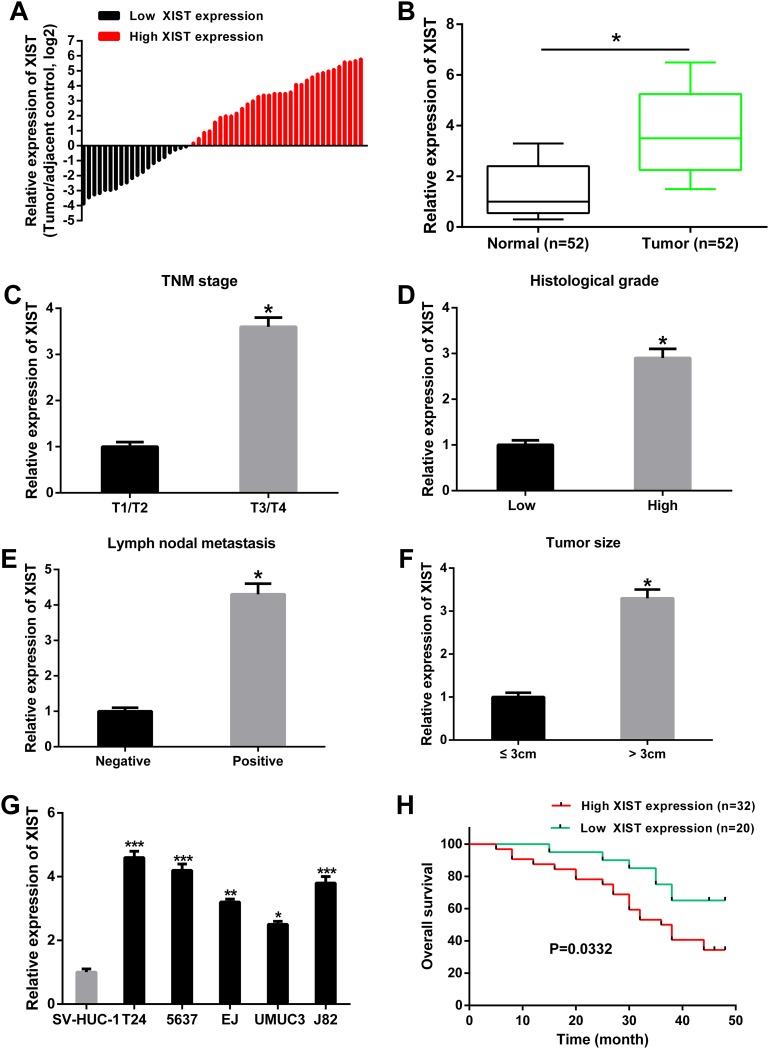
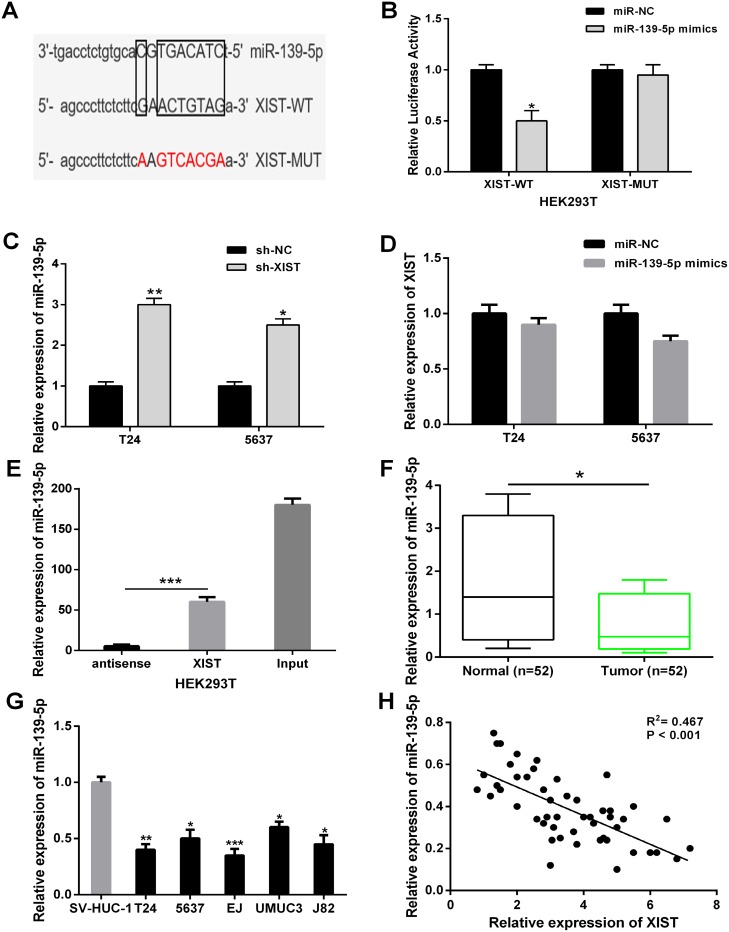
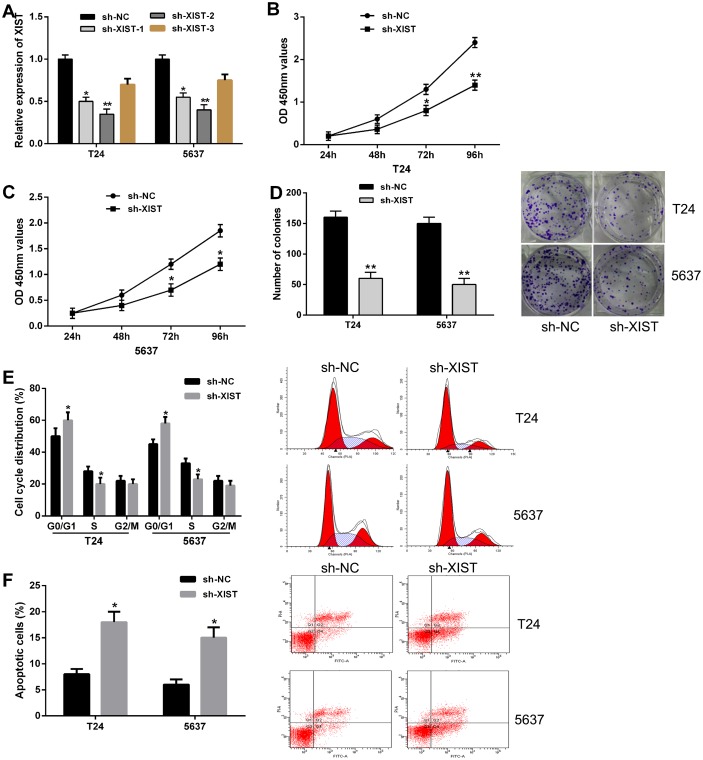
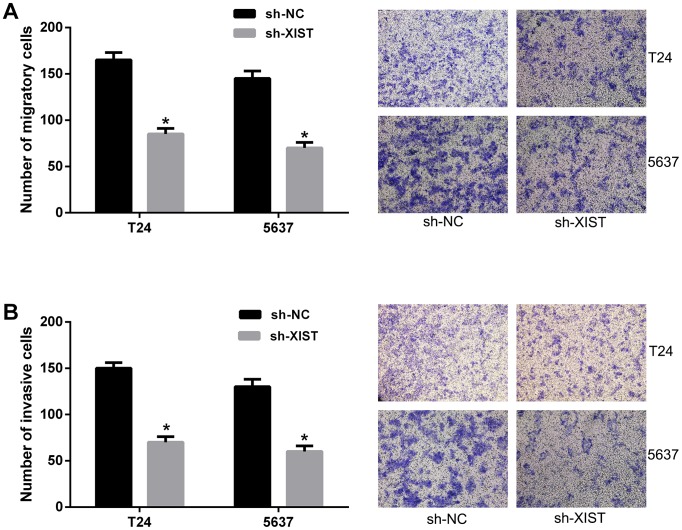
Bladder cancer is one of the most common urological malignancy all over the world. Recently, long non-coding RNA (lncRNA) XIST has been identified as an oncogenic gene in several type of cancers. However, the expression level and functional role of XIST in bladder cancer remain largely unknown. In the present study, we found that XIST was significantly up-regulated in bladder cancer tissues and cell lines, and was correlated with poor prognosis of bladder cancer patients. Furthermore, XIST knockdown significantly inhibited bladder cancer cell growth and metastasis and tumor growth . We also demonstrated that XIST acted as a competing endogenous RNA for miR-139-5p and repression of miR-139-5p could restore the inhibitory effects on bladder cancer cells induced by XIST shRNA. In addition, we identified that Wnt1 was a direct target of miR-139-5p, and XIST played the oncogenic role in bladder cancer by activating the Wnt/β-catenin signaling pathway. Taken together, our study suggested that lncRNA XIST may serve as a prognostic biomarker and a potential therapeutic target for bladder cancer.
膀胱癌是全球最常见的泌尿系统恶性肿瘤之一。最近,长链非编码RNA(lncRNA)XIST已被确定为几种癌症中的致癌基因。然而,XIST在膀胱癌中的表达水平和功能作用仍 largely unknown。在本研究中,我们发现XIST在膀胱癌组织和细胞系中显著上调,且与膀胱癌患者的不良预后相关。此外,XIST敲低显著抑制膀胱癌细胞生长、转移以及肿瘤生长。我们还证明XIST作为miR-139-5p的竞争性内源性RNA,抑制miR-139-5p可恢复XIST shRNA对膀胱癌细胞的抑制作用。此外,我们确定Wnt1是miR-139-5p的直接靶点,XIST通过激活Wnt/β-连环蛋白信号通路在膀胱癌中发挥致癌作用。综上所述,我们的研究表明lncRNA XIST可能作为膀胱癌的预后生物标志物和潜在治疗靶点。