de Paula Vanessa de Jesus R, Guimarães Fabiana Meira, Diniz Breno Satler, Forlenza Orestes Vicente
Laboratory of Neuroscience LIM-27, Department and Institute of Psychiatry, Faculty of Medicine, University of São Paulo, SP, Brazil.
Dement Neuropsychol. 2009 Jul-Sep;3(3):188-194. doi: 10.1590/S1980-57642009DN30300003.
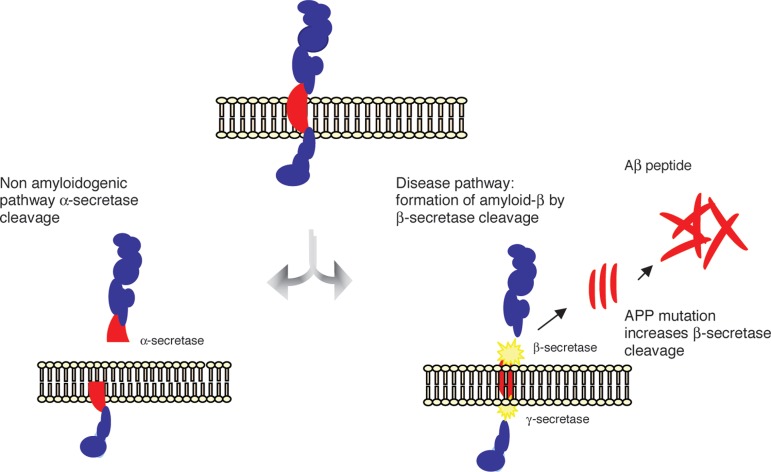
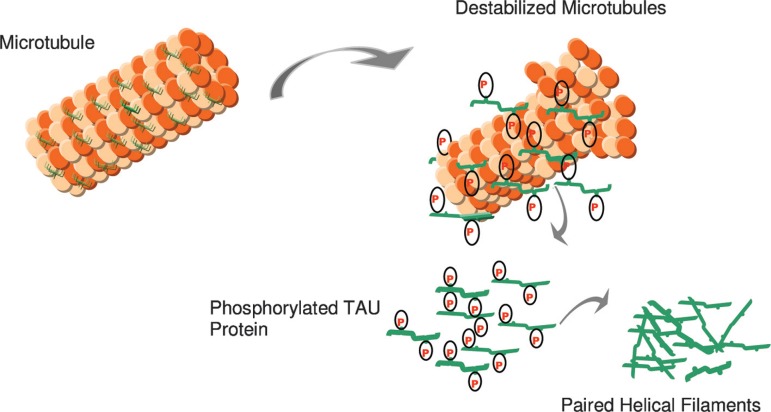
Alzheimer's disease (AD) is a neurodegenerative disease characterized by progressive cognitive decline, including memory loss, behavioral and psychological symptoms and personality changes. The neuropathological hallmarks of AD are the presence of neuritic (senile) plaques (NP) and neurofibrillary tangles (NFT), along with neuronal loss, dystrophic neurites, and gliosis. Neuritic plaques are extracellular lesions and their main constituent is the amyloid-β peptide (Aβ). Neurofibrillary tangles are intracellular lesions that are mainly composed of hyperphosphorylated Tau protein. In this article, we review the major hypotheses concerning the physiopathology of AD, focusing on the β-amyloid cascade as primary events (supported by the "βaptists") and cytoskeletal abnormalities secondary to the hyperphosphorylation of protein Tau (as advocated by the "Tauists"). We further provide an integrative view of the physiopathology of AD.
阿尔茨海默病(AD)是一种神经退行性疾病,其特征是进行性认知衰退,包括记忆丧失、行为和心理症状以及人格改变。AD的神经病理学特征是存在神经炎性(老年)斑块(NP)和神经原纤维缠结(NFT),以及神经元丢失、营养不良性神经突和胶质增生。神经炎性斑块是细胞外病变,其主要成分是淀粉样β肽(Aβ)。神经原纤维缠结是细胞内病变,主要由过度磷酸化的Tau蛋白组成。在本文中,我们回顾了关于AD生理病理学的主要假说,重点关注作为主要事件的β-淀粉样蛋白级联反应(得到“β-淀粉样蛋白派”支持)以及蛋白质Tau过度磷酸化继发的细胞骨架异常(如“Tau派”所主张)。我们还提供了AD生理病理学的综合观点。