Baalsrud Helle Tessand, Tørresen Ole Kristian, Solbakken Monica Hongrø, Salzburger Walter, Hanel Reinhold, Jakobsen Kjetill S, Jentoft Sissel
Department of Biosciences, Centre for Ecological and Evolutionary Synthesis (CEES), University of Oslo, Oslo, Norway.
Zoological Institute, University of Basel, Basel, Switzerland.
Mol Biol Evol. 2018 Mar 1;35(3):593-606. doi: 10.1093/molbev/msx311.
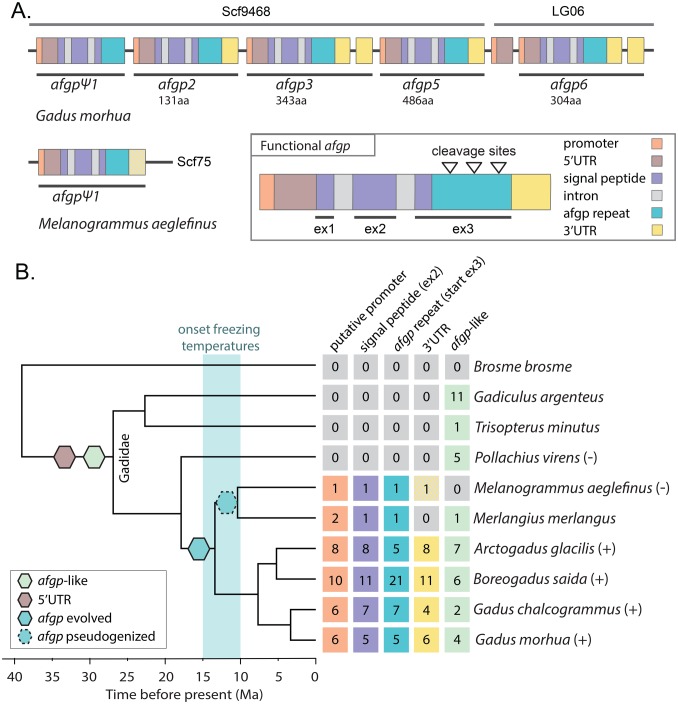
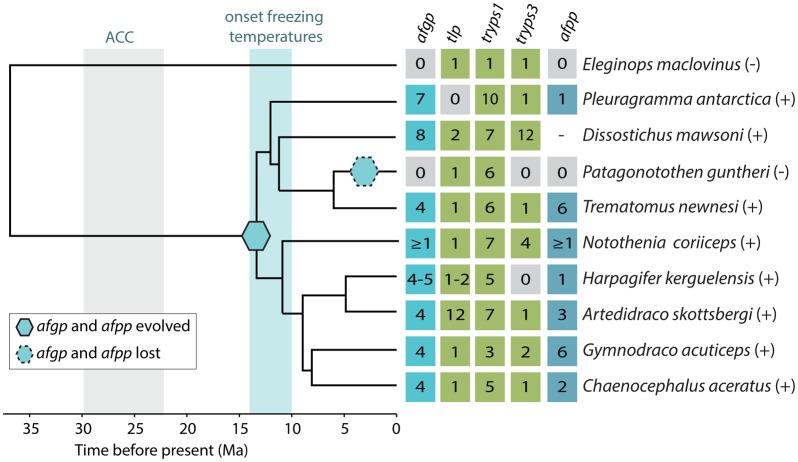
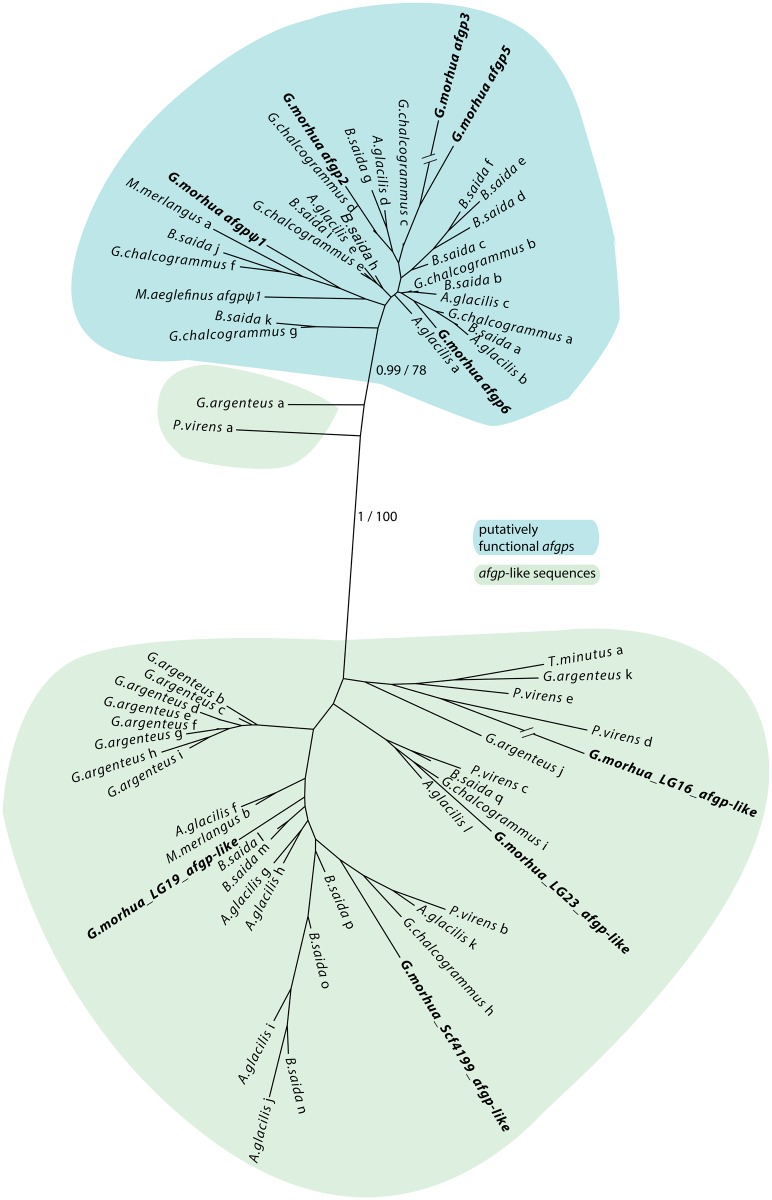
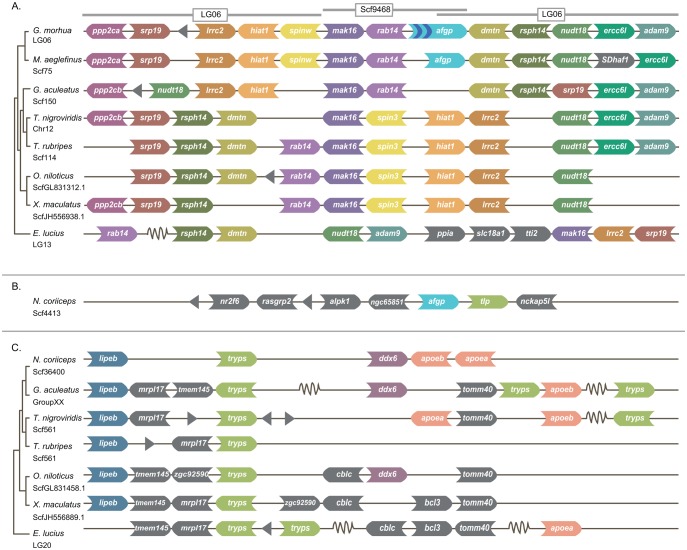
New genes can arise through duplication of a pre-existing gene or de novo from non-coding DNA, providing raw material for evolution of new functions in response to a changing environment. A prime example is the independent evolution of antifreeze glycoprotein genes (afgps) in the Arctic codfishes and Antarctic notothenioids to prevent freezing. However, the highly repetitive nature of these genes complicates studies of their organization. In notothenioids, afgps evolved from an extant gene, yet the evolutionary origin of afgps in codfishes is unknown. Here, we demonstrate that afgps in codfishes have evolved de novo from non-coding DNA 13-18 Ma, coinciding with the cooling of the Northern Hemisphere. Using whole-genome sequence data from several codfishes and notothenioids, we find higher copy number of afgp in species exposed to more severe freezing suggesting a gene dosage effect. Notably, antifreeze function is lost in one lineage of codfishes analogous to the afgp losses in non-Antarctic notothenioids. This indicates that selection can eliminate the antifreeze function when freezing is no longer imminent. In addition, we show that evolution of afgp-assisting antifreeze potentiating protein genes (afpps) in notothenioids coincides with origin and lineage-specific losses of afgp. The origin of afgps in codfishes is one of the first examples of an essential gene born from non-coding DNA in a non-model species. Our study underlines the power of comparative genomics to uncover past molecular signatures of genome evolution, and further highlights the impact of de novo gene origin in response to a changing selection regime.
新基因可通过已有基因的复制或从非编码DNA从头产生,为生物在不断变化的环境中进化出新功能提供原材料。一个典型例子是北极鳕鱼和南极南极鱼亚目鱼类中抗冻糖蛋白基因(afgps)的独立进化,以防止结冰。然而,这些基因的高度重复性使对其结构的研究变得复杂。在南极鱼亚目鱼类中,afgps从一个现存基因进化而来,但鳕鱼中afgps的进化起源尚不清楚。在此,我们证明鳕鱼中的afgps在1300万至1800万年前从非编码DNA从头进化而来,这与北半球的冷却同时发生。利用几种鳕鱼和南极鱼亚目鱼类的全基因组序列数据,我们发现暴露于更严重冰冻环境的物种中afgp的拷贝数更高,这表明存在基因剂量效应。值得注意的是,鳕鱼的一个谱系中抗冻功能丧失,类似于非南极南极鱼亚目鱼类中afgp的丧失。这表明当结冰不再迫在眉睫时,选择可以消除抗冻功能。此外,我们表明南极鱼亚目鱼类中辅助抗冻增强蛋白基因(afpps)的afgp进化与afgp的起源和谱系特异性丧失相吻合。鳕鱼中afgps的起源是一个非模式物种中从非编码DNA诞生的必需基因的首批例子之一。我们的研究强调了比较基因组学在揭示过去基因组进化分子特征方面的力量,并进一步突出了从头基因起源对不断变化的选择机制的影响。