Ni Haibo, Whittaker Dominic G, Wang Wei, Giles Wayne R, Narayan Sanjiv M, Zhang Henggui
Biological Physics Group, University of Manchester, Manchester, United Kingdom.
Space Institute of Southern China, Shenzhen, China.
Front Physiol. 2017 Nov 23;8:946. doi: 10.3389/fphys.2017.00946. eCollection 2017.
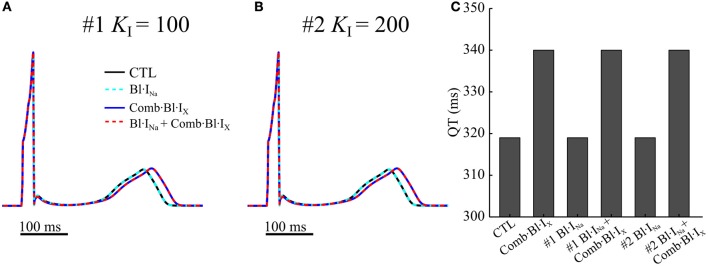
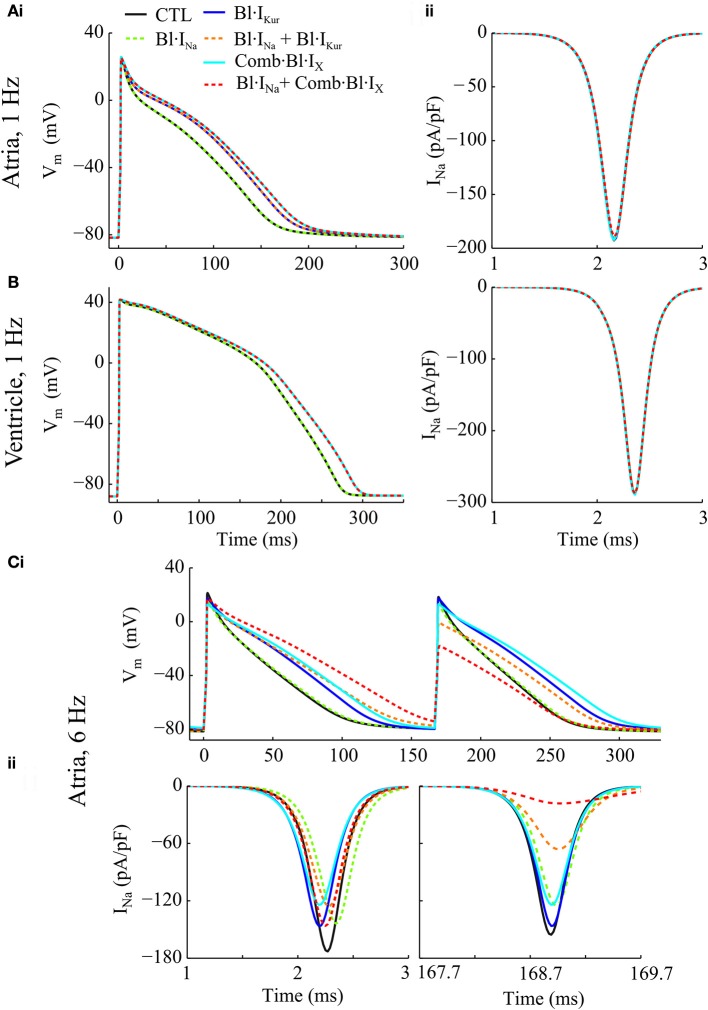
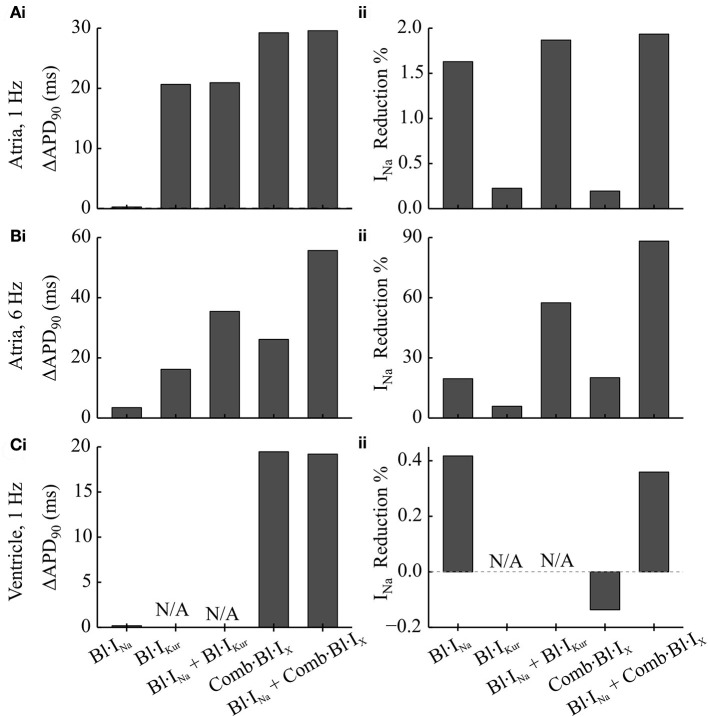
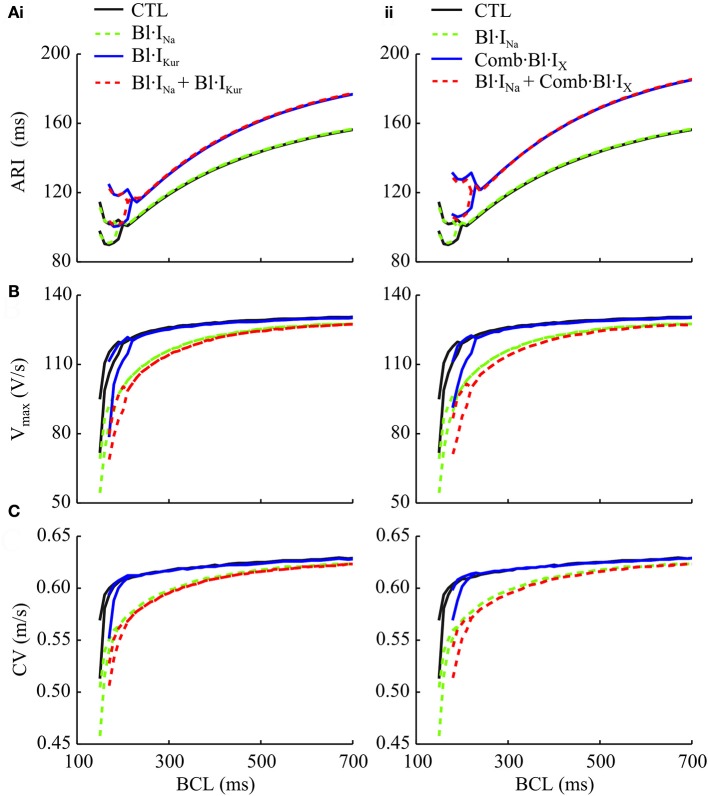
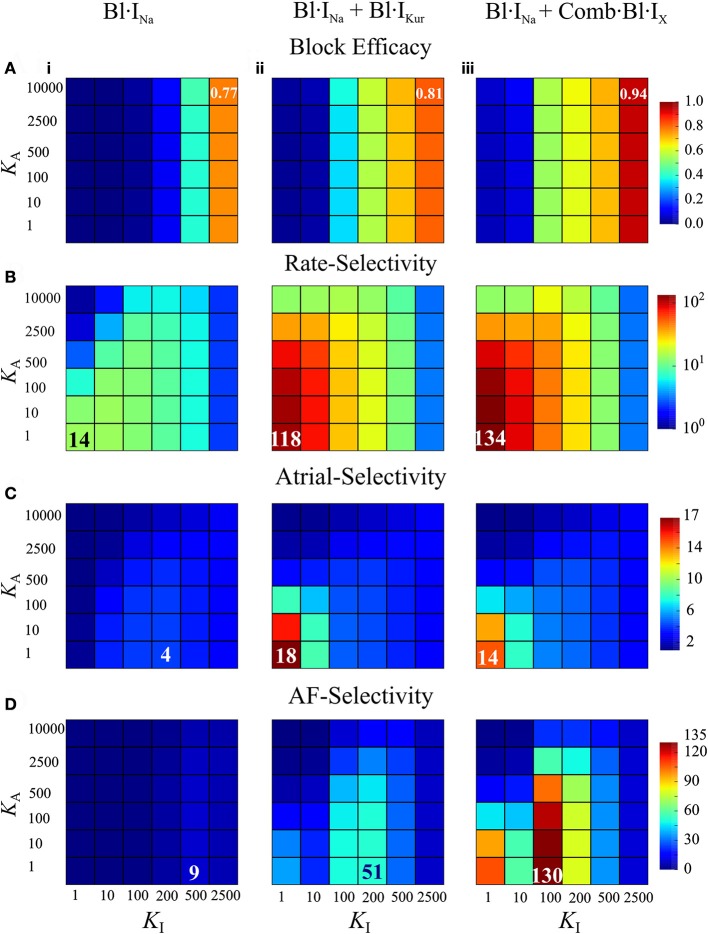
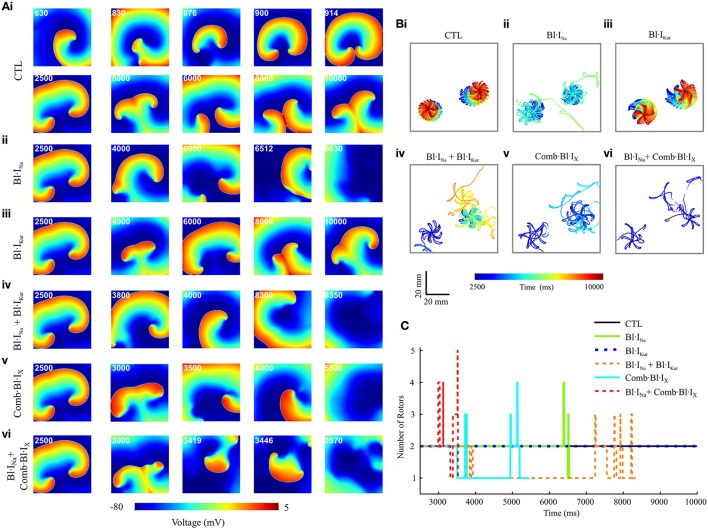
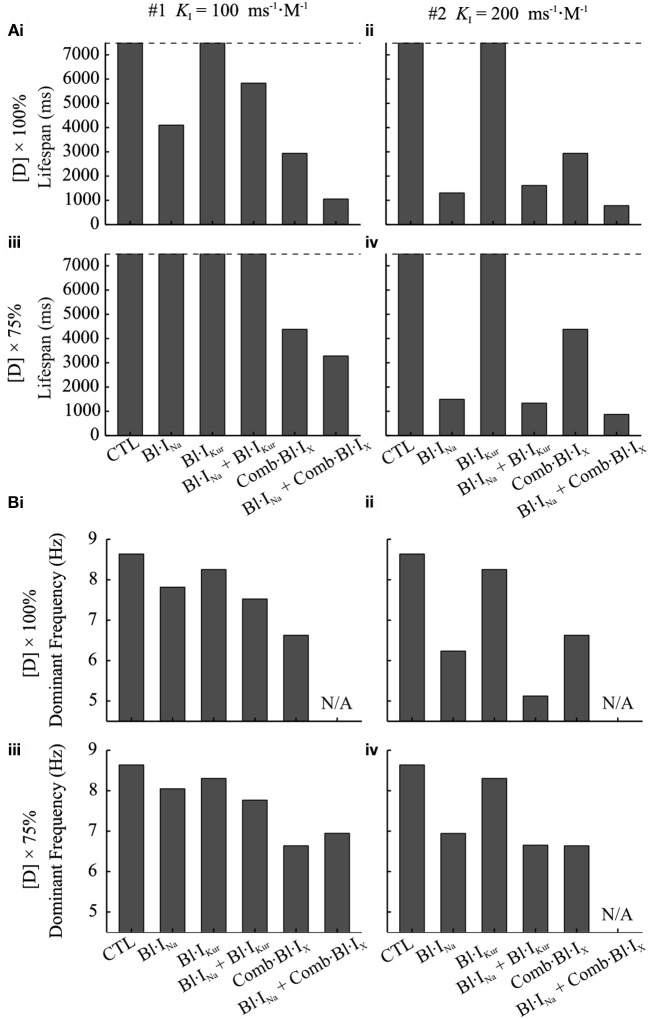
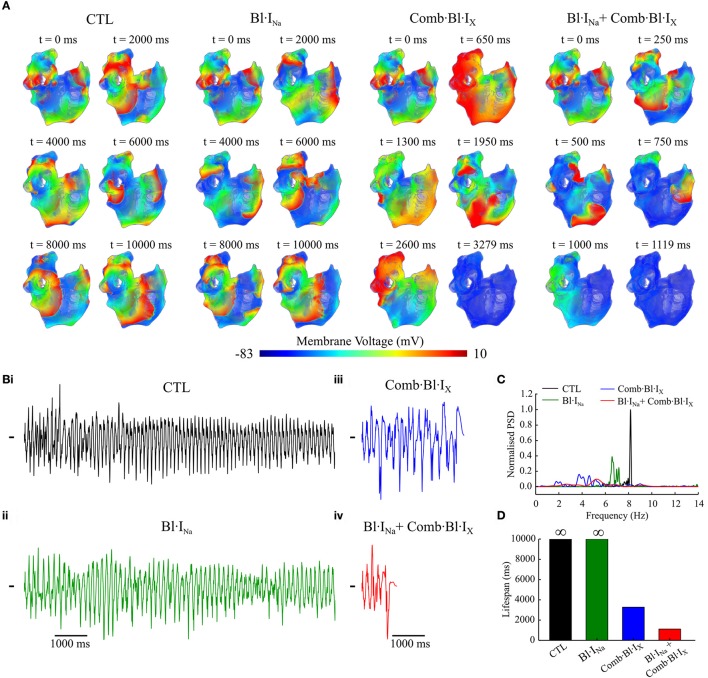
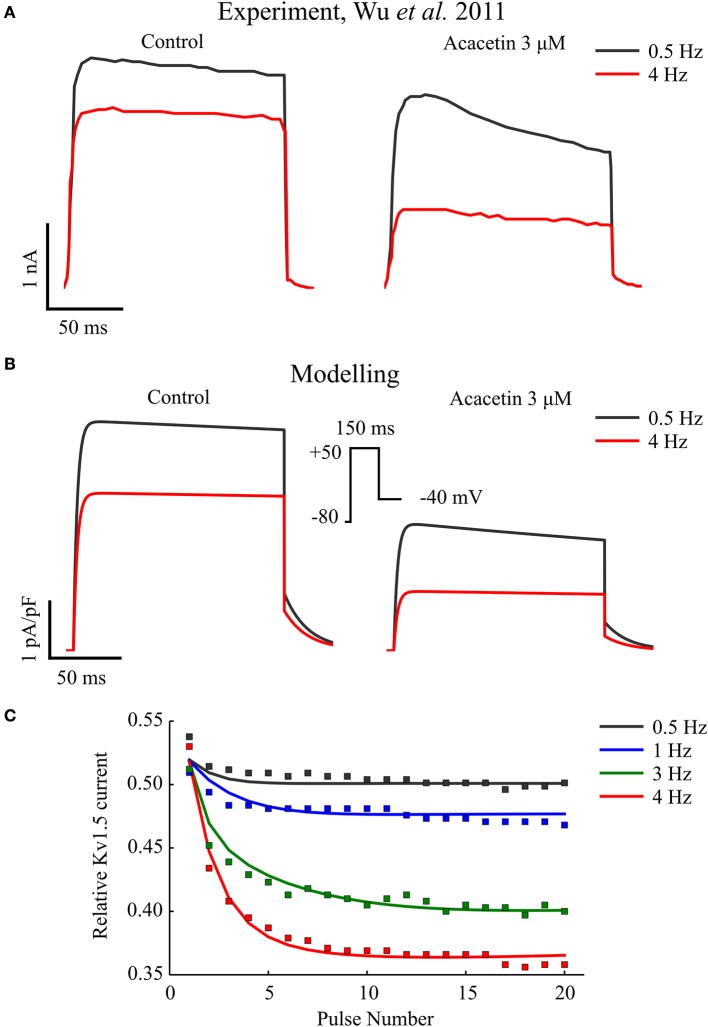
Atrial fibrillation (AF) is the most common cardiac arrhythmia. Developing effective and safe anti-AF drugs remains an unmet challenge. Simultaneous block of both atrial-specific ultra-rapid delayed rectifier potassium (K) current (I) and the Na current (I) has been hypothesized to be anti-AF, without inducing significant QT prolongation and ventricular side effects. However, the antiarrhythmic advantage of simultaneously blocking these two channels vs. individual block in the setting of AF-induced electrical remodeling remains to be documented. Furthermore, many I blockers such as acacetin and AVE0118, partially inhibit other K currents in the atria. Whether this multi-K-block produces greater anti-AF effects compared with selective I-block has not been fully understood. The aim of this study was to use computer models to (i) assess the impact of multi-K-block as exhibited by many I blokers, and (ii) evaluate the antiarrhythmic effect of blocking I and I, either alone or in combination, on atrial and ventricular electrical excitation and recovery in the setting of AF-induced electrical-remodeling. Contemporary mathematical models of human atrial and ventricular cells were modified to incorporate dose-dependent actions of acacetin (a multichannel blocker primarily inhibiting I while less potently blocking I, I, and I). Rate- and atrial-selective inhibition of I was also incorporated into the models. These single myocyte models were then incorporated into multicellular two-dimensional (2D) and three-dimensional (3D) anatomical models of the human atria. As expected, application of I blocker produced pronounced action potential duration (APD) prolongation in atrial myocytes. Furthermore, combined multiple K-channel block that mimicked the effects of acacetin exhibited synergistic APD prolongations. Synergistically anti-AF effects following inhibition of I and combined I/K-channels were also observed. The attainable maximal AF-selectivity of I inhibition was greatly augmented by blocking I or multiple K-currents in the atrial myocytes. This enhanced anti-arrhythmic effects of combined block of Na- and K-channels were also seen in 2D and 3D simulations; specially, there was an enhanced efficacy in terminating re-entrant excitation waves, exerting improved antiarrhythmic effects in the human atria as compared to a single-channel block. However, in the human ventricular myocytes and tissue, cellular repolarization and computed QT intervals were modestly affected in the presence of actions of acacetin and I blockers (either alone or in combination). In conclusion, this study demonstrates synergistic antiarrhythmic benefits of combined block of I and I, as well as those of I and combined multi K-current block of acacetin, without significant alterations of ventricular repolarization and QT intervals. This approach may be a valuable strategy for the treatment of AF.
心房颤动(AF)是最常见的心律失常。开发有效且安全的抗AF药物仍然是一项未得到满足的挑战。同时阻断心房特异性超快速延迟整流钾(K)电流(I)和钠电流(I)被认为具有抗AF作用,且不会引起明显的QT间期延长和心室副作用。然而,在AF诱导的电重构情况下,同时阻断这两种通道与单独阻断相比的抗心律失常优势仍有待证实。此外,许多I阻滞剂如刺芒柄花素和AVE0118会部分抑制心房中的其他K电流。与选择性I阻断相比,这种多K阻断是否能产生更大的抗AF作用尚未完全明确。本研究的目的是使用计算机模型:(i)评估许多I阻滞剂所表现出的多K阻断的影响;(ii)评估单独或联合阻断I和I对AF诱导的电重构情况下心房和心室电激动及恢复的抗心律失常作用。对当代人类心房和心室细胞数学模型进行修改,以纳入刺芒柄花素(一种多通道阻滞剂,主要抑制I,同时对I、I和I的抑制作用较弱)的剂量依赖性作用。对I的速率和心房选择性抑制也纳入模型。然后将这些单个心肌细胞模型整合到人类心房的多细胞二维(2D)和三维(3D)解剖模型中。正如预期的那样,应用I阻滞剂可使心房肌细胞的动作电位时程(APD)明显延长。此外,模拟刺芒柄花素作用的联合多K通道阻断表现出协同的APD延长。在抑制I和联合I/K通道后也观察到协同的抗AF作用。通过阻断心房肌细胞中的I或多个K电流,I抑制可达到的最大AF选择性大大增强。在2D和3D模拟中也观察到联合阻断钠通道和钾通道增强的抗心律失常作用;特别是,与单通道阻断相比,在终止折返激动波方面疗效增强,在人类心房中发挥了更好的抗心律失常作用。然而,在人类心室肌细胞和组织中,在存在刺芒柄花素和I阻滞剂(单独或联合)作用的情况下,细胞复极化和计算的QT间期受到适度影响。总之,本研究证明了联合阻断I和I以及I和刺芒柄花素联合多K电流阻断具有协同抗心律失常益处,且心室复极化和QT间期无明显改变。这种方法可能是治疗AF的一种有价值的策略。