School of Earth, Environmental, and Biological Sciences, Queensland University of Technology (QUT), Brisbane, Queensland, Australia.
School of Biomedical Sciences, Queensland University of Technology (QUT), Brisbane, Queensland, Australia.
Genome Biol Evol. 2018 Jan 1;10(1):94-107. doi: 10.1093/gbe/evx257.
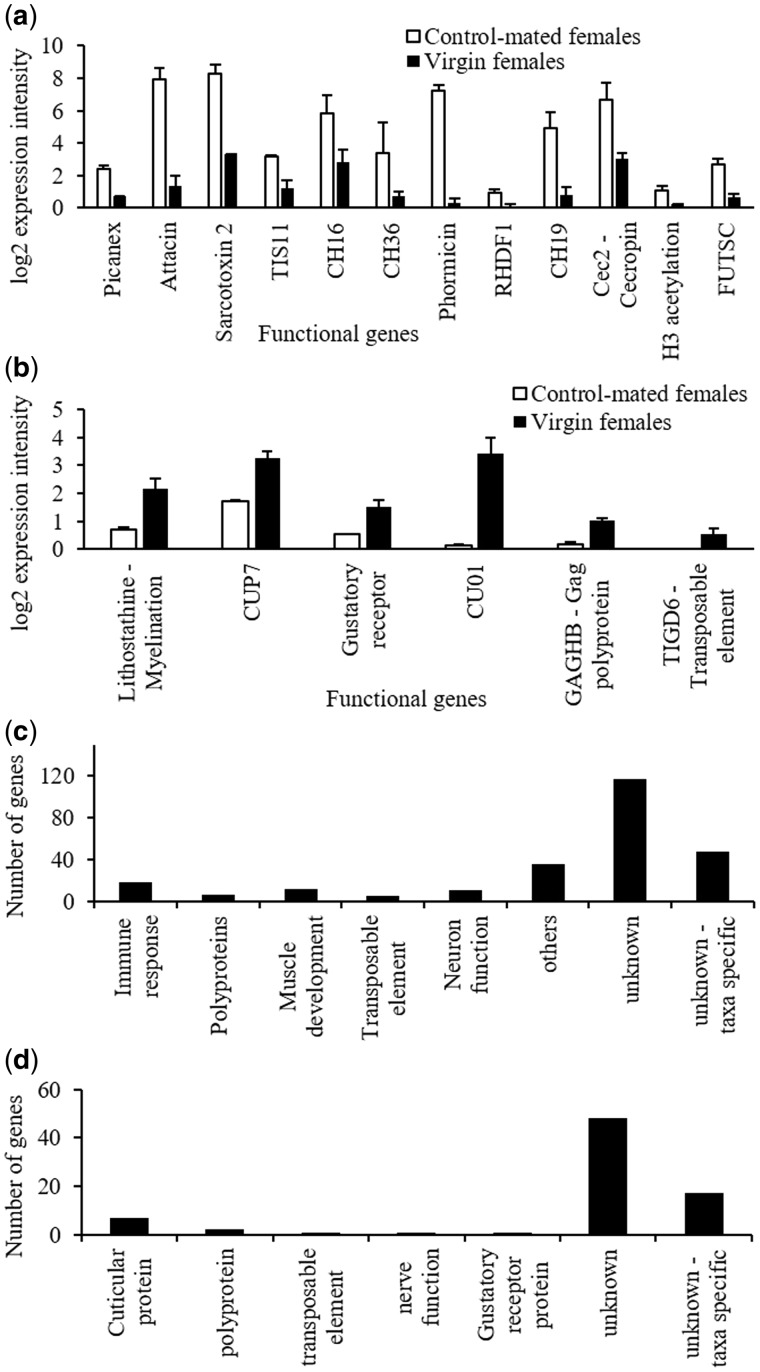
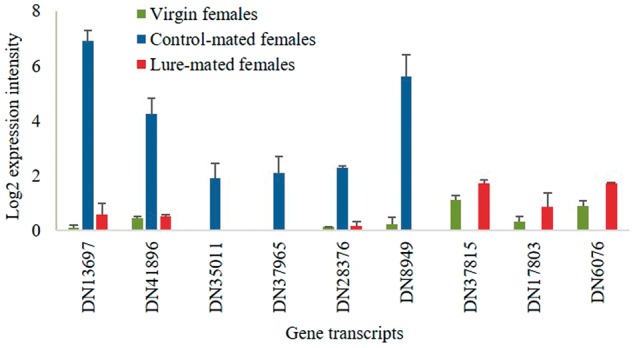
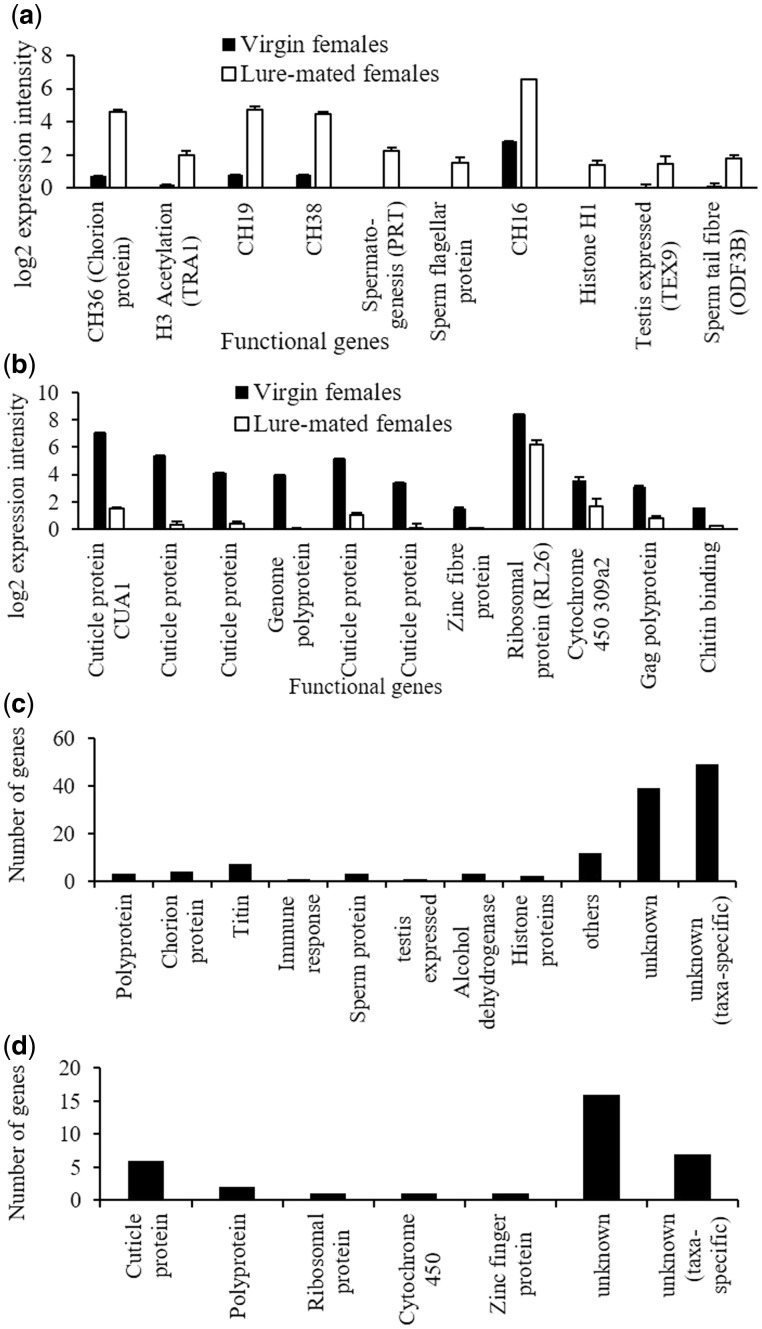
Female post-mating behaviors are regulated by complex factors involving males, females, and the environment. In insects, plant secondary compounds that males actively forage for, may indirectly modify female behaviors by altering male behavior and physiology. In the tephritid fruit fly, Bactrocera tryoni, females mated with males previously fed on plant-derived phenylpropanoids (="lures" based on usage in tephritid literature), have longer mating refractoriness, greater fecundity, and reduced longevity than females mated with non-lure fed males. This system thus provides a model for studying transcriptional changes associated with those post-mating behaviors, as the genes regulating the phenotypic changes are likely to be expressed at a greater magnitude than in control females. We performed comparative transcriptome analyses using virgin B. tryoni females, females mated with control males (control-mated), and females mated with lure-fed males (lure-mated). We found 331 differentially expressed genes (DEGs) in control-mated females and 80 additional DEGs in lure-mated females. Although DEGs in control-mated females are mostly immune response genes and chorion proteins, as reported in Drosophila species, DEGs in lure-mated females are titin-like muscle proteins, histones, sperm, and testis expressed proteins which have not been previously reported. While transcripts regulating mating (e.g., lingerer) did not show differential expression in either of the mated female classes, the odorant binding protein Obp56a was down-regulated. The exclusively enriched or suppressed genes in lure-mated females, novel transcripts such as titin and histones, and several taxa-specific transcripts reported here can shed more light on post-mating transcriptional changes, and this can help understand factors possibly regulating female post-mating behaviors.
雌性交配后的行为受涉及雄虫、雌虫和环境的复杂因素调控。在昆虫中,雄虫主动觅食的植物次生化合物可能通过改变雄虫的行为和生理,间接改变雌虫的行为。在桔小实蝇(Bactrocera tryoni)中,与之前食用植物衍生苯丙烷类化合物(基于桔小实蝇文献中的用法称为“引诱剂”)的雄虫交配的雌虫,其交配后不应期较长、繁殖力更强、寿命更短,与与未食用引诱剂的雄虫交配的雌虫相比。因此,该系统为研究与这些交配后行为相关的转录变化提供了一个模型,因为调节表型变化的基因可能比对照雌虫表达的幅度更大。我们使用处女桔小实蝇雌虫、与对照雄虫交配的雌虫(对照交配)和与诱饵喂食雄虫交配的雌虫(诱饵交配)进行了比较转录组分析。我们在对照交配的雌虫中发现了 331 个差异表达基因(DEGs),在诱饵交配的雌虫中发现了 80 个额外的 DEGs。尽管对照交配的雌虫中的 DEGs 主要是免疫反应基因和卵壳蛋白,如在果蝇物种中报道的那样,但诱饵交配的雌虫中的 DEGs 是肌球蛋白样 titin 蛋白、组蛋白、精子和睾丸表达蛋白,这些在以前的报道中尚未涉及。虽然调节交配的转录物(例如 lingerer)在任何一种交配的雌虫中都没有表现出差异表达,但气味结合蛋白 Obp56a 下调。仅在诱饵交配的雌虫中富集或抑制的基因、新的转录本如 titin 和组蛋白,以及本文报道的几个分类群特异性转录本,可以更深入地了解交配后转录变化的因素,这有助于理解可能调节雌性交配后行为的因素。