Departments of Psychiatry, University of Wisconsin, Madison, WI, USA.
Neuroscience Training Program, University of Wisconsin, Madison, WI, USA.
Transl Psychiatry. 2017 Dec 11;7(12):1282. doi: 10.1038/s41398-017-0047-9.
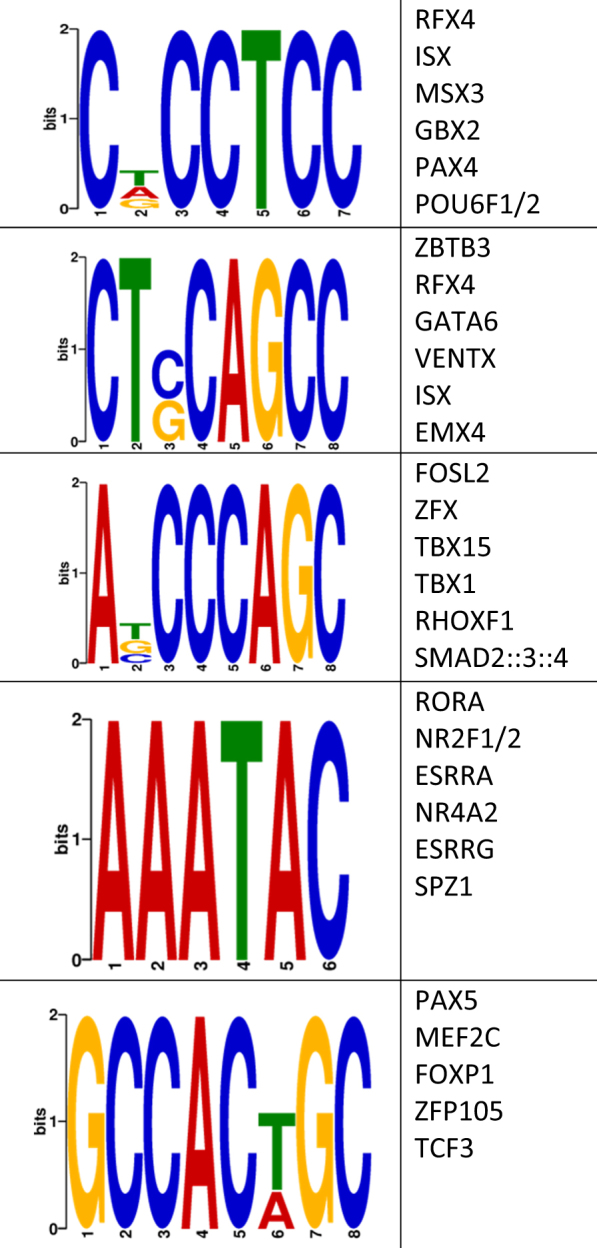
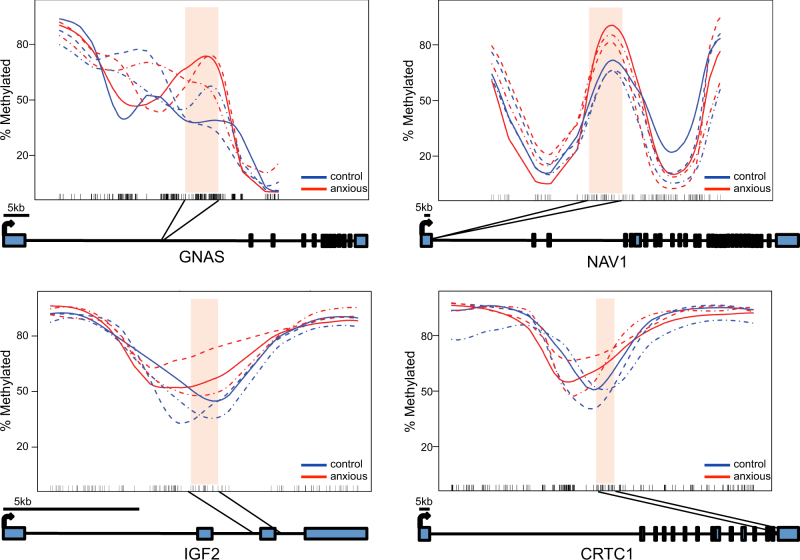
The etiology of individual differences in human anxiousness is complex and includes contributions from genetic, epigenetic (i.e., DNA methylation) and environmental factors. Past genomic approaches have been limited in their ability to detect human anxiety-related differences in these factors. To overcome these limitations, we employed both a multi-dimensional characterization method, to select monozygotic twin pairs discordant for anxiety, and whole genome DNA methylation sequencing. This approach revealed 230 anxiety-related differentially methylated loci that were annotated to 183 genes, including several known stress-related genes such as NAV1, IGF2, GNAS, and CRTC1. As an initial validation of these findings, we tested the significance of an overlap of these data with anxiety-related differentially methylated loci that we previously reported from a key neural circuit of anxiety (i.e., the central nucleus of the amygdala) in young monkeys and found a significant overlap (P-value < 0.05) of anxiety-related differentially methylated genes, including GNAS, SYN3, and JAG2. Finally, sequence motif predictions of all the human differentially methylated regions indicated an enrichment of five transcription factor binding motifs, suggesting that DNA methylation may regulate gene expression by mediating transcription factor binding of these transcripts. Together, these data demonstrate environmentally sensitive factors that may underlie the development of human anxiety.
个体焦虑差异的病因复杂,包括遗传、表观遗传(即 DNA 甲基化)和环境因素的贡献。过去的基因组方法在检测这些因素与人类焦虑相关差异的能力上存在局限性。为了克服这些限制,我们采用了多维特征化方法,选择焦虑不一致的同卵双胞胎,并进行全基因组 DNA 甲基化测序。这种方法揭示了 230 个与焦虑相关的差异甲基化基因座,这些基因座注释到 183 个基因,包括几个已知的应激相关基因,如 NAV1、IGF2、GNAS 和 CRTC1。作为对这些发现的初步验证,我们测试了这些数据与我们之前从焦虑的关键神经回路(即杏仁核中央核)在年轻猴子中报告的与焦虑相关的差异甲基化基因座的重叠的意义,发现了显著的重叠(P 值<0.05),包括 GNAS、SYN3 和 JAG2。最后,所有人类差异甲基化区域的序列基序预测表明,五个转录因子结合基序富集,表明 DNA 甲基化可能通过调节这些转录物的转录因子结合来调节基因表达。总之,这些数据表明,环境敏感因素可能是人类焦虑发展的基础。