College of Mechanical and Electronic Engineering, Northwest Agriculture & Forestry University, Yangling, Shaanxi 712100, China.
Laboratory of Neuroimaging, National Institute on Alcoholism and Alcohol Abuse, Bethesda, MD 20892, USA.
Neural Plast. 2017;2017:9297621. doi: 10.1155/2017/9297621. Epub 2017 Oct 31.
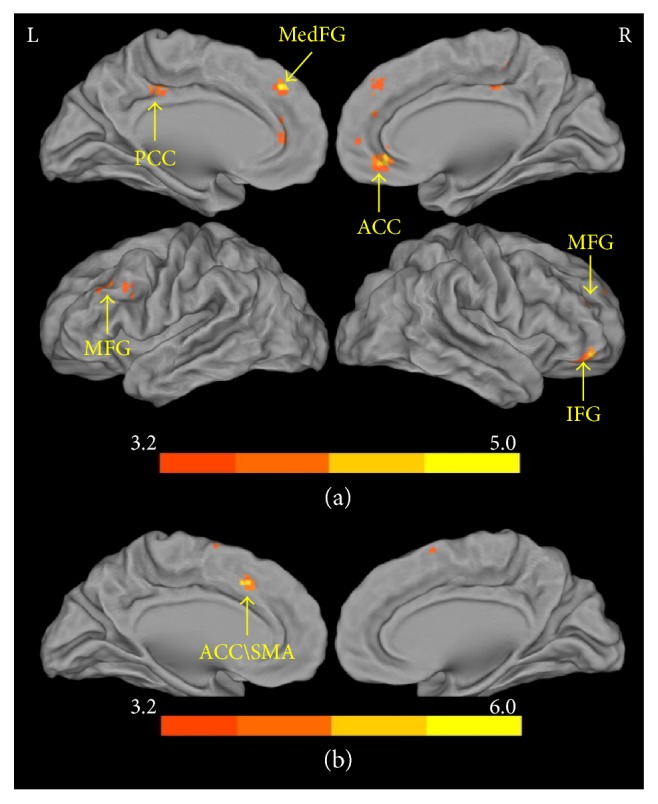
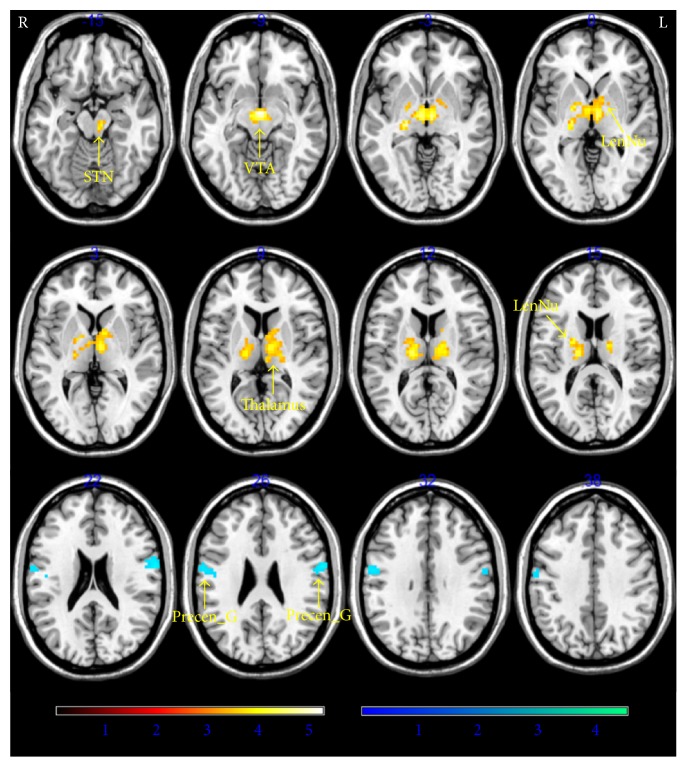
Negative urgency (NU) and positive urgency (PU) are implicated in several high-risk behaviors, such as eating disorders, substance use disorders, and nonsuicidal self-injury behavior. The current study aimed to explore the possible link between trait of urgency and brain activity at rest. We assessed the amplitude of low-frequency fluctuations (ALFF) of the resting-state functional magnetic resonance imaging (fMRI) signal in 85 healthy volunteers. Trait urgency measures were related to ALFF in the lateral orbitofrontal cortex, dorsolateral prefrontal cortex, ventral and dorsal medial frontal cortex, anterior cingulate, and posterior cingulate cortex/precuneus. In addition, trait urgency measures showed significant correlations with the functional connectivity of the posterior cingulate cortex/precuneus seed with the thalamus and midbrain region. These findings suggest an association between intrinsic brain activity and impulsive behaviors in healthy humans.
负性冲动(NU)和正性冲动(PU)与多种高风险行为有关,例如饮食障碍、物质使用障碍和非自杀性自伤行为。本研究旨在探索特质冲动与静息态脑活动之间可能存在的联系。我们评估了 85 名健康志愿者静息状态功能磁共振成像(fMRI)信号低频振幅(ALFF)。特质冲动测量值与外侧眶额皮层、背外侧前额叶皮层、腹侧和背侧内侧前额叶皮层、前扣带回和后扣带回/楔前叶的 ALFF 有关。此外,特质冲动测量值与后扣带回/楔前叶种子与丘脑和中脑区域的功能连接呈显著相关。这些发现表明内在脑活动与健康人群的冲动行为之间存在关联。