Hoffman Samuel L, Reid Kaufman Robert Reid, Ferrari Shannon, Alexander Sheila Ann, Rosenzweig Margaret Quinn, Wesmiller Susan W
Doctoral Program of Nursing Practice in Family Medicine, University of Pittsburgh.
University of Pittsburgh, Acute and Tertiary Care.
J Adv Pract Oncol. 2016 May-Jun;7(4):382-389. doi: 10.6004/jadpro.2016.7.4.2. Epub 2016 May 1.
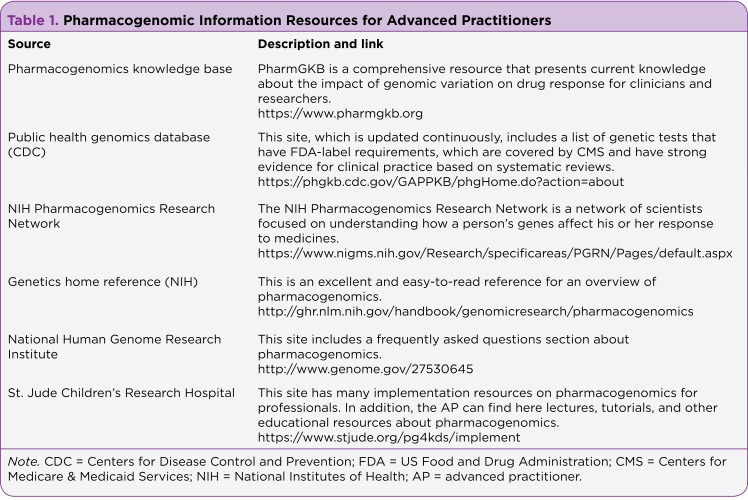
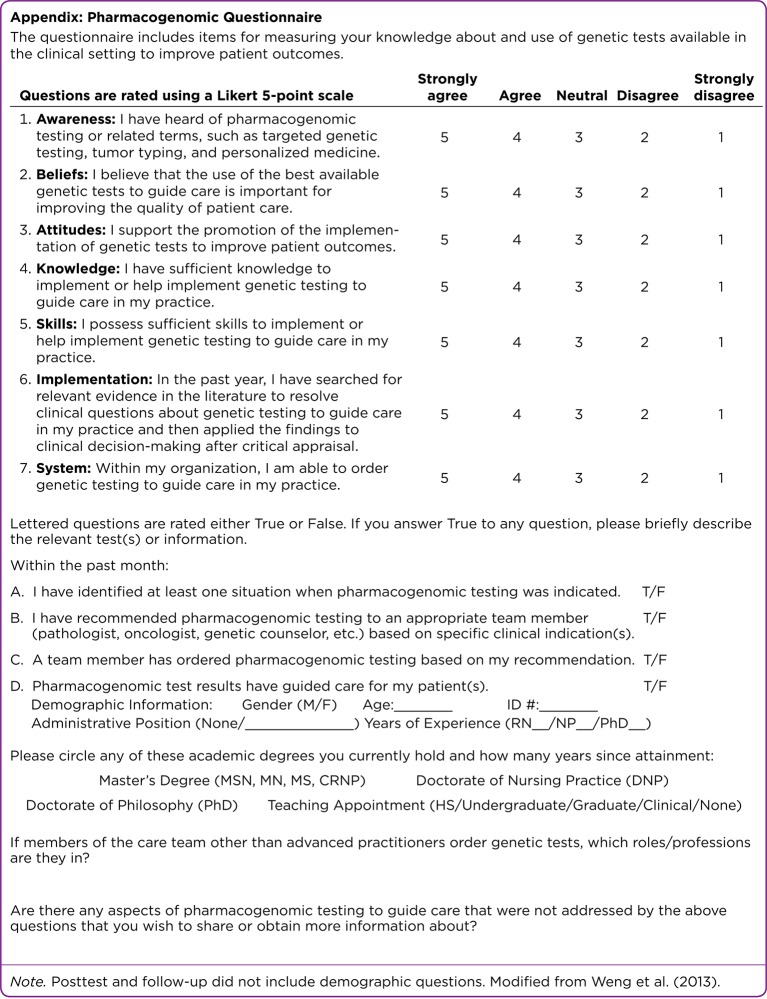
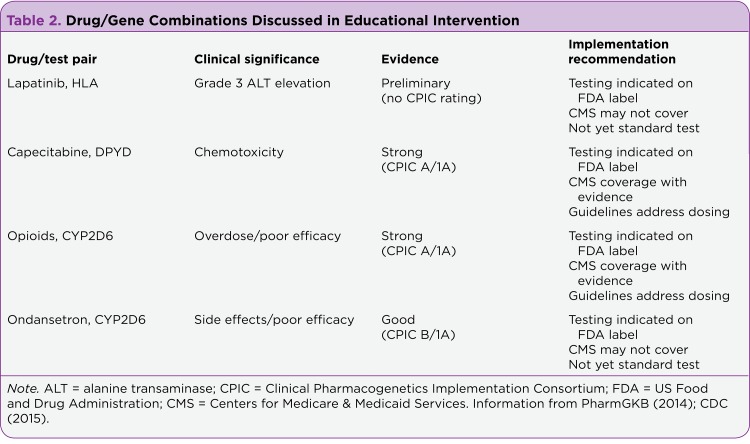
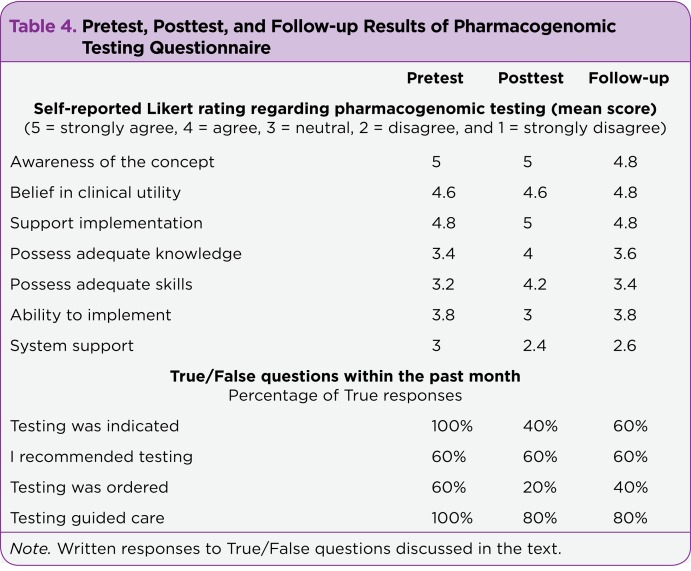
To provide the best available evidence-based care to their patients, advanced practitioners (APs) must become proficient in genomic competencies and remain informed regarding the availability of pharmacogenomic tests. Databases, such as the Centers for Disease Control and Prevention's "Genomic Testing," provide guidance about pharmacogenomic testing, but many APs are not aware of these resources. This study employed a quasi-experimental pretest/posttest design using a convenience sample of APs in a large clinical outpatient breast cancer clinic to assess the knowledge base, beliefs, attitudes, and barriers regarding pharmacogenomic testing among front-line APs and increase knowledge through a targeted educational intervention. The objectives of the educational intervention were to (1) increase knowledge of the clinical indication for testing; (2) increase collaboration among the interprofessional team; and (3) identify correctly when the plan of care should be modified based on pharmacogenomic test results to optimize patient outcomes. Responses showed that these oncology APs possess a strong foundation in genetics and support the addition of new pharmacogenomic tests to their practice.
为了向患者提供最佳的循证护理,高级从业者(APs)必须精通基因组学能力,并随时了解药物基因组学检测的可用性。诸如疾病控制与预防中心的“基因组检测”之类的数据库提供了有关药物基因组学检测的指导,但许多APs并不知晓这些资源。本研究采用了准实验性的前测/后测设计,以一家大型临床门诊乳腺癌诊所的APs便利样本为对象,评估一线APs在药物基因组学检测方面的知识基础、信念、态度和障碍,并通过有针对性的教育干预来增加知识。教育干预的目标是:(1)增加对检测临床指征的了解;(2)加强跨专业团队之间的协作;(3)根据药物基因组学检测结果正确确定何时应修改护理计划,以优化患者治疗效果。结果显示,这些肿瘤学APs在遗传学方面有坚实的基础,并支持在其实践中增加新的药物基因组学检测。