Department of Biomedical Sciences, University of Padova, Padova, Italy.
Department of Biology, University of Padova, Padova, Italy.
Cell Death Differ. 2018 Jun;25(6):1131-1145. doi: 10.1038/s41418-017-0033-z. Epub 2017 Dec 11.
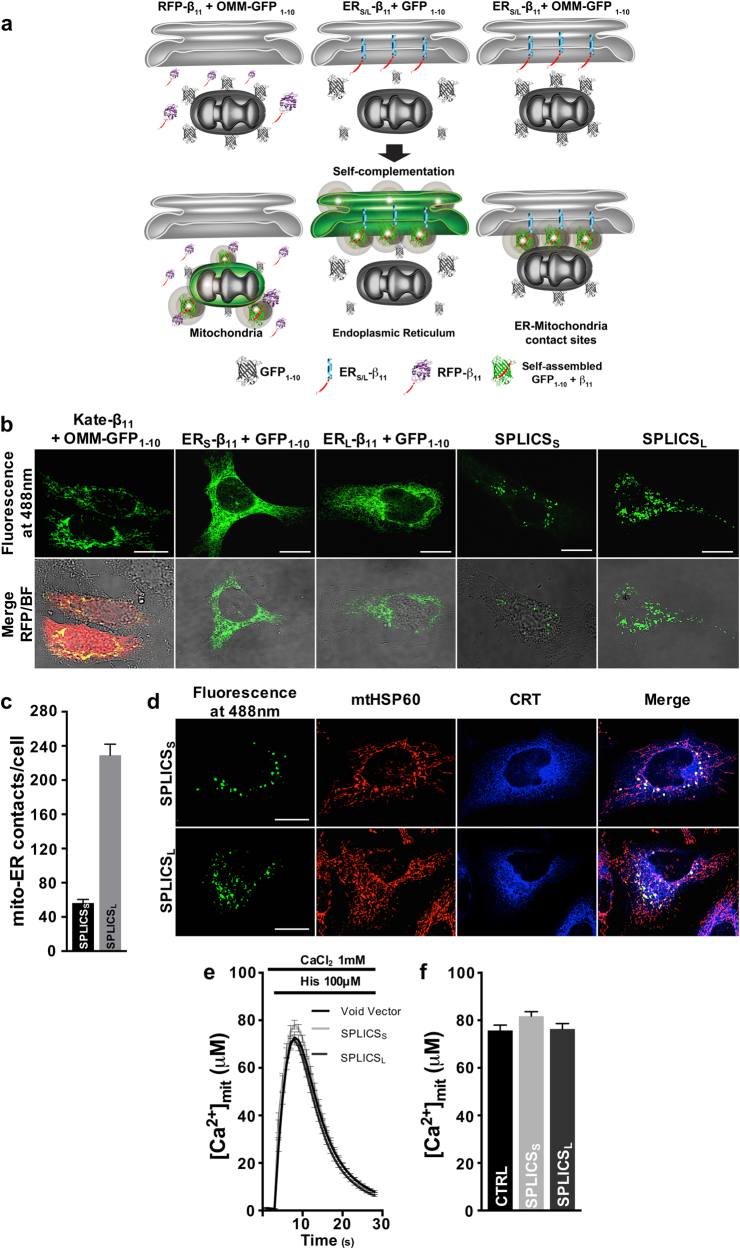
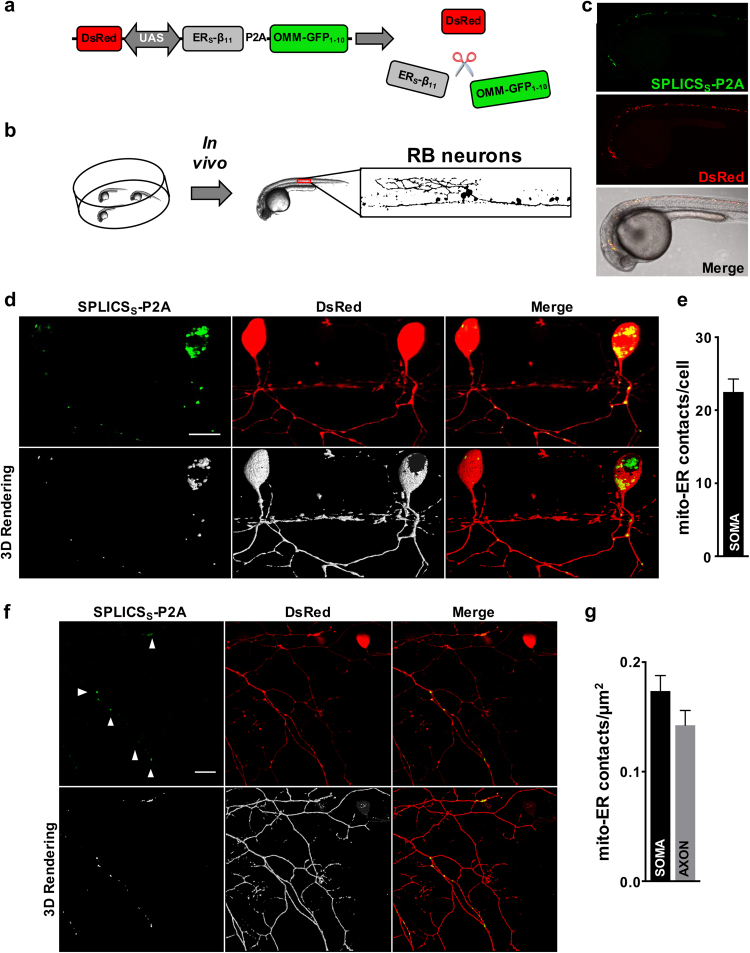
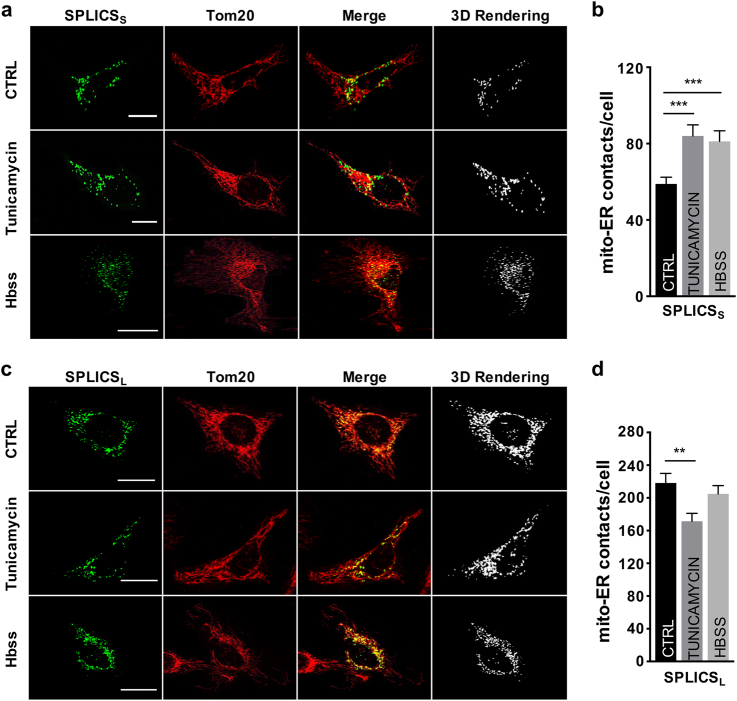
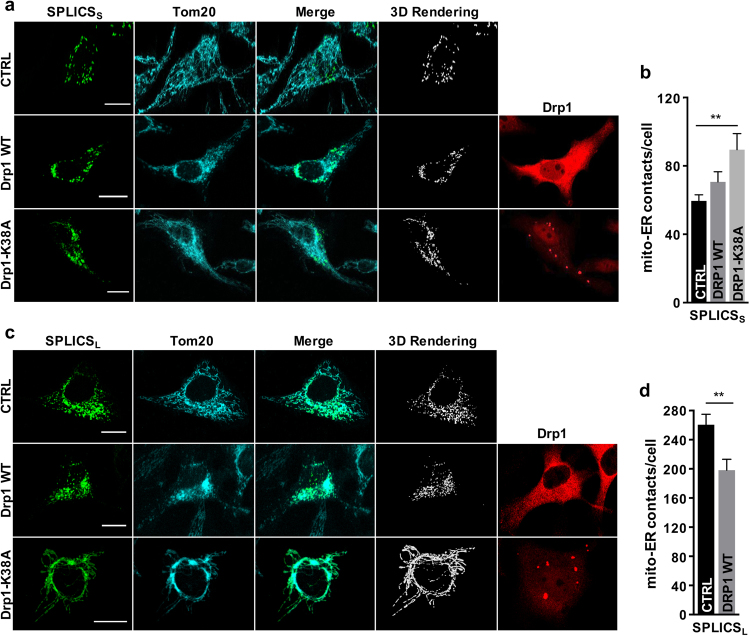
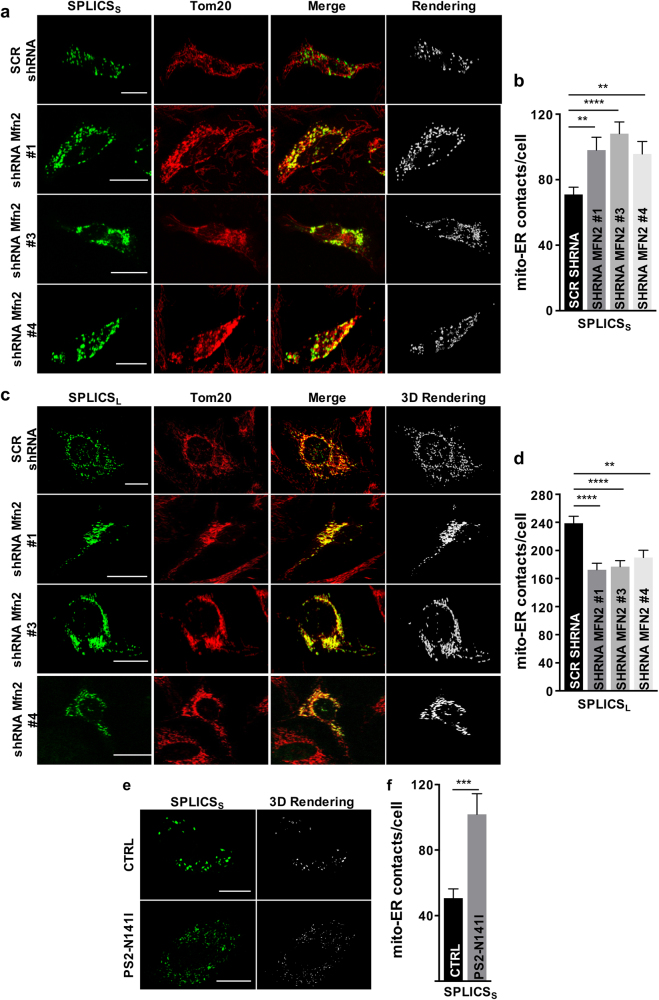
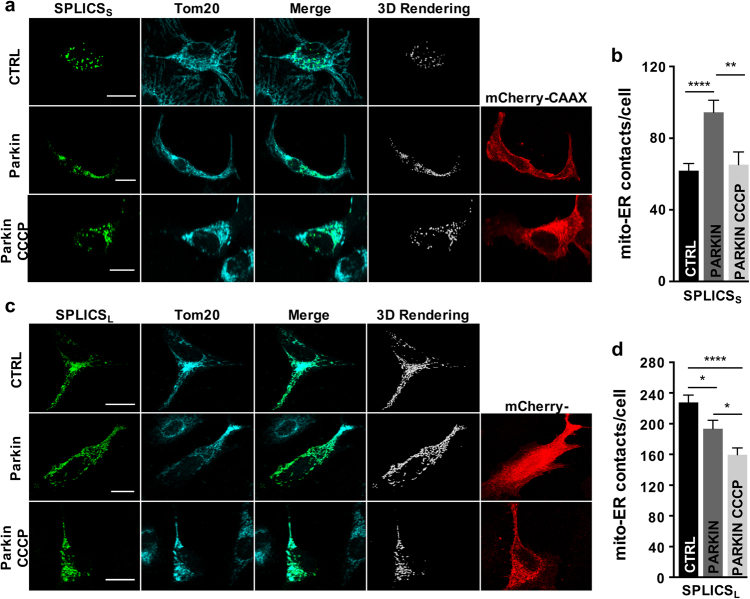
Contact sites are discrete areas of organelle proximity that coordinate essential physiological processes across membranes, including Ca signaling, lipid biosynthesis, apoptosis, and autophagy. However, tools to easily image inter-organelle proximity over a range of distances in living cells and in vivo are lacking. Here we report a split-GFP-based contact site sensor (SPLICS) engineered to fluoresce when organelles are in proximity. Two SPLICS versions efficiently measured narrow (8-10 nm) and wide (40-50 nm) juxtapositions between endoplasmic reticulum and mitochondria, documenting the existence of at least two types of contact sites in human cells. Narrow and wide ER-mitochondria contact sites responded differently to starvation, ER stress, mitochondrial shape modifications, and changes in the levels of modulators of ER-mitochondria juxtaposition. SPLICS detected contact sites in soma and axons of D. rerio Rohon Beard (RB) sensory neurons in vivo, extending its use to analyses of organelle juxtaposition in the whole animal.
接触位点是细胞器邻近的离散区域,可协调跨膜的基本生理过程,包括钙信号转导、脂质生物合成、细胞凋亡和自噬。然而,目前缺乏在活细胞和体内范围内轻松成像细胞器近距离的工具。在这里,我们报告了一种基于分裂 GFP 的接触位点传感器(SPLICS),它在细胞器接近时会发出荧光。两种 SPLICS 版本有效地测量了内质网和线粒体之间狭窄(8-10nm)和宽(40-50nm)的毗邻,证明了人类细胞中至少存在两种类型的接触位点。窄和宽的 ER-线粒体接触位点对饥饿、内质网应激、线粒体形状改变以及 ER-线粒体毗邻调节剂水平的变化有不同的反应。SPLICS 在活体斑马鱼 Rohon Beard(RB)感觉神经元的体和轴突中检测到接触位点,将其用途扩展到整个动物的细胞器毗邻分析。