Division of Mucosal Immunology, Department of Microbiology and Immunology, The Institute of Medical Science, The University of Tokyo, Tokyo 108-8639, Japan; Japan Tobacco Inc., Central Pharmaceutical Research Institute, 1-1 Murasaki-cho, Takatsuki, Osaka 569-1125, Japan.
Division of Mucosal Immunology, Department of Microbiology and Immunology, The Institute of Medical Science, The University of Tokyo, Tokyo 108-8639, Japan.
Stem Cell Reports. 2018 Jan 9;10(1):314-328. doi: 10.1016/j.stemcr.2017.11.004. Epub 2017 Dec 7.
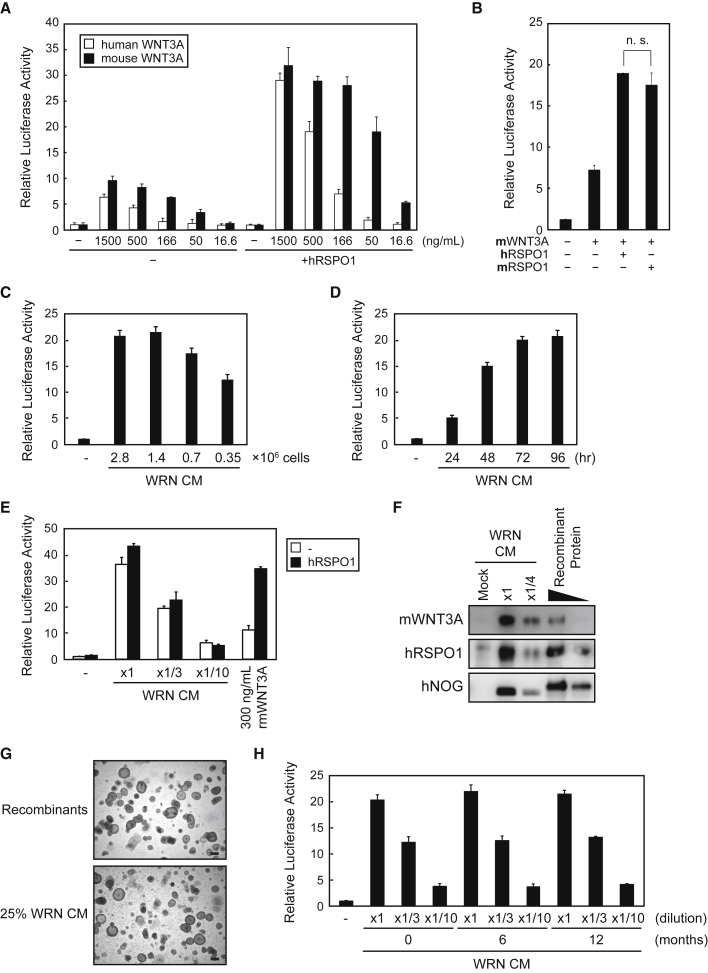
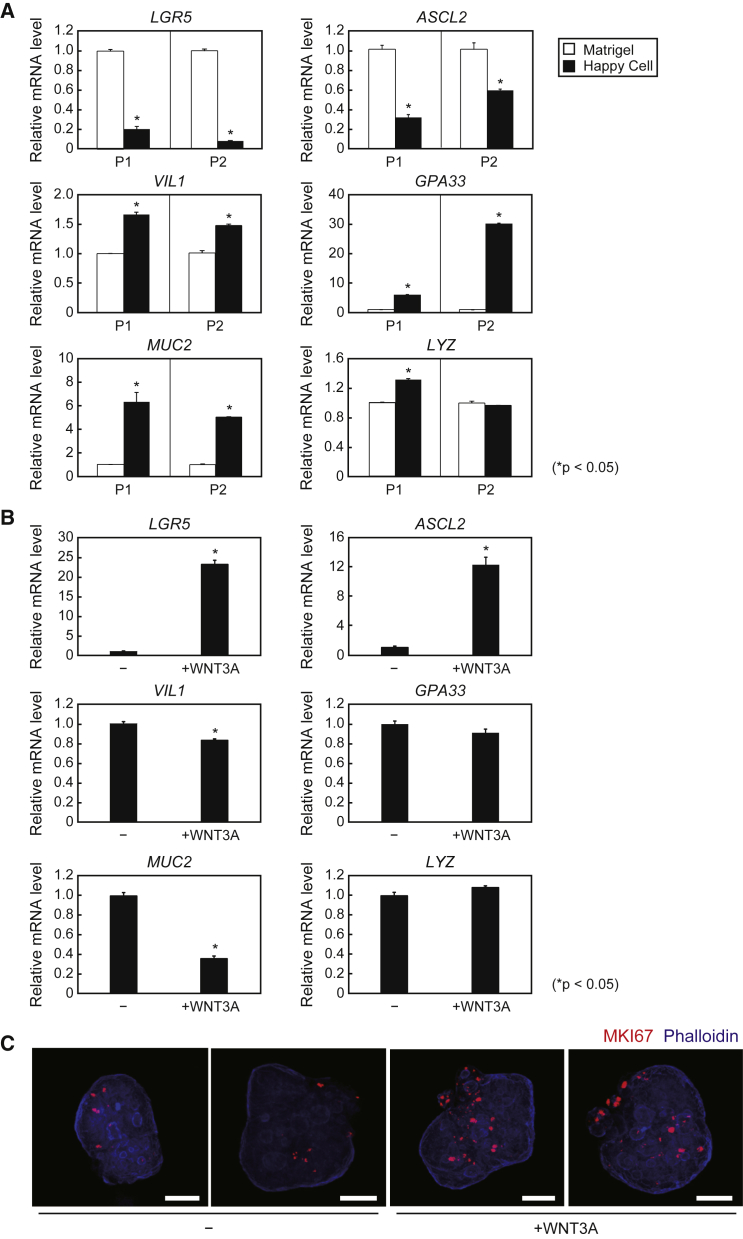
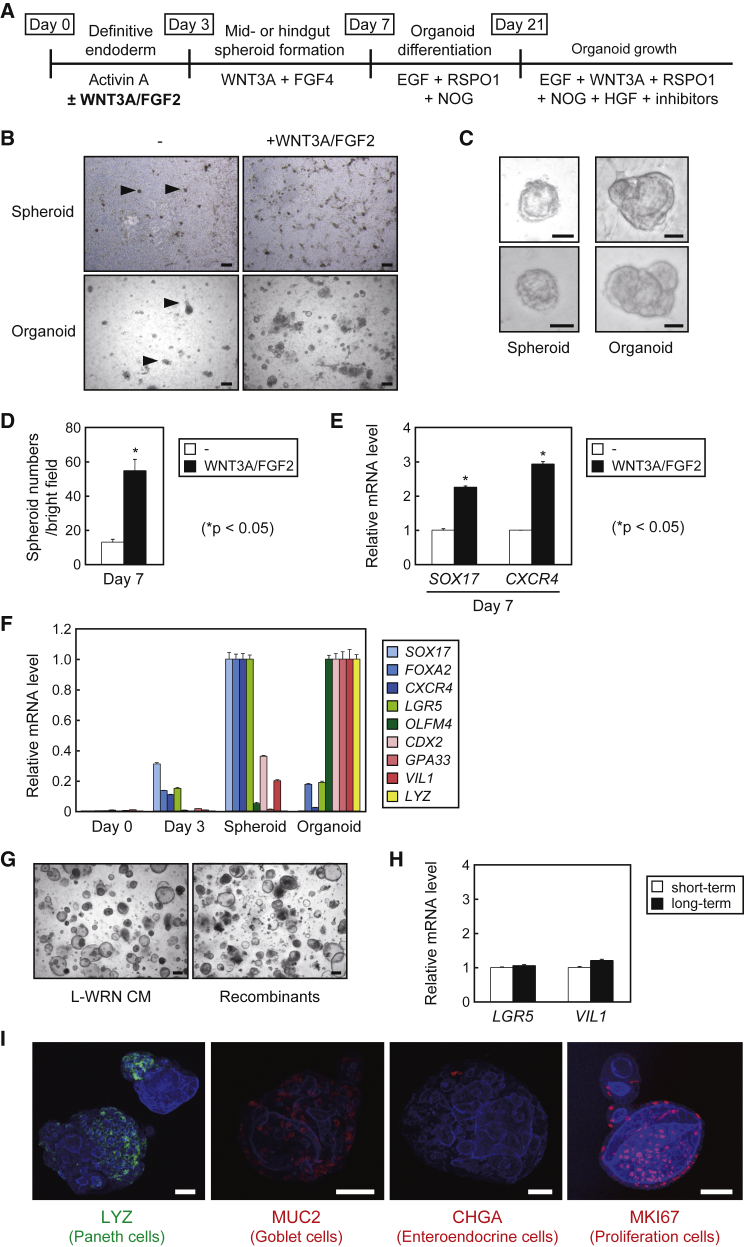
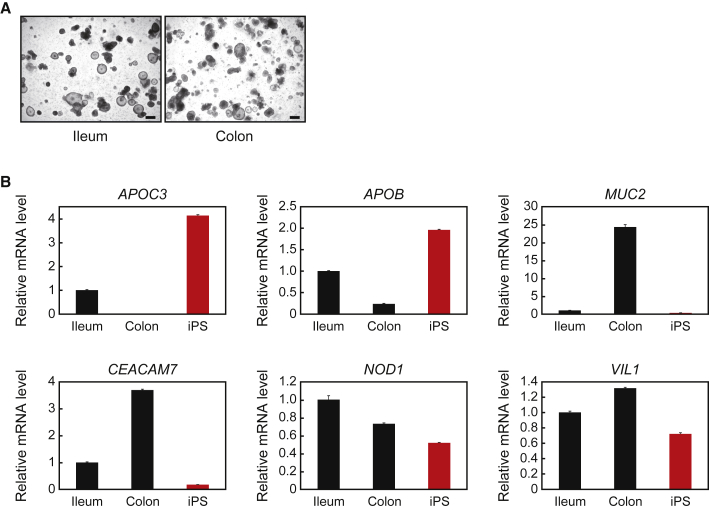
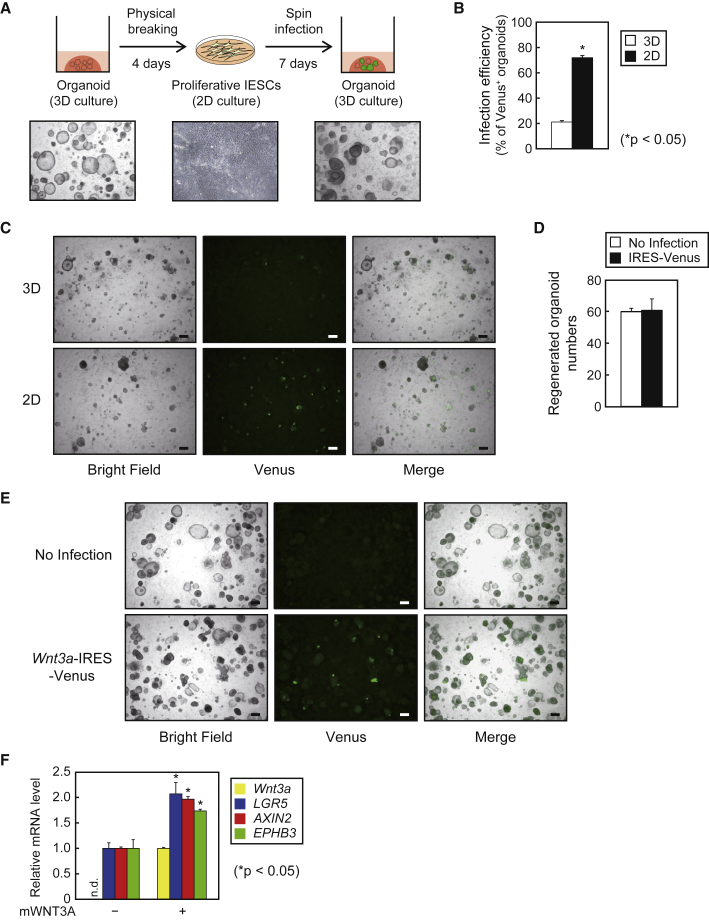
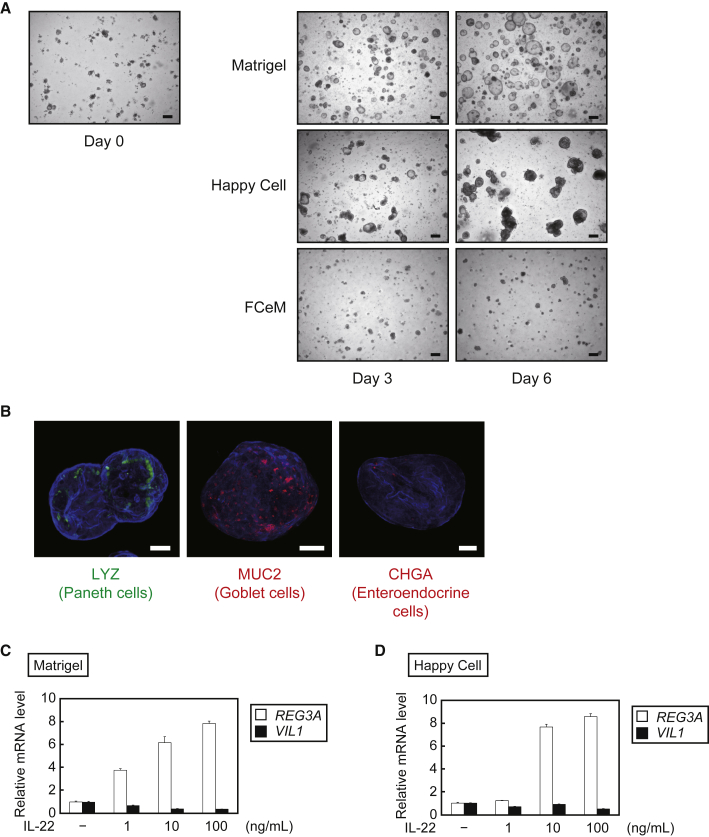
Gut epithelial organoids are routinely used to investigate intestinal biology; however, current culture methods are not amenable to genetic manipulation, and it is difficult to generate sufficient numbers for high-throughput studies. Here, we present an improved culture system of human induced pluripotent stem cell (iPSC)-derived intestinal organoids involving four methodological advances. (1) We adopted a lentiviral vector to readily establish and optimize conditioned medium for human intestinal organoid culture. (2) We obtained intestinal organoids from human iPSCs more efficiently by supplementing WNT3A and fibroblast growth factor 2 to induce differentiation into definitive endoderm. (3) Using 2D culture, followed by re-establishment of organoids, we achieved an efficient transduction of exogenous genes in organoids. (4) We investigated suspension organoid culture without scaffolds for easier harvesting and assays. These techniques enable us to develop, maintain, and expand intestinal organoids readily and quickly at low cost, facilitating high-throughput screening of pathogenic factors and candidate treatments for gastrointestinal diseases.
肠道上皮类器官常用于研究肠道生物学;然而,目前的培养方法不适于遗传操作,且难以获得足够数量的类器官用于高通量研究。在此,我们提出了一种改良的人诱导多能干细胞(iPSC)衍生的肠道类器官培养系统,涉及四项方法学进展。(1)我们采用慢病毒载体,可方便地建立和优化人肠道类器官培养的条件培养基。(2)我们通过补充 WNT3A 和成纤维细胞生长因子 2 来诱导向原肠胚分化,从而更有效地从人 iPSC 获得肠道类器官。(3)我们采用 2D 培养,然后再重建类器官,实现了类器官中外源基因的高效转导。(4)我们研究了无支架的悬浮类器官培养,以便于类器官的收获和检测。这些技术使我们能够以低成本快速、轻松地开发、维持和扩展肠道类器官,便于对胃肠道疾病的致病因素和候选治疗方法进行高通量筛选。