Liu Yang, Tao Xi, Ma Jianhua, Bian Zhaoying, Zeng Dong, Feng Qianjin, Chen Wufan, Zhang Hua
Guangdong Provincial Key Laboratory of Medical Image Processing, Southern Medical University, Guangzhou, Guangdong, 510515, China.
Sci Rep. 2017 Dec 12;7(1):17461. doi: 10.1038/s41598-017-17668-5.
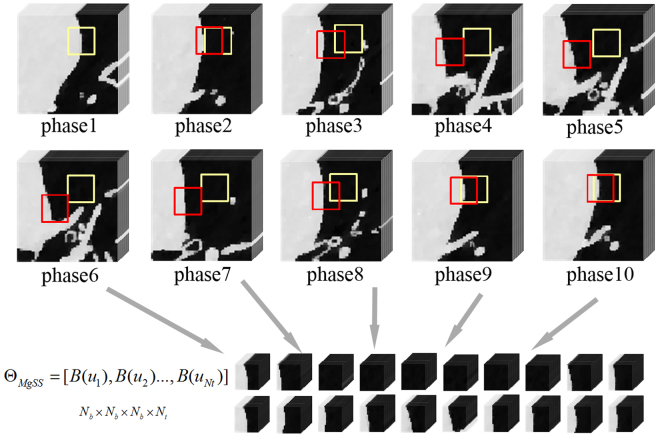
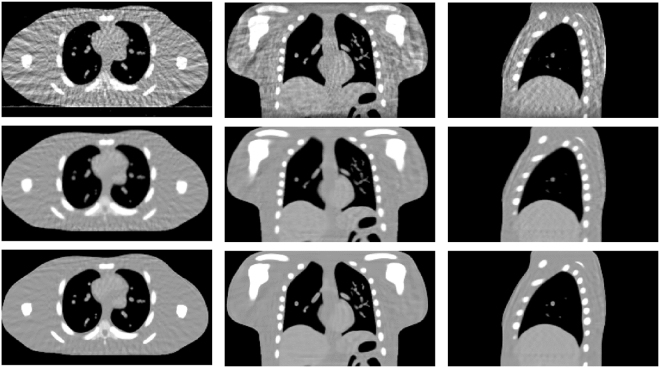
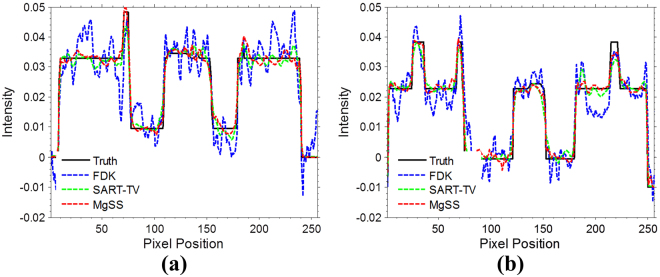
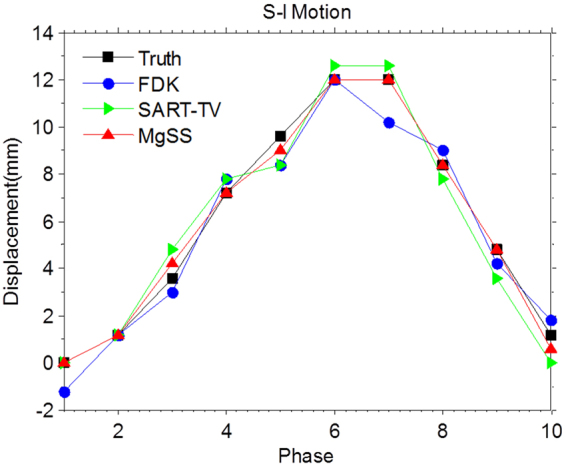
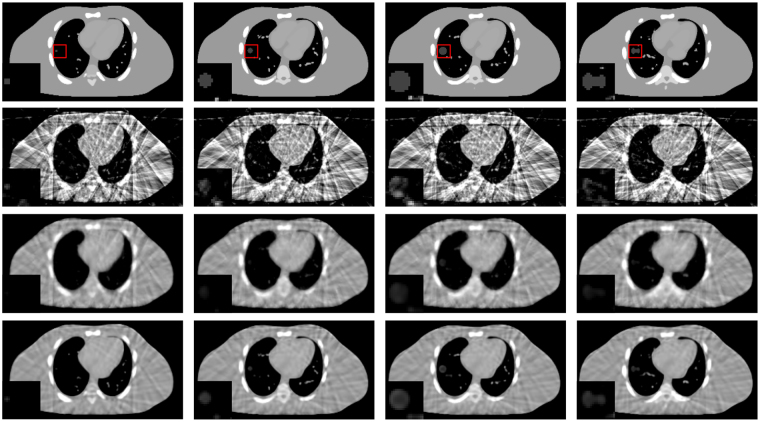
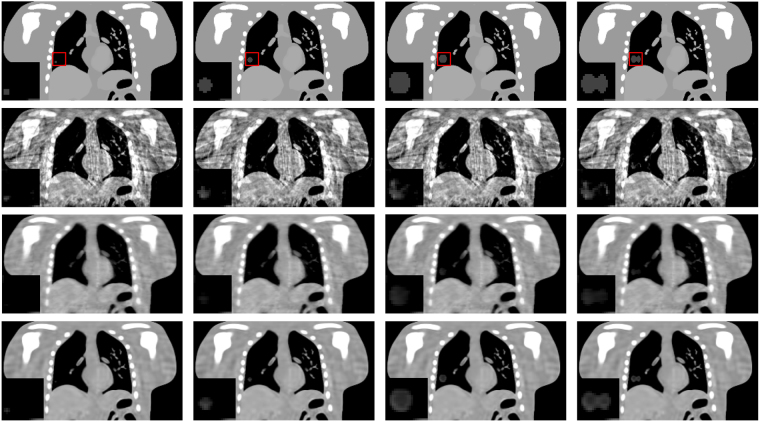
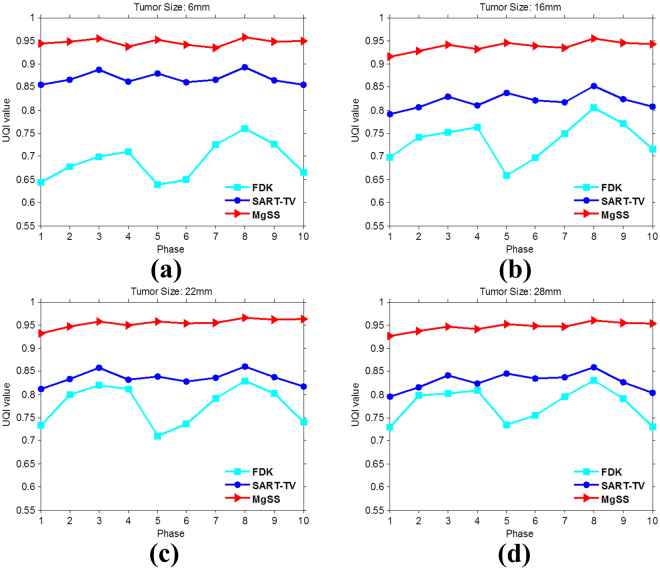
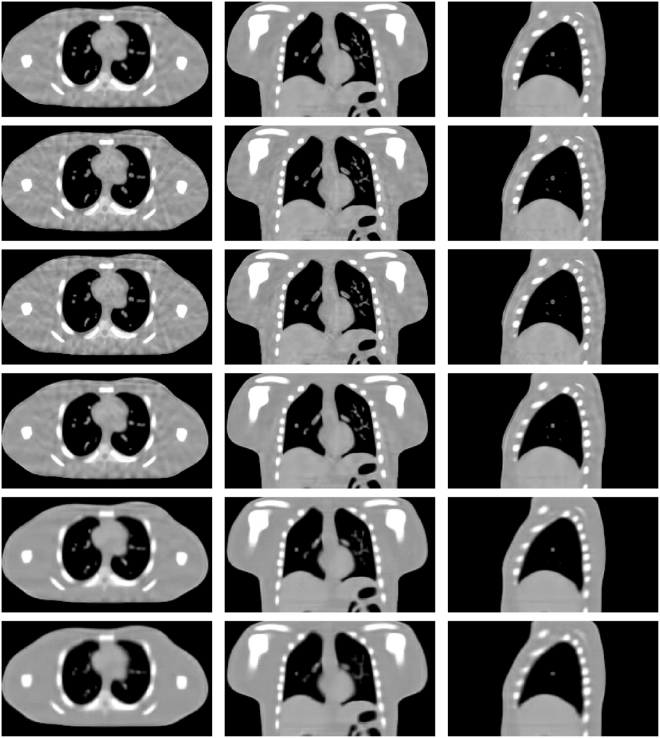
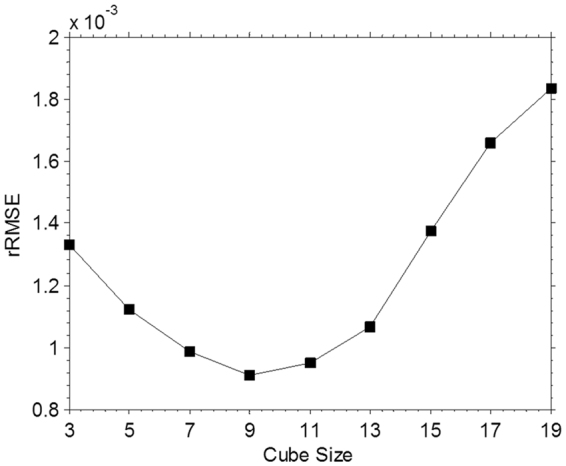
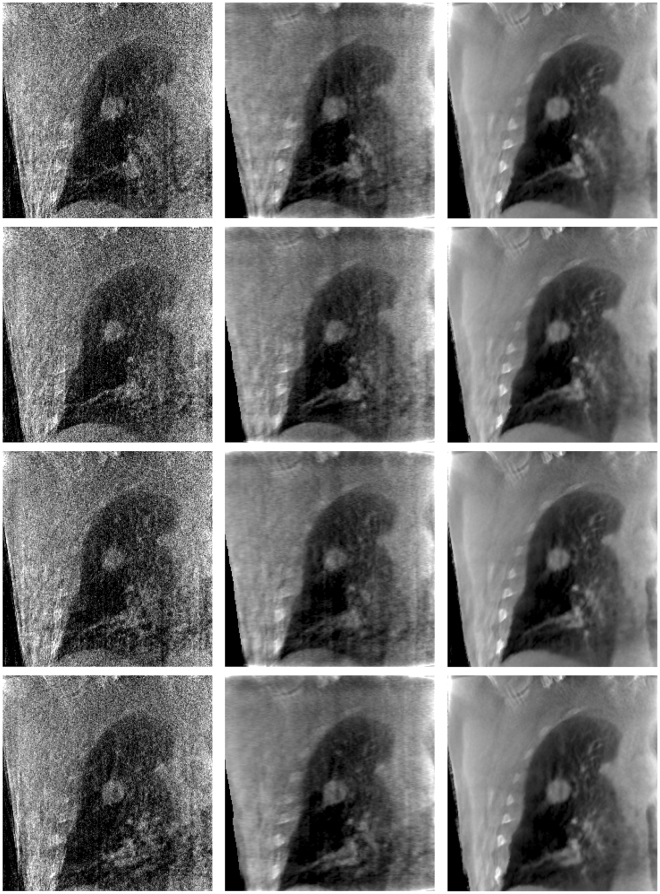
Conventional cone-beam computed tomography is often deteriorated by respiratory motion blur, which negatively affects target delineation. On the other side, the four dimensional cone-beam computed tomography (4D-CBCT) can be considered to describe tumor and organ motion. But for current on-board CBCT imaging system, the slow rotation speed limits the projection number at each phase, and the associated reconstructions are contaminated by noise and streak artifacts using the conventional algorithm. To address the problem, we propose a novel framework to reconstruct 4D-CBCT from the under-sampled measurements-Motion guided Spatiotemporal Sparsity (MgSS). In this algorithm, we try to divide the CBCT images at each phase into cubes (3D blocks) and track the cubes with estimated motion field vectors through phase, then apply regional spatiotemporal sparsity on the tracked cubes. Specifically, we recast the tracked cubes into four-dimensional matrix, and use the higher order singular value decomposition (HOSVD) technique to analyze the regional spatiotemporal sparsity. Subsequently, the blocky spatiotemporal sparsity is incorporated into a cost function for the image reconstruction. The phantom simulation and real patient data are used to evaluate this algorithm. Results show that the MgSS algorithm achieved improved 4D-CBCT image quality with less noise and artifacts compared to the conventional algorithms.
传统的锥形束计算机断层扫描常常因呼吸运动模糊而质量下降,这对靶区勾画产生负面影响。另一方面,四维锥形束计算机断层扫描(4D-CBCT)可用于描述肿瘤和器官的运动。但对于当前的机载CBCT成像系统,其缓慢的旋转速度限制了每个相位的投影数量,并且使用传统算法进行的相关重建会受到噪声和条纹伪影的干扰。为了解决这个问题,我们提出了一种新颖的框架——运动引导的时空稀疏性(MgSS),用于从不充分采样的测量中重建4D-CBCT。在该算法中,我们尝试将每个相位的CBCT图像划分为立方体(三维块),并通过相位利用估计的运动场向量跟踪这些立方体,然后对跟踪的立方体应用区域时空稀疏性。具体而言,我们将跟踪的立方体重塑为四维矩阵,并使用高阶奇异值分解(HOSVD)技术分析区域时空稀疏性。随后,将块状时空稀疏性纳入图像重建的代价函数中。使用体模模拟和真实患者数据对该算法进行评估。结果表明,与传统算法相比,MgSS算法在减少噪声和伪影的情况下提高了4D-CBCT图像质量。