Feizi Sepehr, Azari Amir A, Safapour Sharareh
Ophthalmic Research Center, Labbafinejad Medical Center, Shahid Beheshti University of Medical Sciences, Tehran, 16666 Iran.
Eye Vis (Lond). 2017 Dec 10;4:28. doi: 10.1186/s40662-017-0094-6. eCollection 2017.
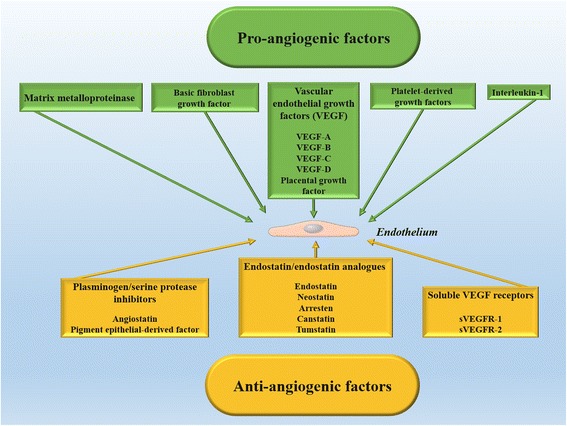
Angiogenesis refers to new blood vessels that originate from pre-existing vascular structures. Corneal neovascularization which can lead to compromised visual acuity occurs in a wide variety of corneal pathologies. A large subset of measures has been advocated to prevent and/or treat corneal neovascularization with varying degrees of success. These approaches include topical corticosteroid administration, laser treatment, cautery, and fine needle diathermy. Since the imbalance between proangiogenic agents and antiangiogenic agents primarily mediate the process of corneal neovascularization, recent therapies are intended to disrupt the different steps in the synthesis and actions of proangiogenic factors. These approaches, however, are only partially effective and may lead to several side effects. The aim of this article is to review the most relevant treatments for corneal neovascularization available so far.
血管生成是指从预先存在的血管结构中产生新的血管。角膜新生血管可导致视力受损,发生于多种角膜病变中。人们已经提倡采取大量措施来预防和/或治疗角膜新生血管,取得了不同程度的成功。这些方法包括局部应用皮质类固醇、激光治疗、烧灼和微针透热疗法。由于促血管生成因子和抗血管生成因子之间的失衡主要介导角膜新生血管形成过程,最近的治疗旨在干扰促血管生成因子合成和作用的不同步骤。然而,这些方法仅部分有效,且可能导致多种副作用。本文的目的是综述迄今为止可用的治疗角膜新生血管的最相关疗法。