Shin Hongsup, Zou Qijia, Ma Wei Ji
Center for Neural Science and Department of Psychology, New York University, New York, USA.
J Vis. 2017 Dec 1;17(14):10. doi: 10.1167/17.14.10.
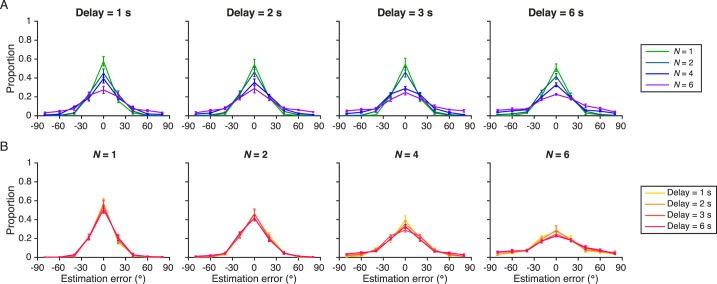
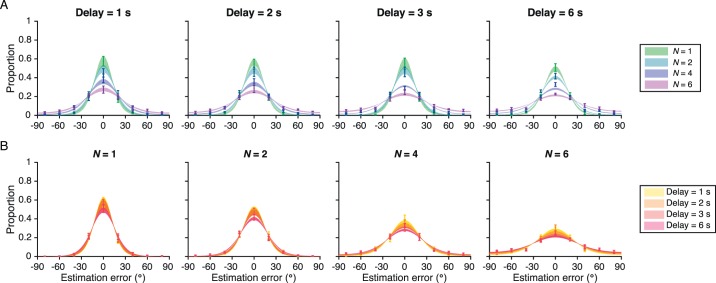
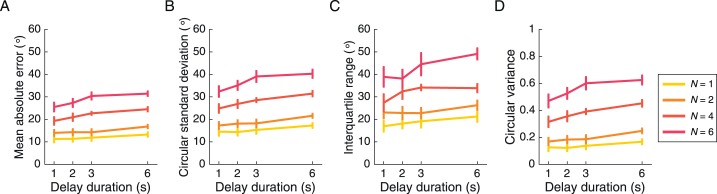
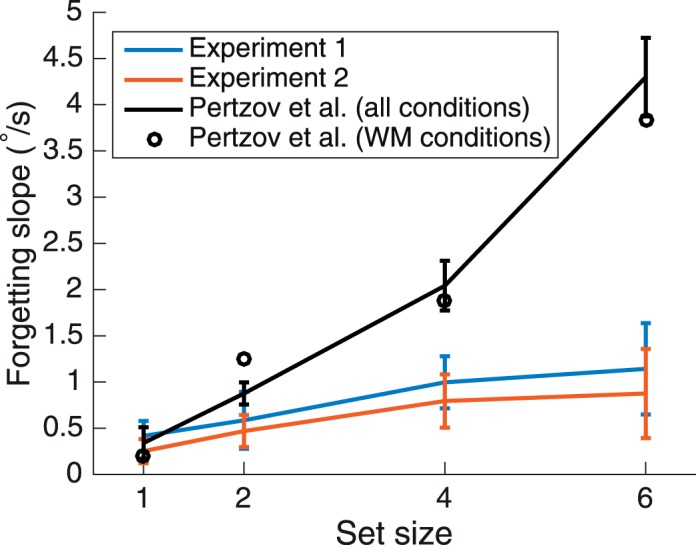
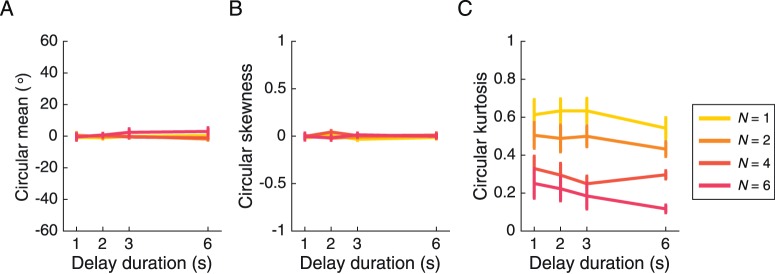
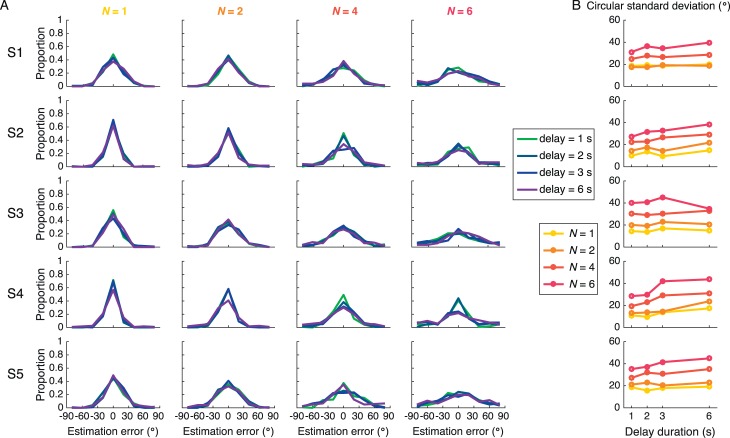
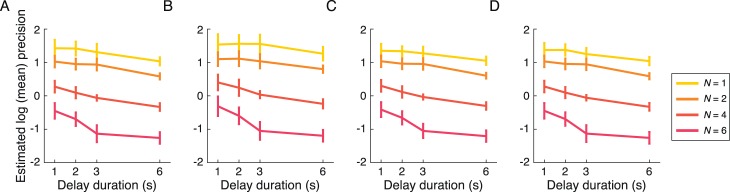
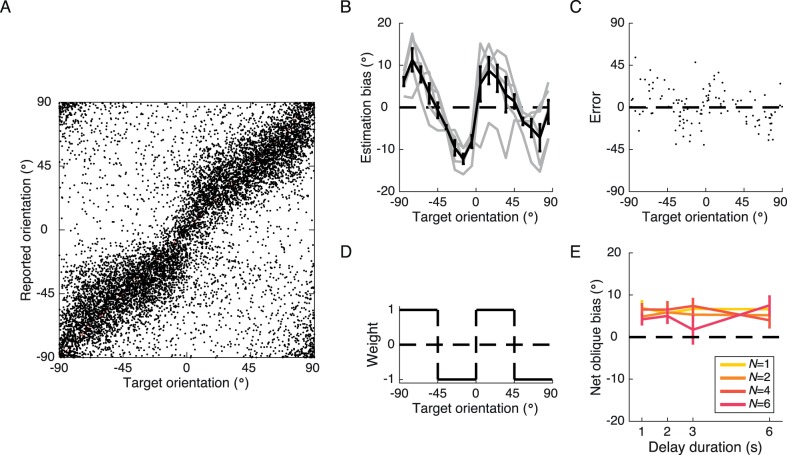
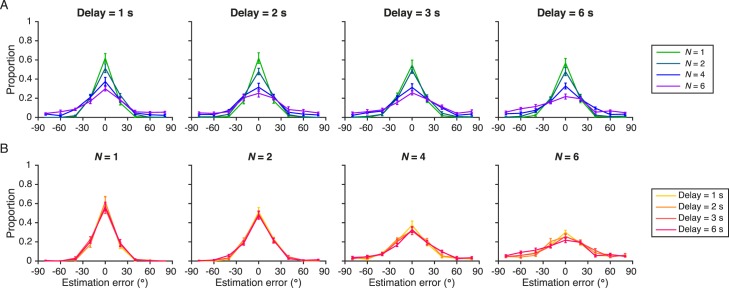
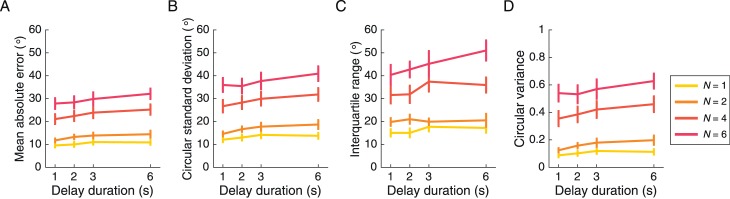
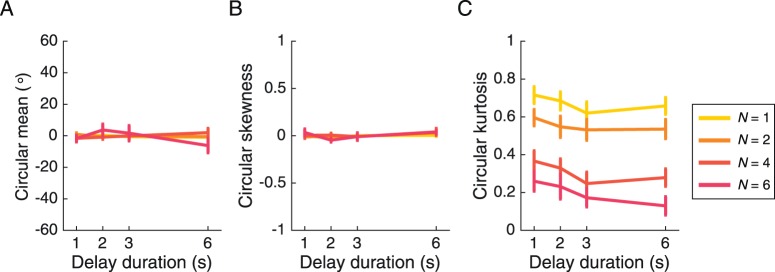
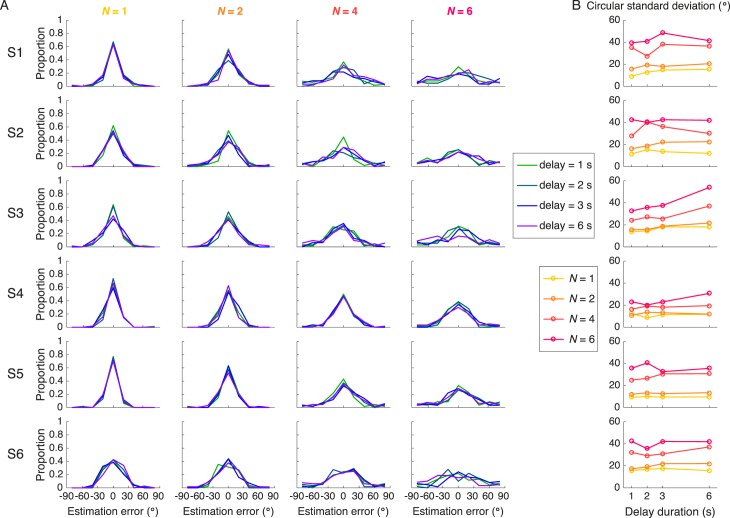
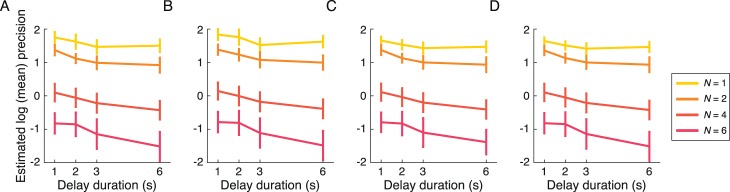
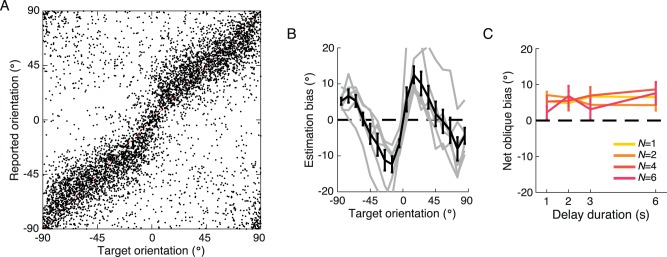
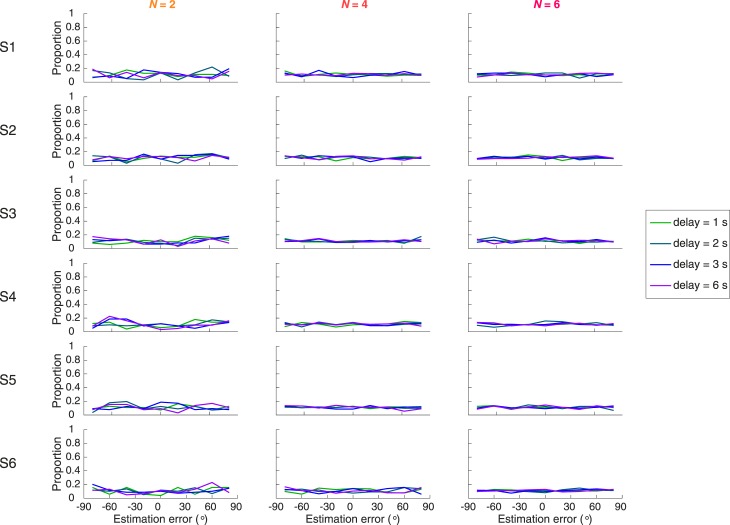
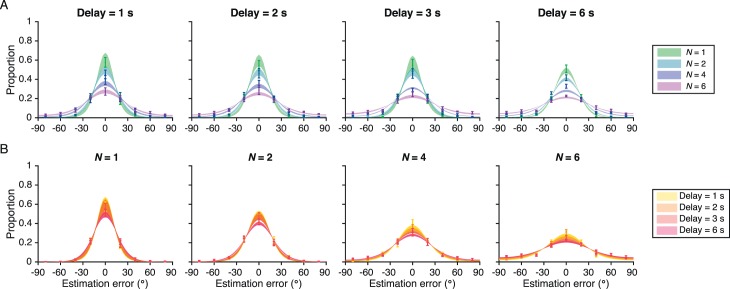
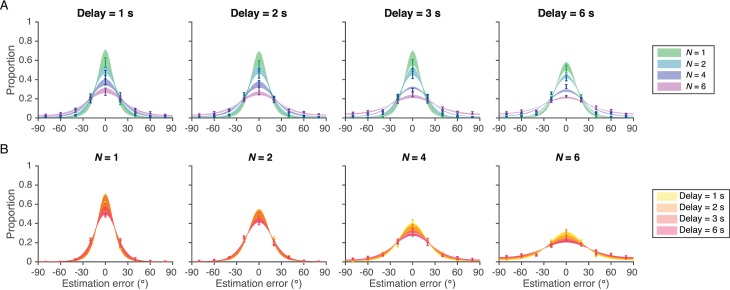
We used a delayed-estimation paradigm to characterize the joint effects of set size (one, two, four, or six) and delay duration (1, 2, 3, or 6 s) on visual working memory for orientation. We conducted two experiments: one with delay durations blocked, another with delay durations interleaved. As dependent variables, we examined four model-free metrics of dispersion as well as precision estimates in four simple models. We tested for effects of delay time using analyses of variance, linear regressions, and nested model comparisons. We found significant effects of set size and delay duration on both model-free and model-based measures of dispersion. However, the effect of delay duration was much weaker than that of set size, dependent on the analysis method, and apparent in only a minority of subjects. The highest forgetting slope found in either experiment at any set size was a modest 1.14°/s. As secondary results, we found a low rate of nontarget reports, and significant estimation biases towards oblique orientations (but no dependence of their magnitude on either set size or delay duration). Relative stability of working memory even at higher set sizes is consistent with earlier results for motion direction and spatial frequency. We compare with a recent study that performed a very similar experiment.
我们采用延迟估计范式来表征集合大小(1、2、4或6)和延迟持续时间(1、2、3或6秒)对方向视觉工作记忆的联合影响。我们进行了两项实验:一项实验中延迟持续时间是分块的,另一项实验中延迟持续时间是交错的。作为因变量,我们在四个简单模型中检验了四个无模型离散度指标以及精度估计。我们使用方差分析、线性回归和嵌套模型比较来测试延迟时间的影响。我们发现集合大小和延迟持续时间对无模型和基于模型的离散度测量均有显著影响。然而,延迟持续时间的影响比集合大小的影响弱得多,这取决于分析方法,并且仅在少数受试者中明显。在任何集合大小下,两个实验中发现的最高遗忘斜率为适度的1.14°/秒。作为次要结果,我们发现非目标报告率较低,并且对倾斜方向存在显著的估计偏差(但其大小与集合大小或延迟持续时间均无关)。即使在较高集合大小下工作记忆的相对稳定性也与先前关于运动方向和空间频率的结果一致。我们与最近进行了非常相似实验的一项研究进行了比较。