Department of Cell Biology, Faculty of Medicine, Fukuoka University, Fukuoka, 814-0180, Japan.
Department of Otorhinolaryngology, Faculty of Medicine, Fukuoka University, Fukuoka, 814-0180, Japan.
Cell Death Dis. 2017 Dec 14;8(12):3218. doi: 10.1038/s41419-017-0006-7.
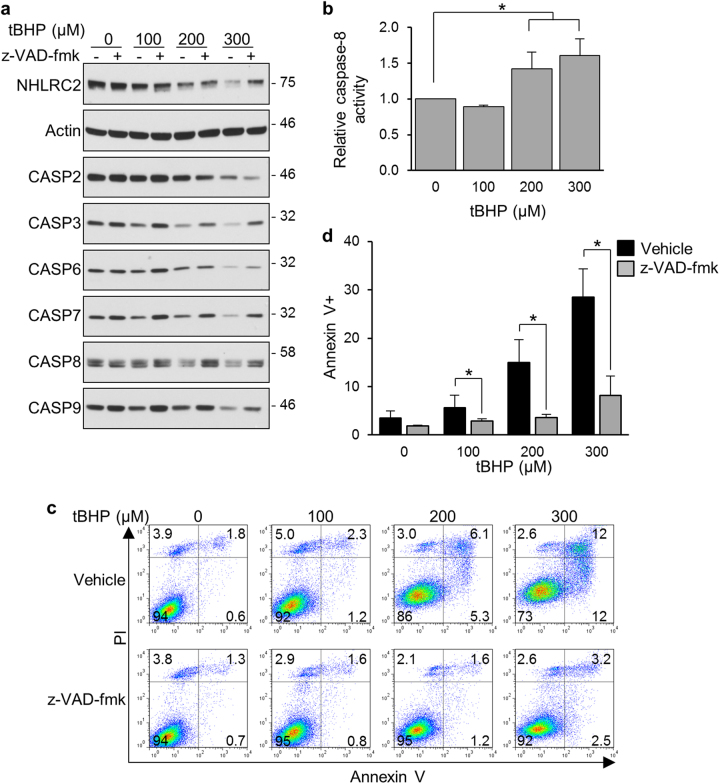
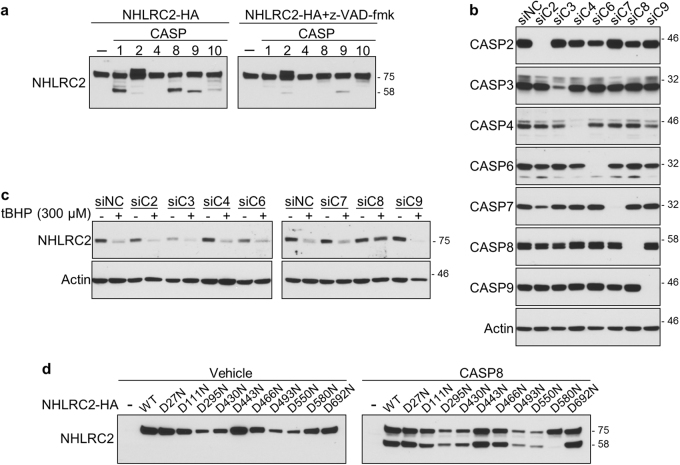
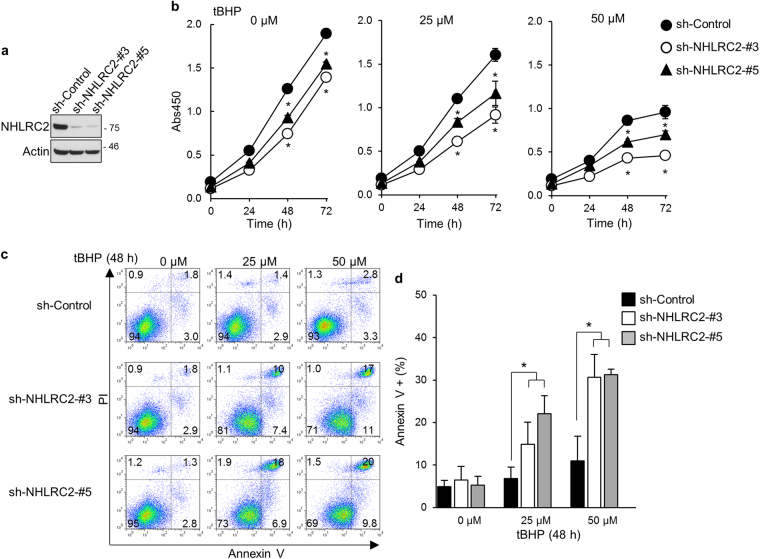
Excess production of reactive oxygen species (ROS) is known to cause apoptotic cell death. However, the molecular mechanisms whereby ROS induce apoptosis remain elusive. Here we show that the NHL-repeat-containing protein 2 (NHLRC2) thioredoxin-like domain protein is cleaved by caspase-8 in ROS-induced apoptosis in the HCT116 human colon cancer cell line. Treatment of HCT116 cells with the oxidant tert-butyl hydroperoxide (tBHP) induced apoptosis and reduced NHLRC2 protein levels, whereas pretreatment with the antioxidant N-acetyl-L-cysteine prevented apoptosis and the decrease in NHLRC2 protein levels seen in tBHP-treated cells. Furthermore, the ROS-induced decrease in NHLRC2 protein levels was relieved by the caspase inhibitor z-VAD-fmk. We found that the thioredoxin-like domain of NHLRC2 interacted with a proenzyme form of caspase-8, and that caspase-8 cleaved NHLRC2 protein at Asp580 in vitro. Furthermore, siRNA-mediated knockdown of caspase-8 blocked the ROS-induced decrease in NHLRC2 protein levels. Both shRNA and CRISPR-Cas9-mediated loss of NHLRC2 resulted in an increased susceptibility of HCT116 cells to ROS-induced apoptosis. These results suggest that excess ROS production causes a caspase-8-mediated decrease in NHLRC2 protein levels, leading to apoptotic cell death in colon cancer cells, and indicate an important role of NHLRC2 in the regulation of ROS-induced apoptosis.
已知活性氧(ROS)的过度产生会导致细胞凋亡。然而,ROS 诱导细胞凋亡的分子机制仍不清楚。在这里,我们表明 NHL 重复包含蛋白 2(NHLRC2)的硫氧还蛋白样结构域蛋白在 HCT116 人结肠癌细胞系的 ROS 诱导的细胞凋亡中被半胱天冬酶-8 切割。用氧化剂叔丁基过氧化氢(tBHP)处理 HCT116 细胞会诱导细胞凋亡并降低 NHLRC2 蛋白水平,而用抗氧化剂 N-乙酰-L-半胱氨酸预处理可防止 tBHP 处理细胞中观察到的细胞凋亡和 NHLRC2 蛋白水平下降。此外,ROS 诱导的 NHLRC2 蛋白水平下降被半胱天冬酶抑制剂 z-VAD-fmk 缓解。我们发现 NHLRC2 的硫氧还蛋白样结构域与半胱天冬酶-8 的前酶形式相互作用,并且半胱天冬酶-8 在体外在 Asp580 处切割 NHLRC2 蛋白。此外,siRNA 介导的半胱天冬酶-8 敲低阻断了 ROS 诱导的 NHLRC2 蛋白水平下降。shRNA 和 CRISPR-Cas9 介导的 NHLRC2 缺失均导致 HCT116 细胞对 ROS 诱导的细胞凋亡的敏感性增加。这些结果表明,ROS 过度产生导致 caspase-8 介导的 NHLRC2 蛋白水平降低,导致结肠癌细胞凋亡,并表明 NHLRC2 在 ROS 诱导的细胞凋亡调节中起重要作用。